-
by sayum
08 October 2026 12:31 PM







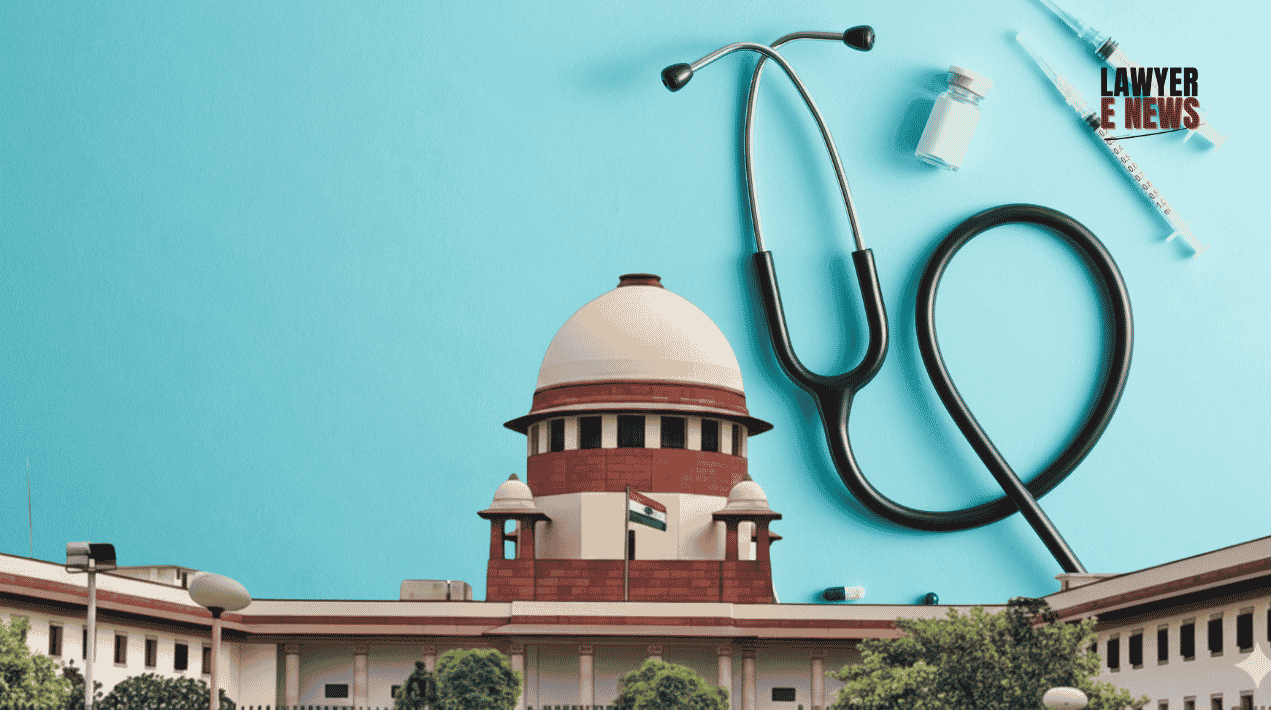
"The efficacy of the regulatory framework cannot be assessed merely by the existence of prescribed norms; it must also be judged by their efficacy, implementation and enforcement." Supreme Court of India, in an order dated October 8, 2026, directed the Union of India to constitute a high-level committee to comprehensively examine and strengthen the regulatory framework governing unethical marketing practices by pharmaceutical companies.
A bench comprising Justice Vikram Nath and Justice Sandeep Mehta underscored that the absence of an enforceable legal regime has a direct bearing on the fundamental right to health guaranteed under Article 21 of the Constitution of India. The Court emphasized that while it must exercise judicial restraint regarding policy formulation, it cannot remain indifferent when the regulatory gap adversely impacts public health.
The petition was filed by the Federation of Medical & Sales Representatives Association of India and others, seeking judicial intervention to curb unethical marketing practices in the pharmaceutical industry. The petitioners contended that pharmaceutical companies often provide inducements such as gifts, hospitality, and monetary benefits to medical practitioners, leading to the irrational over-prescription of medicines. They argued that the existing Uniform Code for Pharmaceutical Marketing Practices (UCPMP), 2015, remained ineffective due to its voluntary nature, necessitating a binding statutory framework.
The primary question before the Court was whether the existing regulatory mechanism is sufficient to safeguard the right to health under Article 21 by preventing unethical pharmaceutical marketing practices. The Court also examined the extent of its jurisdiction under Articles 32, 141, and 142 of the Constitution to mandate legislative action or frame guidelines in the absence of an effective statutory regime. Additionally, the Court addressed whether it could facilitate a consultative process to ensure that policy formulation aligns with constitutional mandates.
Court’s Observations and Directions Need For Effective Enforcement
The bench observed that the issues raised are of considerable public importance. It noted that the existing framework, including the UCPMP, has not proven entirely effective in curbing unethical conduct. The Court stressed that any regulatory framework must be judged not by the existence of norms, but by its capacity for meaningful enforcement, transparency, and accountability.
The Balancing Of Interests
The Court noted that any effective regulatory framework must balance the legitimate interests of the pharmaceutical industry with the paramount duty of protecting patients. It emphasized that safeguards must be capable of being enforced to address and prevent violations that could lead to serious public health risks, such as antimicrobial resistance and the irrational consumption of medicines.
"This Court, while exercising its constitutional jurisdiction, must therefore remain mindful of the doctrine of separation of powers and cannot substitute its own policy determination for that of the executive."
Judicial Restraint And Policy Formulation
Acknowledging the doctrine of separation of powers, the Court clarified that it would not enter the domain of policy formulation, which primarily falls within the ambit of the Union of India. However, the bench asserted that judicial restraint does not mean remaining a silent spectator when public health concerns are at stake. By facilitating a consultative exercise, the Court aimed to bridge the gap between policy intent and regulatory efficacy.
Directions For Regulatory Strengthening
The Court issued a series of mandatory directions, requiring the Union of India to constitute a committee within two weeks to undertake a holistic examination of the current framework. This committee is directed to consider all material placed on record and provide a reasonable opportunity to stakeholders to voice their concerns. The committee must submit its recommendations within two months of its first meeting, focusing on measures for transparency and accountability.
Final Accountability Mechanism
Following the submission of recommendations, the Union of India is required to take an appropriate and reasoned decision. The government must then file a compliance affidavit detailing the steps taken and the progress made, setting the stage for a follow-up hearing on January 29, 2027. The Court's order seeks to ensure that the regulatory evolution is both informed by expert opinion and consistent with the constitutional mandate of the right to life and health.
The Court’s intervention marks a decisive shift towards establishing a more rigorous, mandatory, and transparent oversight mechanism for the pharmaceutical sector. By tying the regulatory framework directly to the fundamental right to health, the order places the burden of ensuring ethical industry conduct firmly upon the executive, with the Court maintaining a supervisory role through its upcoming compliance review.
Date of Decision: 08 October 2026
Case Title: Federation of Medical & Sales Representatives Association of India & Ors. v. Union of India & Ors. | Writ Petition (C) No(S). 323 of 2021