-
by sayum
08 October 2026 6:24 AM







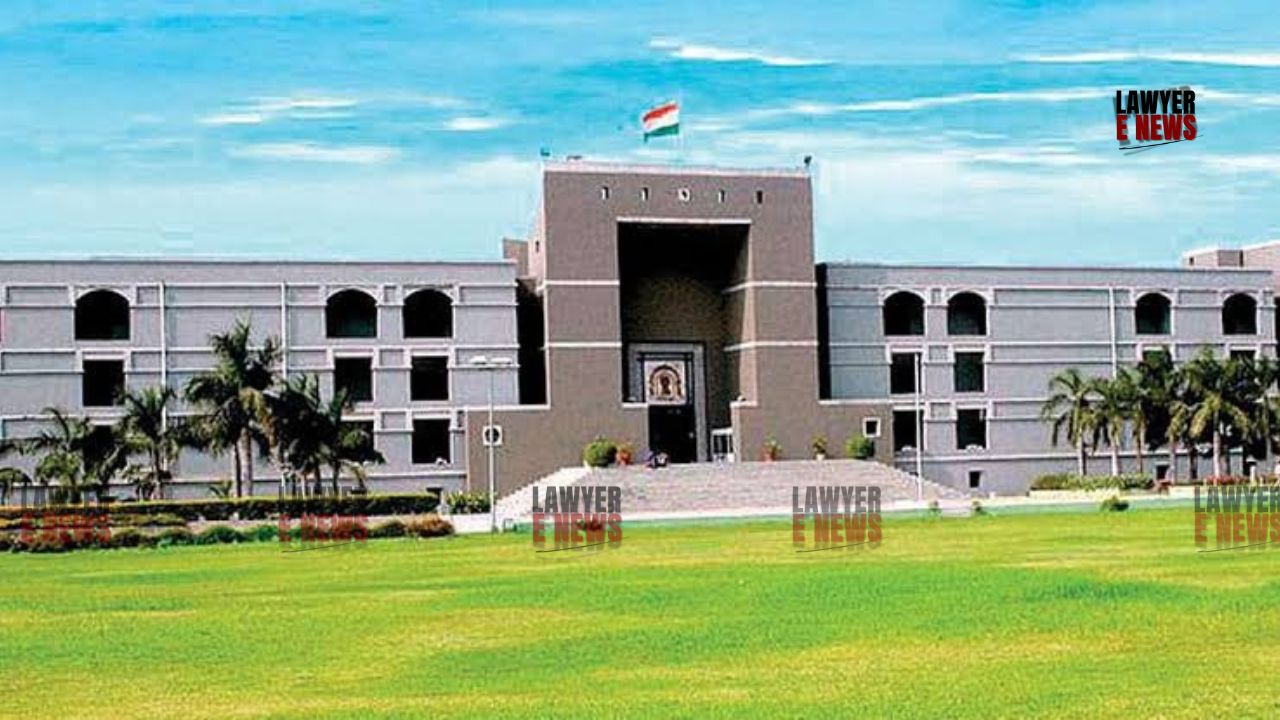
"Equities can be balanced by denying the appellants’ interest for the period for which they did not approach the Court. The substantive rights of the appellants should not be allowed to be defeated on technical grounds by taking hyper technical view of self-imposed limitations." Gujarat High Court held that in land acquisition matters, a delay in filing an appeal can be condoned by balancing the equities, specifically by denying the appellants interest on enhanced compensation for the period of delay.
A bench of Justice Mool Chand Tyagi observed that the law of limitation should not be used to defeat substantive rights on technical grounds, and that a "pragmatic and not pedantic" approach is required in compensation cases.
The case involved an application seeking the condonation of a significant delay of 2,391 days in preferring a First Appeal against a judgment and award passed by the 7th Additional Senior Civil Judge, Jamnagar. The applicants contended that the delay was not intentional or malafide but arose due to specific circumstances that prevented them from approaching the court within the statutory period.
The primary issue before the court was whether a delay of such significant duration could be condoned under Section 5 of the Limitation Act, 1963, in a land acquisition context. The court also examined the extent of its discretionary power to balance equities between the state’s interest and the land losers' rights to fair compensation.
Applying the Doctrine of Sufficient Cause
The court reiterated that the expression "sufficient cause" under Section 5 of the Limitation Act is elastic and requires a liberal, pragmatic, and justice-oriented interpretation. While the length of the delay is not the sole factor, the court emphasized that applicants must demonstrate bona fide conduct. Mere negligence or vague explanations cannot constitute sufficient cause for condoning such a long period of inaction.
"The expression 'sufficient cause' is elastic and is required to receive a liberal, pragmatic and justice oriented interpretation."
The bench extensively referenced the principles laid down by the Supreme Court in Collector, Land Acquisition, Anantnag v. MST. Katiji, N. Balakrishnan v. M. Krishnamurthy, and Esha Bhattacharjee v. Raghunathpur Nafar Academy. It underscored that courts are not meant to legalize injustice by adhering to hyper-technical views, provided the explanation offered for the delay is not fanciful or concocted.
Balancing Equities in Land Acquisition
Regarding the specific context of land acquisition, the court highlighted that land losers should not be deprived of their substantive rights due to procedural delays. However, to ensure fairness to the state, the court invoked the principle of balancing equities, noting that the prejudice caused by the delay could be mitigated by restricting the financial liability of the state.
"Equities can be balanced by denying the appellants’ interest for the period for which they did not approach the Court."
Following the precedent set in Dhiraj Singh v. State of Haryana and Huchanagouda v. Assistant Commissioner and Land Acquisition Officer, the court noted that determining the market value relates back to the date of the preliminary notification. Therefore, the state suffers no prejudice if the court condones the delay, provided that the claimants are denied interest for the duration of the delay.
The Court allowed the application for condonation of delay subject to the condition that if the compensation is enhanced, the applicants shall not be entitled to any interest for the period of 2,391 days. This approach ensures that the "cause of substantial justice" is preferred over rigid technical considerations without imposing an undue financial burden on the public exchequer.
Date of Decision: 01 October 2026