-
by sayum
08 October 2026 6:13 AM







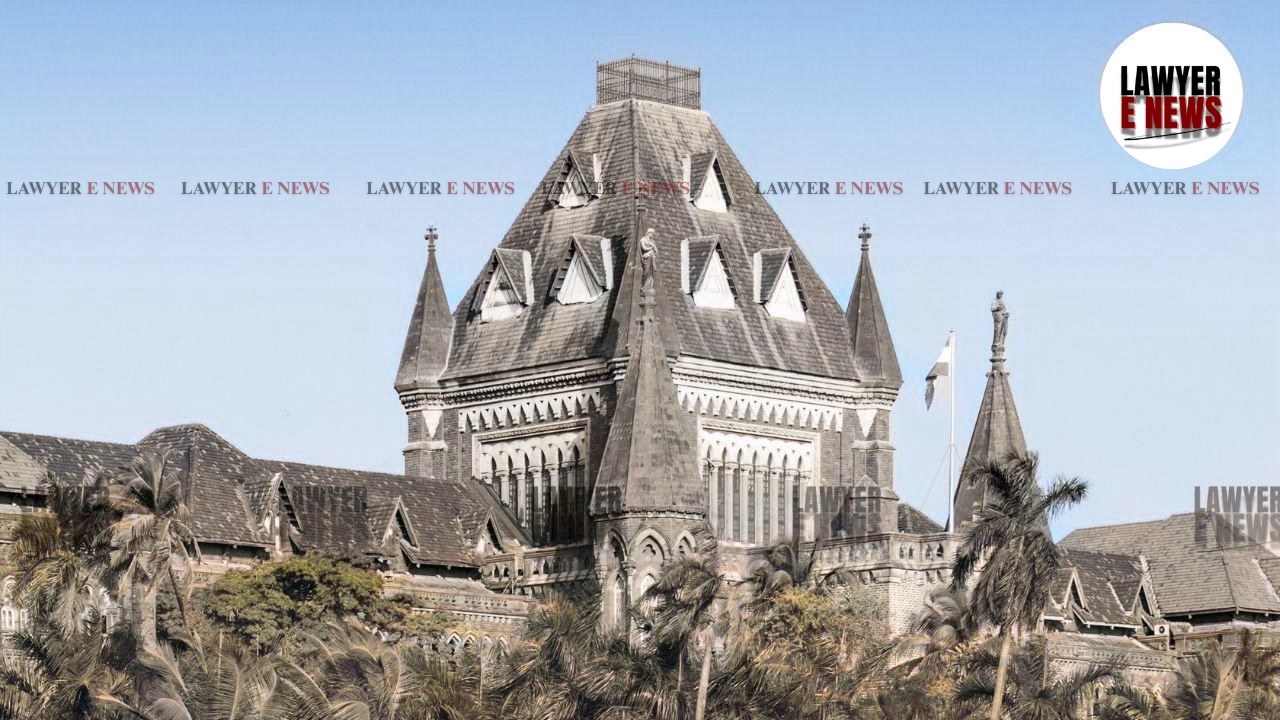
"The statutory provisions contained in Section 25FFA of the I.D. Act mandate that the Company should have issued the intended closure notice to the Appropriate Government at least 60 days before the date on which it intended to close down the concerned department/unit of the Company." Bombay High Court, in a judgment dated 06 October 2026, held that while the requirement of a 60-day notice under Section 25FFA of the Industrial Disputes Act (ID Act) is a mandatory statutory protection, a closure notice will not be rendered per se illegal due to a technical shortfall in the notice period if the employer demonstrates genuine, non-malafide reasons for closure, such as the cessation of manufacturing activities and the unsafe condition of the factory premises.
A bench of Justice Sandeep V. Marne observed that the court must balance the statutory rights of workmen with the practical realities of industrial management, particularly where the employer has paid idle wages for over a decade in the absence of productive work.
The dispute arose following the 2004 closure of the Sewree, Mumbai factory—the erstwhile site for manufacturing iconic soap brands 'Moti' and 'Hamam'—by Hindustan Unilever Limited (HUL), which had acquired Tata Oil Mills Company (TOMCO). While HUL had successfully implemented Voluntary Retirement Schemes (VRS) for 918 workers, 85 employees remained, leading to industrial references before the Tribunal regarding the legality of the closure and demands for reinstatement. The Industrial Tribunal had previously issued conflicting awards, granting some workmen VRS benefits while relegating others to retrenchment compensation.
The court was called upon to determine whether the closure notice issued by HUL was invalid due to alleged violations of Section 25FFA of the ID Act and the non-applicability of Chapter V-B provisions. Furthermore, the court examined whether the workmen could establish "functional integrality" between the closed Sewree unit and other profitable units of the company to challenge the closure, and whether the management was bound by past assurances given during the 1994 merger.
Absence of Functional Integrality
The court emphasized that for Chapter V-B of the ID Act to apply, there must be a distinct industrial establishment with at least 100 workers. The court rejected the argument that the strength of other HUL units could be aggregated with the Sewree factory. Relying on Isha Steel Treatment, Bombay v. Association of Engineering Workers, the court held that functional integrality is not presumed merely because a company operates multiple branches.
Functional integrality requires evidence of interdependence
The court noted that the workmen failed to produce evidence of functional interdependence between the Sewree facility and other HUL units. Merely because the company continued to market the same brands elsewhere did not imply that the Sewree unit was not a distinct, standalone establishment that had become commercially unviable.
Genuineness of Closure Reasons
The court accepted the management's evidence that no manufacturing had occurred at the Sewree site for over a decade. It highlighted that the factory Inspector had restrained manufacturing due to the dilapidated and dangerous state of the premises. The court noted the employer's contention that it had paid approximately Rs. 40 crores in idle wages, finding that the management was not obligated to sustain such losses indefinitely.
Validity of Section 25FFA Notice
Addressing the contention regarding Section 25FFA, the court acknowledged the principle in Mackinnon Mackenzie and Company Limited v. Mackinnon Employees Union that notice requirements are mandatory. However, the court distinguished the present case, noting that the plea was not properly raised before the Tribunal and that the employer had clearly demonstrated bonafide circumstances.
Equitable Balancing of Interests
To resolve the long-standing dispute, the court declined to strictly apply technical defaults to void the closure. Instead, it facilitated a settlement by directing HUL to pay all 85 remaining workers the benefits of the 1999 VRS scheme, including 6% interest and early bird incentives, regardless of the original formulas. This "deferred wage" payment was deemed a fair resolution to end years of litigation.
Closure upheld with modified compensation
The court affirmed the Industrial Tribunal's decision to reject reinstatement, noting that the factory's closure was a legitimate management decision. It modified the previous awards to ensure parity among all workers by directing HUL to pay the amounts agreed upon during court-assisted settlement efforts, effectively treating the final compensation as a full and final settlement.
Date of Decision: 06 October 2026