-
by sayum
27 August 2026 7:40 AM







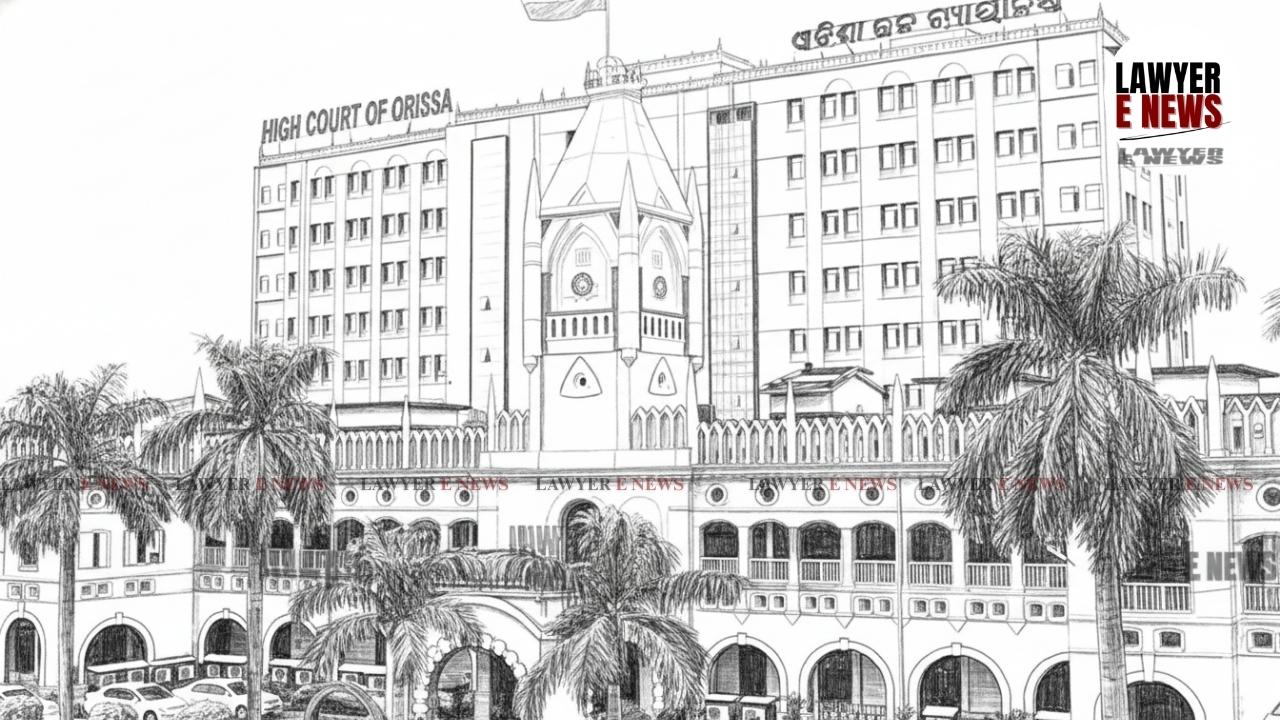
"The provision, however, on a plain reading, cannot be construed to confer any right upon the accused to adduce evidence-in-chief by way of affidavit as the Court cannot supply words to a statute which the legislature has deliberately omitted," Orissa High Court, in a significant ruling, held that an accused in a cheque dishonour case cannot lead defence evidence-in-chief by way of an affidavit.
While dealing with a petition challenging a magistrate's order that discarded the defence's affidavit evidence, a single-judge bench of Dr. Justice Sanjeeb K Panigrahi observed that Section 145(1) of the Negotiable Instruments Act, 1881, expressly enables only the complainant to present evidence on affidavit, and the court cannot step in to fill a deliberate legislative omission.
The dispute originated from a business relationship between the parties where an undated security cheque issued by the petitioners was allegedly misused, leading to a criminal complaint under Section 138 of the Negotiable Instruments Act, 1881. During the trial before the Sub-Divisional Judicial Magistrate (SDJM) in Bhubaneswar, the accused filed their evidence-in-chief via affidavit, which the complainant formally opposed. The SDJM subsequently allowed the complainant's plea, discarded the accused's affidavit, and directed them to adduce evidence in person. Aggrieved by this rejection, the petitioners approached the High Court invoking its inherent powers under Section 528 of the Bharatiya Nagarik Suraksha Sanhita (BNSS), 2023.
The primary question before the court was whether an accused in a proceeding under Section 138 of the Negotiable Instruments Act, 1881, is entitled to file their evidence-in-chief by way of an affidavit. The court was also called upon to determine whether Section 145(2) of the Act confers any independent procedural right upon the accused to bypass oral examination-in-chief.
Plain Reading Of Section 145 NI Act
Analyzing the statutory framework, the court noted that Section 145(1) of the Negotiable Instruments Act, 1881, creates a specific exception to regular criminal procedure by allowing the complainant's evidence to be given on affidavit. The bench emphasized that the provision explicitly uses the term "complainant" and purposefully refrains from extending this convenience to the accused facing trial.
"The provision specifically uses the expression 'complainant' in sub-section (1) and does not extend the same liberty to the accused."
Courts Cannot Fill Legislative Gaps
The court firmly rejected the argument that the omission of the word "accused" from Section 145(1) was a mere oversight that the judiciary could cure. Relying heavily on the Supreme Court's landmark decision in Mandvi Cooperative Bank Limited v. Nimesh B. Thakore, the bench reiterated that courts cannot usurp legislative functions. The judge noted the Supreme Court's reasoning that defence evidence is fundamentally different from a complainant's case, which is largely documentary, thereby justifying the legislature's differential treatment of the two parties.
Clarifying The Scope Of Section 145(2)
Addressing the petitioners' reliance on Section 145(2) of the Act, the bench clarified that this sub-section does not act as an enabling provision for the accused to file affidavits. Instead, it merely dictates the procedure for summoning and examining a person who has already lawfully placed their affidavit on record under sub-section (1). The court stated that interpreting this procedural safeguard as a substantive right for the accused would go entirely against the plain text of the statute.
"The provision, however, on a plain reading, cannot be construed to confer any right upon the accused to adduce evidence-in-chief by way of affidavit as the Court cannot supply words to a statute which the legislature has deliberately omitted."
Precedential Value Of Mandvi Bank Decision
The petitioners had heavily cited the Supreme Court judgment in Indian Bank Association v. Union of India to argue that procedures should be uniformly simplified for the speedy trial of cheque bounce cases. However, the High Court clarified that the Indian Bank Association case did not overrule, dilute, or dissent from the strict interpretation laid down in Mandvi Cooperative Bank.
No New Procedural Rights Created
The bench noted that the Supreme Court's later decision in Indian Bank Association only reiterated earlier principles regarding speedy disposal without conferring any new evidentiary rights upon the accused. The court observed that the earlier ratio remains good law and solidly governs the field of evidence in Section 138 proceedings.
"The said decision therefore cannot be read in a manner conferring any right upon the accused to present evidence-in-chief by way of affidavit."
Finding no illegality or infirmity in the lower court's approach, the High Court dismissed the petition and upheld the SDJM's order discarding the affidavit evidence of the accused. The ruling reinforces the strict procedural boundaries of the Negotiable Instruments Act, definitively clarifying that the convenience of affidavit evidence at the primary stage is an exclusive statutory privilege of the complainant.
Date of Decision: 13 March 2026