Inability To Trace Beneficiaries Cannot Defeat Or Postpone Compensation Disbursal: Supreme Court Directs High Court Suo Motu Proceedings Disability Pension | Mere Manifestation Of Disease During Military Service Without Causal Connection Is Not Sufficient For Entitlement: Supreme Court Prevention Of Corruption Act | Mere Recovery Of Tainted Money Without Proof Of Demand Cannot Sustain Conviction: Supreme Court Appointment Contrary To Statutory Requirements And Advertisement Terms Amounts To Fraud On Public: Supreme Court IT Act | Once Settlement Commission Admits Application Under Section 245C, Assessing Officer Loses Jurisdiction To Reopen Assessment Under Section 148: Supreme Court NDPS Act | Prosecution Must Establish Unbroken Chain Of Custody For Samples, Failure To Comply With Section 52-A Renders FSL Report Inadmissible: Supreme Court Section 180 BNSS | Investigating Officers Must Adopt Transparent Practices; DGP Should Consider Making Audio-Video Recording Of Witness Statements Mandatory: Allahabad High Court Rowdy Sheet Cannot Be Opened In A Mechanical Manner Based On Mere Pendency Of Two Criminal Cases: Andhra Pradesh High Court 'Surname Protection Under Section 35 Trade Marks Act Not Restricted To Natural Persons': Bombay High Court Allows Corporate Body To Use Family Name Circumstantial Evidence | Prosecution Must Prove Connectivity Between Accused And Crime, Mere 'Last Seen' Theory Insufficient: Calcutta High Court Section 482 BNSS | Criminal Prosecution Against Company Directors Cannot Be Quashed When Investigation Reveals Active Role Beyond Mere Designation: Delhi High Court Cannot Be Permitted To Patch Up Weak Points: Karnataka High Court Dismisses Belated Order 41 Rule 27 CPC Plea Order XXI Rule 90 CPC | Burden To Prove Material Irregularity Or Fraud In Court Auction Sale Lies Upon Judgment Debtor: Kerala High Court Departmental Instructions Not Being Mandatory, Non-Compliance Does Not Vitiate Enquiry If Guilt Is Proved By Other Cogent Evidence: Delhi High Court Doctrine Of Res Gestae | Hearsay Evidence Can Be Admissible If Statement Is Spontaneous And Contemporaneous With The Occurrence: Madras High Court Relatives Cannot Be Roped Into Matrimonial Disputes On The Basis Of Omnibus Allegations: Madhya Pradesh High Court Grants Discharge Victim In Private Complaint Case Entitled To File Appeal Against Acquittal Before Sessions Court U/S 372 CrPC: Punjab & Haryana High Court Section 58 BNSS | Detention Beyond 24 Hours Without Magistrate’s Authority Vitiates Remand, Entitles Accused To Bail: Orissa High Court Section 18 Limitation Act | Acknowledgement Of Loan In Promissory Note Extends Period Of Limitation For Entire Debt: Delhi High Court Section 138 NI Act | Existence Of Defence Founded On Disputed Facts Cannot Be Ground To Scuttle Cheque Bounce Prosecution At Inception: Punjab & Haryana High Court

Accident Occurred Due to Rash and Negligent Act of the First Respondent: Andhra High Court Reassesses Mechanic’s Compensation Claim

07 May 2024 8:19 AM

By: Admin


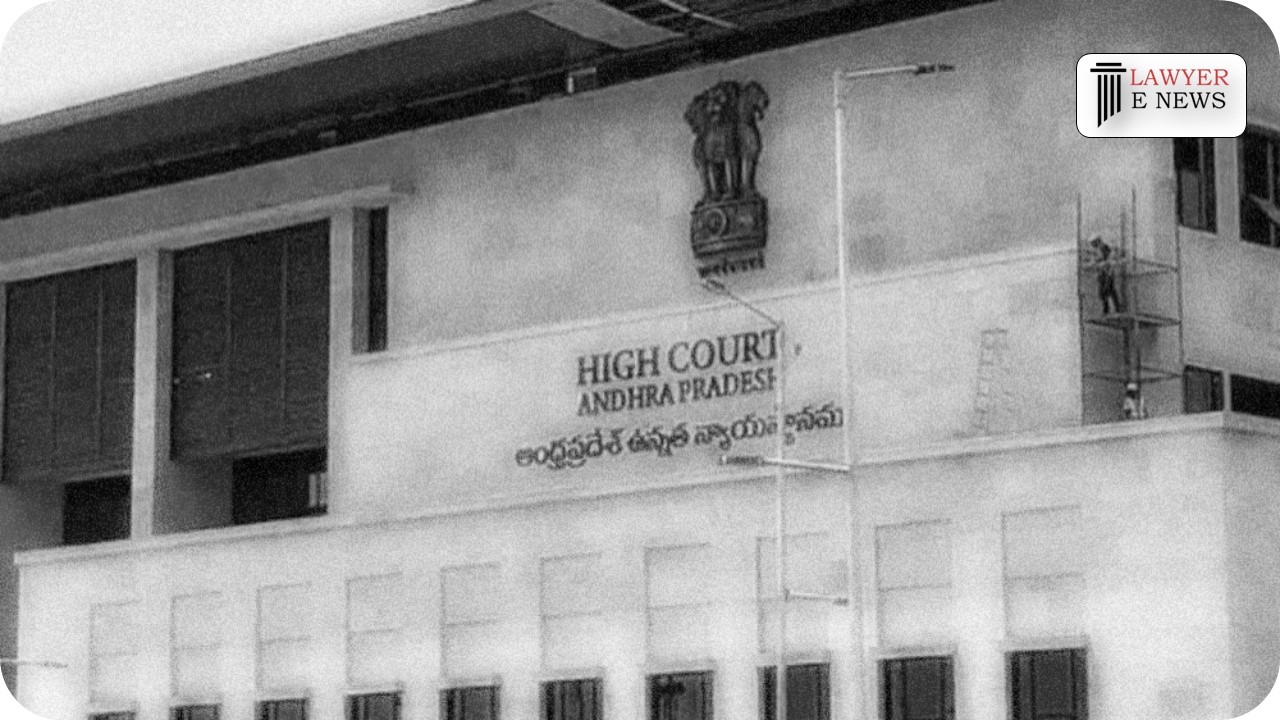
In a detailed judgment, the High Court of Andhra Pradesh at Amaravati has revised the compensation awarded to a mechanic who was severely injured in a motor vehicle accident, confirming the negligence of the driver involved.

The pivotal legal issue dealt with the assessment of compensation for injuries sustained due to a motor vehicle accident, focusing particularly on the validation of claims associated with medical expenses and the extent of negligence.

The accident, involving a bus driven by an unlicensed APSRTC mechanic, resulted in serious injuries to another mechanic. The Motor Accidents Claims Tribunal initially awarded Rs. 3,40,000 based on the claims presented. The APSRTC appealed, disputing both the negligence established and the amount of compensation.

Confirmation of Negligence: The court reaffirmed that the accident was a result of the “rash and negligent act of the first respondent,” as evidenced by police reports and the chargesheet, upholding the tribunal’s findings on this aspect.

Analysis of Compensation Claims: The court dissected the compensation awarded for medical expenses, pain and suffering, and permanent discomfort:

Medical Expenses: The court noted the lack of substantial evidence for the claimed Rs. 1,00,000 for medical expenses, leading to adjustments.

Pain and Suffering: Compensation for pain and suffering was reduced from Rs. 1,00,000 to Rs. 75,000, reflecting a reassessment of the tribunal’s higher estimate.

Permanent Discomfort: Despite no formal disability certificate, the court acknowledged the lifelong discomfort caused by the injuries, assigning Rs. 50,000 for this category.

Reduction of Total Compensation: Following its examination, the High Court reduced the overall compensation from Rs. 3,40,000 to Rs. 2,15,000, rectifying the overestimations in the original tribunal award.

Decision: The High Court partially allowed the appeal, setting the revised compensation at Rs. 2,15,000 with an interest rate of 7.5% per annum from the date of the petition until payment. This decision underscores the court’s role in meticulously verifying and adjusting compensation based on the evidence available.

Date of Decision: May 1, 2024

The Depot Manager VS Kota Mohan Simhadri Appalaswamy,

Latest Legal News