-
by sayum
08 October 2026 6:24 AM







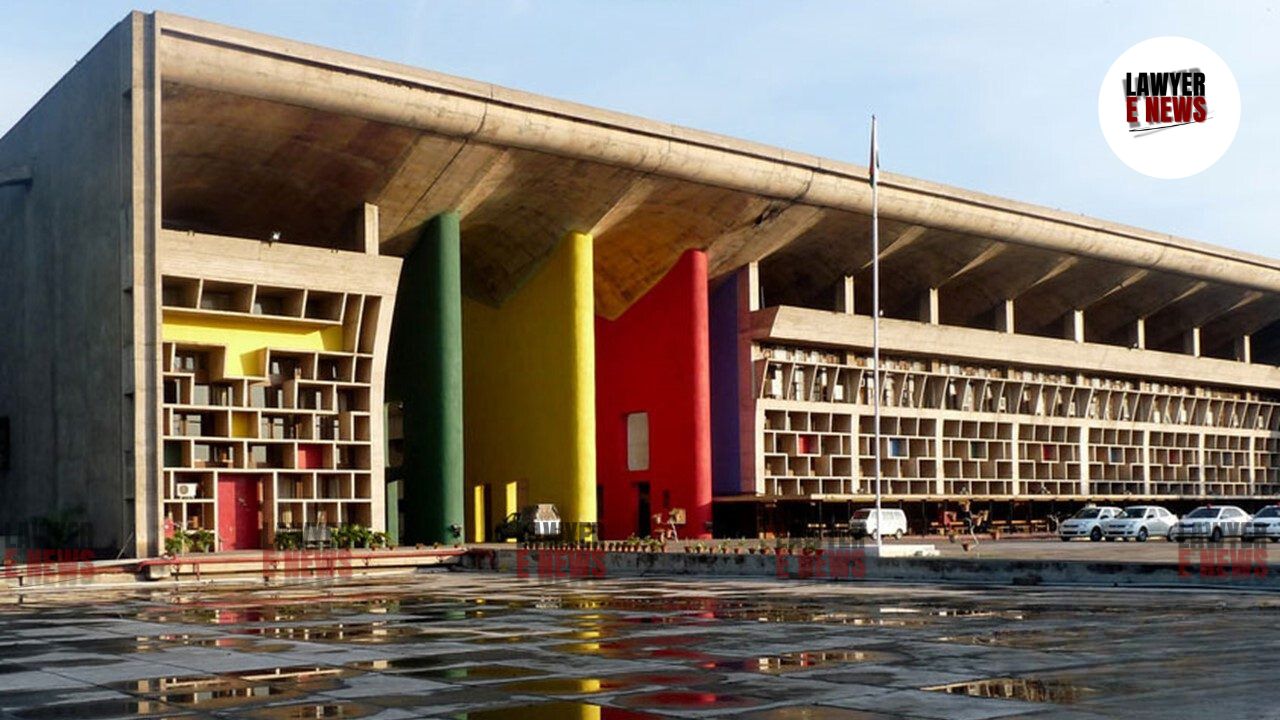
In a significant ruling on property law pertaining to the rights of redemption in usufructuary mortgages, the High Court of Punjab and Haryana has set aside the judgments and decrees of the lower courts that previously recognized the respondent's ownership of the disputed land by prescription.
The appeal, RSA-821-1993, brought by the legal heirs of Jagat Ram against Rachpal Singh & Others, challenged the lower courts' decrees on the basis that the respondent had not rightfully acquired ownership by merely the passage of time without redemption of the mortgage. The core legal argument turned around the provisions of the Transfer of Property Act, 1882, particularly Sections 58 and 60, and Article 61(a) of the Limitation Act, 1963, which deals with the right of redemption of immovable property.
The case originated when Rachpal Singh claimed ownership of land that had been mortgaged in 1942-43 by Jai Karan to his son Suram Chand, who upon his death in 1981, allegedly willed it to Singh. The appellants contested that neither Jai Karan nor his successors had redeemed the land, and consequently, by efflux of time, Singh claimed ownership.
The key issues deliberated in court included whether the mortgage deed was genuine, the validity of the will, the rights of the appellants to challenge the possession, and fundamentally, whether the passage of 30 years without redemption extinguishes the right to redeem the property.
Justice Alka Sarin, presiding over the matter, provided a comprehensive legal analysis, citing numerous precedents including the landmark Supreme Court judgments that reinforced the doctrine "once a mortgage, always a mortgage," establishing that no time limit can extinguish the right to redeem a mortgage. The Court pointed out that:
"The limitation of 30 years under Article 61(a) begins to run when the right to redeem or recover possession accrues."
"In case of usufructuary mortgage, where no time limit is fixed for redemption, the right to seek redemption would not arise on the date of the mortgage but will arise when the mortgagor pays or tenders to the mortgagee the mortgage money."
Justice Sarin emphasized that the claims for ownership by the respondent due to the mere passage of time without any act of redemption were legally untenable.
Decision: The High Court allowed the appeal, setting aside the decisions of the Trial Court and the First Appellate Court. The suit filed by Rachpal Singh was dismissed, reaffirming that the right to redeem a usufructuary mortgage remains with the mortgagor indefinitely, unless extinguished by payment or a specific act of redemption.
Date of Decision: April 29, 2024
Jagat Ram (deceased) through LRs vs. Rachpal Singh & Ors