-
by sayum
05 August 2026 5:12 AM







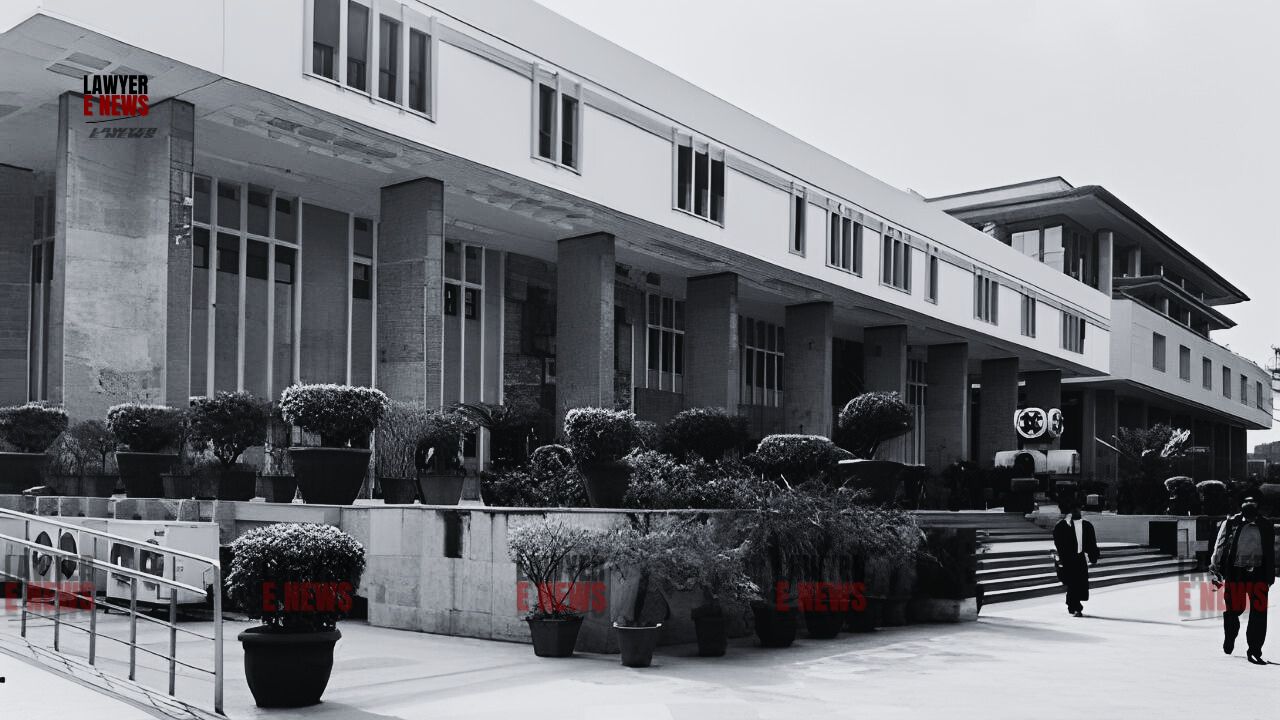
“Mere Use of Known Diethers and Hot Filtration is a Predictable Outcome”: In a significant ruling Delhi High Court dismissed a patent appeal filed by Lummus Novolen Technology GmbH, holding that its claimed process for producing a Ziegler-Natta catalyst lacked the requisite inventive step under Section 2(1)(ja) of the Patents Act, 1970. Justice Saurabh Banerjee upheld the findings of the Assistant Controller of Patents and Designs, who had earlier rejected the patent application for being an obvious variation of known prior art.
The judgment reinforced the principle that "a mere collocation of known steps, when predictable to a skilled artisan, does not justify the grant of a patent," and warned against attempts at evergreening, which the Court described as “tantamount to giving rebirth to the patent after the end of its fixed term.”
Genesis of the Dispute: A Second Patent Filing on the Same Day
The appellant, a German process technology firm, had filed Indian Patent Application No. 4278/DELNP/2015 titled “High Performance Ziegler-Natta Catalyst Systems…” on May 19, 2015. The application was one of two patent applications filed on the same day, both describing similar processes involving the use of diether compounds and hot filtration for producing high-activity olefin polymerization catalysts.
While one application (4277/DELNP/2015) was granted, the present application was rejected by the Controller on January 30, 2023, for lacking inventive step and being “obvious in view of the combined teachings” of three prior art documents—D1, D2, and D3.
“The Claimed Process is a Predictable Combination of Known Prior Arts”: Court Finds Obviousness Fatal to Patent
Justice Banerjee framed the key issue as: “Whether any ‘inventive step’ under Section 2(1)(ja) of the 1970 Act is involved in Claims 1 to 9 of the subject application filed by the appellant?”
Relying on the structure of Section 2(1)(ja), which requires either technical advance, economic significance, or both—while ensuring that the invention is not obvious to a person skilled in the art—the Court emphasized that:
“The monopoly granted to a patentee is justified only by the patentee’s contribution in the art.”
The Court concluded that no such contribution was present here. The combination of a spherical MgCl₂-based support, a diether compound as internal donor, and hot filtration was found to be already disclosed, either individually or in combination, by the prior art.
In paragraph 27, the Court decisively stated:
“When combining process steps and parameters of the cited prior art document D3 with the disclosures made in the cited prior art documents D1 and D2, the invention disclosed in the present patent application emerges as a predictable outcome.”
Could-Would Test Seals the Fate: “Skilled Person Would Arrive at This Invention”
Applying the Could-Would Test, the Court held that the claimed process was not only possible but motivated by existing knowledge. Referring to the Controller’s reasoning, it noted:
“A person skilled in the art would use such a support in the process of Example 13 of D1 and add an extraction step as disclosed in the general process of D3 and would arrive at the process of present claim 1.” [Para 30]
Importantly, the Court highlighted that one of the inventors in the present application, Mr. Andreas Winter, was also an inventor in cited prior art D3, further strengthening the view that the so-called invention lacked novelty:
“Mr. Winter Andreas is himself a person skilled in the art who would have been aware of all that what was involved therein.” [Para 30]
“This is Nothing but an Attempt to Evergreen”: Court Flags Redundancy with Earlier Granted Patent
In rejecting the appellant’s assertion that the new application was distinct, the Court observed:
“The appellant is unable to demonstrate any differences inter se the two patent applications so filed by the appellant… This gives an impression that the appellant is attempting to monopolise and evergreen the patent.”
Citing the granted application 4277/DELNP/2015, which contained nearly identical claims regarding diether donors, molecular weight range, and hydrogen response, the Court found that the second filing sought to extend monopoly over the same subject matter.
“Such redundancy cannot be permitted. It will tantamount to evergreening and would give a rebirth to the patent after end of its fixed term.” [Para 30]
D1, D2, and D3—All Teach the Same Core Concepts
Referring to the specific examples from prior art documents:
D1 (Example 13): Demonstrated the use of 2-isobutyl-2-isopropyl-1,3-dimethoxypropane with hot filtration and achieved a molecular weight distribution (MWD) of 7—falling within the claimed 5.75 to 9 range.
D2: Examples 8, 10, and 14 disclosed similar polypropylene products with MWD of 7–7.1 using diether donors.
D3: Described an almost identical process and suggested diethers as suitable internal donors.
The Court concluded:
“The process of obtaining the catalyst in the subject application is similar to that in the cited prior art documents.” [Para 29]
It also rejected the claim that D3 "teaches away" from the invention:
“Nowhere does it mention diether as a non-suitable solution or that it would not work.” [Para 34]
“A Reasoned and Judicially Sound Order”: High Court Praises Controller’s Analysis
In addressing the procedural fairness and judicial rigour of the Controller’s rejection, the Court cited the standard laid down in Agriboard International LLC v. Deputy Controller of Patents and Dolby International AB v. Assistant Controller.
“The Controller has passed a well-reasoned order… which itself shows a clear application of mind.” [Para 32]
It rejected the appellant’s contention that the order was a mechanical reproduction of European patent office findings.
No Patent Where No Invention
Summing up, the Court found no merit in the appeal and no violation of natural justice:
“The invention in the subject application is obvious to the person skilled in the art under Section 2(1)(ja) of the 1970 Act.” [Para 35]
“Accordingly, the present appeal is dismissed, leaving the parties to bear their own costs.” [Para 36]
The Registry was also directed to communicate the judgment to the Office of the Controller General of Patents.
Date of Decision: May 29, 2025