
-
by sayum
26 August 2026 1:49 PM







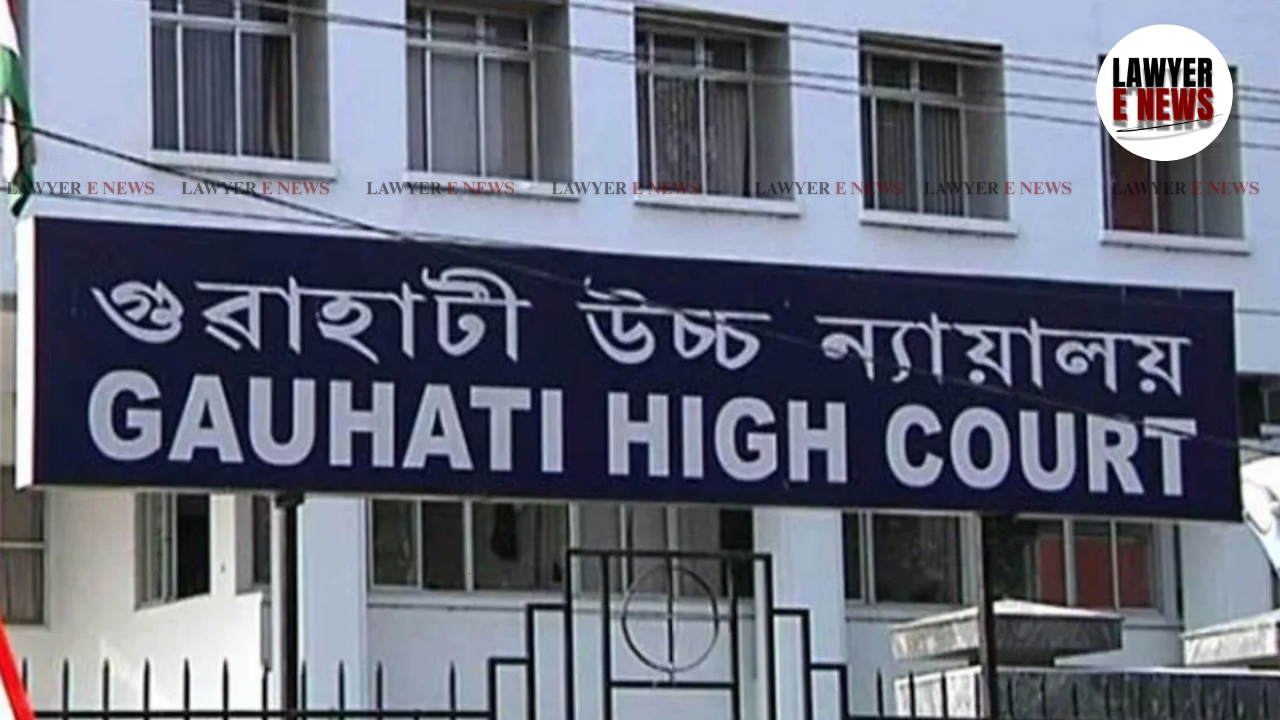
"PIL Is Not a Pill or Panacea for Curing All Wrongs", Gauhati High Court closed a decade-old suo motu PIL questioning whether the Nagaland Legislative Assembly had the constitutional power to enact its own petroleum and natural gas laws. A Division Bench of Justice Kalyan Rai Surana and Justice Manish Choudhury held that the dispute is exclusively between the Union of India and the State of Nagaland, and only the Supreme Court can decide it under Article 131(a) of the Constitution.
Background of the Case
The PIL originated in 2015 before the Kohima Bench of the Gauhati High Court. Local organisations challenged the Nagaland Petroleum and Natural Gas Regulations, 2012 and Rules, 2012, as well as a permit granted to Metropolitan Oil and Gas Private Limited for petroleum operations in the Wokha zone. When the original petitioners withdrew, the Court converted it into a suo motu PIL in 2019 and transferred it to the Principal Seat at Guwahati.
The root of the dispute lay in a resolution passed by the Nagaland Legislative Assembly on July 26, 2010. Relying on Article 371-A of the Constitution — a special provision protecting Naga customary rights — the Assembly declared that no Act of Parliament on ownership and transfer of land and its resources, including mineral oil, shall apply to Nagaland. The State then enacted its own petroleum regulations and invited companies to bid for exploration rights across eleven oil and gas zones.
The Union of India strongly objected, contending that regulation of oilfields and mineral oil is an exclusively Union subject under Entry 53 of List-I of the Seventh Schedule, and that Nagaland had no power to legislate on it.
The Core Constitutional Question
The central question before the Court was whether Article 371-A of the Constitution gives Nagaland affirmative legislative power over petroleum and natural gas, or whether it is merely a provision that prevents Union laws from automatically applying to the State.
The Amicus Curiae, Senior Advocate Mr. C.T. Jamir, argued that Parliament was fully aware of Entry 53 of List-I when it inserted Article 371-A through the Thirteenth Constitutional Amendment in 1962. Since no Act of Parliament applies to Nagaland on ownership of land and its resources without a State resolution, there cannot be an eternal legal vacuum. Impliedly, the State must have the power to legislate.
The State of Nagaland, through Advocate General Mr. K.N. Balgopal, placed reliance on opinions of the Solicitor General of India, the Ministry of Law and Justice, and constitutional experts including Mr. H.M. Seervai and Mr. F.S. Nariman — all of whom had opined that "land and its resources" under Article 371-A includes mineral oil, and that Nagaland has the power to frame its own laws on the subject.
The Union of India, through senior counsel for respondent no. 8, countered that Article 371-A is a purely disabling provision. It prevents Union laws from applying in Nagaland, but it does not and cannot hand legislative power over a Union subject to the State Legislature. Entry 53 of List-I is exclusive to Parliament, and no ministerial letter or parliamentary statement can alter that constitutional position.
Only the Supreme Court Can Decide This
The Court examined the submissions carefully and identified the real issue in unambiguous terms.
"The real issue of law involved in this case is whether the Nagaland State Legislative Assembly had the legislative competence and mandate under Article 371-A of the Constitution of India to enact the Nagaland Petroleum and Natural Gas Regulations, 2012, as the power to enact the said Act was reserved under the Union List under Entry 53 of Part-I to the Seventh Schedule."
The Court held that this is squarely a dispute between the Union of India and the State of Nagaland, falling exclusively within the original jurisdiction of the Supreme Court under Article 131(a) of the Constitution.
It rejected the argument that the presence of Metropolitan Oil and Gas Private Limited as a private party changed the jurisdictional position.
"In the considered opinion of the Court, no party other than the Union of India and the State of Nagaland would be the proper and necessary parties to a dispute of such nature. It would definitely not be open for respondent no. 7 to contest the said issue before any forum. Therefore, the Supreme Court of India alone would have the exclusive jurisdiction under Clause (a) of Article 131 of the Constitution to adjudicate the said issue."
The Court further noted that the tendering process and grant of permits to private companies are ancillary issues wholly dependent on whether the 2012 Regulations and Rules are constitutionally valid in the first place. Once the primary question of legislative competence is answered, the secondary questions resolve themselves.
PIL Not the Right Forum for Legislative Competence Disputes
On the question of maintainability, the Court applied the principles laid down by the Supreme Court in Guruvayoor Devaswom Managing Committee v. C.A. Rajan (2003) 7 SCC 546, which holds that PIL under Article 226 is a remedy for the poor, disadvantaged, and marginalised who cannot access courts on their own, or for raising human rights and environmental concerns.
The Court held that the issue of legislative competence does not involve the curtailment or deprivation of any fundamental right of any citizen. The Union of India — the party objecting to Nagaland's laws — is fully capable of approaching the appropriate forum on its own.
"The issue as to whether or not the Nagaland Legislative Assembly has any legislative power under Article 371-A of the Constitution of India, though an important question, is not the issue to be taken up by the Court as a Public Interest Litigation. The issue raised relates to legislative competence and does not involve curtailment and/or deprivation of any fundamental right of a citizen."
The Court closed the PIL in the exercise of judicial self-restraint, invoking the Supreme Court's own caution that "PIL is not a pill or panacea for curing all wrongs."
The Gauhati High Court closed the suo motu PIL without deciding the merits of any issue. Liberty was granted to the Union of India to challenge the Nagaland Petroleum and Natural Gas Regulations, 2012, the Rules, 2012, and the entire tender and Expression of Interest process before an appropriate forum.
The Court noted that the MoU between the State Government and Metropolitan Oil and Gas Private Limited appeared to have already lapsed by the time of the judgment.
The central constitutional question — whether Article 371-A is an enabling clause or merely a disabling provision — remains open and unanswered. Its eventual resolution by the Supreme Court will carry far-reaching consequences for the structure of asymmetric federalism in India, the rights of tribal communities over natural resources, and the Union's control over energy security.
Date of Decision: March 10, 2026





