
-
by sayum
26 August 2026 1:49 PM







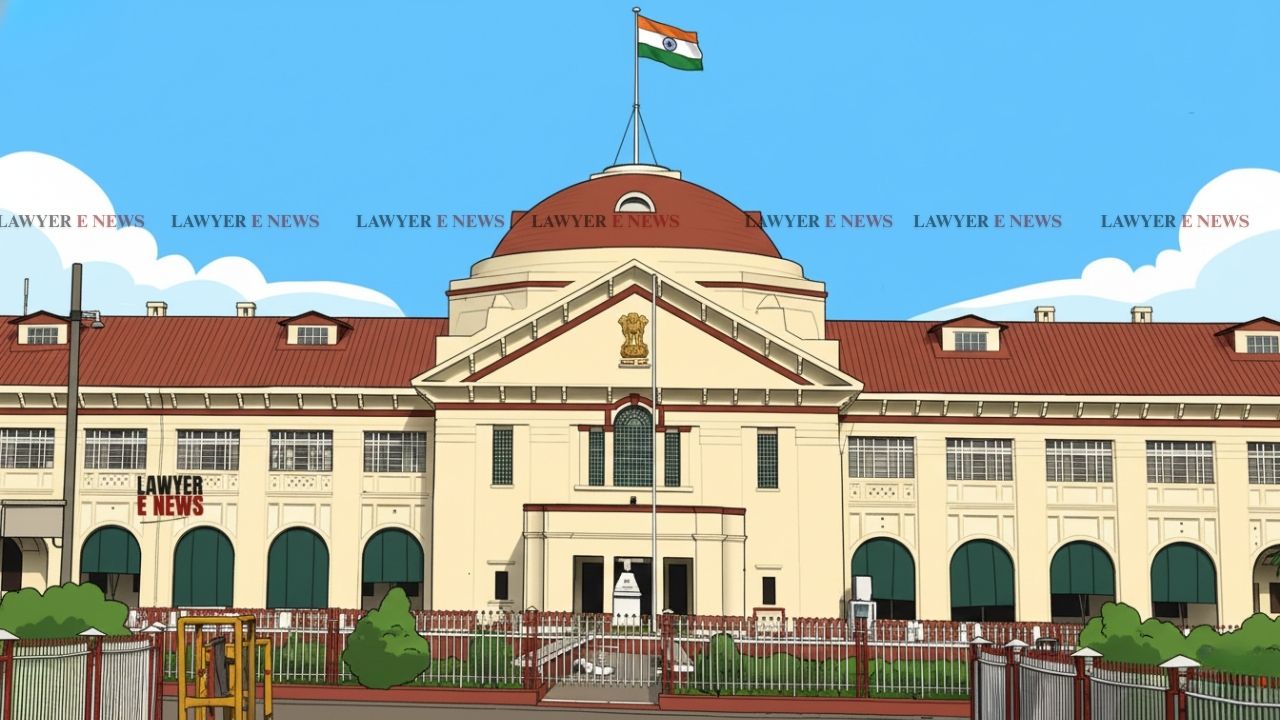
In a significant order Patna High Court has directed the Bihar government to submit a comprehensive report on vocational training, employment linkage, and financial support mechanisms for persons recovering from mental illness, emphasizing that mere constitution of statutory bodies under the Mental Healthcare Act, 2017 is insufficient without functional compliance and outcome-based implementation. The Court noted that only two half-way homes currently exist in the entire state — at Gayajee and Patna — severely restricting rehabilitation capacity.
Background of the Case
The Suo Motu Public Interest Litigation was initiated by a Bench comprising Chief Justice Sangam Kumar Sahoo and Justice Harish Kumar pursuant to an inspection report dated 17.02.2026 submitted by the Member Secretary, Bihar State Legal Services Authority (BSLSA). The report highlighted systemic deficiencies in mental healthcare infrastructure across Bihar, particularly at the Bihar State Institute of Mental Health and Allied Sciences (BIMHAS), Koelwar, Bhojpur. The Court clubbed this matter with an existing petition (C.W.J.C. No. 19702 of 2021) filed by Ms. Akanksha Malviya and placed the matter under continuous judicial monitoring.
Rehabilitation and Social Reintegration
The Court expressed serious concern over the absence of a structured rehabilitation policy. While acknowledging that the State had submitted details of patients being repatriated to their homes or transferred to half-way homes after treatment, the Bench observed that "it is not clear as to what sorts of vocational trainings are being imparted to them and what is the outcome of such training." The Court emphasized that vocational training alone is meaningless without employment linkage and financial independence mechanisms.
Observing that only two half-way homes exist in Bihar, the Court directed the State to submit a detailed report disclosing "the details of the vocational training imparted to the persons who were getting cured from the mental ailment and being lodged in such half-way homes and the finance and the work provided to them to make them self-sufficient and also for opening up such half-way homes in other parts of the State."
Constitutional and Statutory Mandate for Dignified Care
The Court noted that conditions such as environmental hazards, lack of infrastructure, absence of ICU facilities, inadequate staff, and insufficient rehabilitation mechanisms undermine both statutory and constitutional guarantees under Article 21. The Bench held that "functional efficiency must align with statutory mandate of dignified, rights-based care."
Police Duties Under Section 100
Addressing police obligations, the Court directed the Director General of Police to ensure continuous monitoring of compliance by SSPs/SPs across all districts. The Court ordered establishment of a 24×7 toll-free helpline with prominent public placement through print, electronic, and digital media to enable citizens to report wandering mentally ill persons. The Bench stated that "whosoever detects such a person who appears to be, prima facie, suffering from mental health issues and wandering on the streets can give information over such Toll Free Number to the Authority concerned which is to be made available 24x7 for providing emergency assistance and non-emergency support."
The Court emphasized that "proactive police engagement essential for protection, treatment and rehabilitation," directing that once information is received, the concerned Station House Officer must immediately take necessary steps in accordance with Section 100 of the Mental Healthcare Act, 2017.
Prison Obligations Under Section 103
The Inspector General of Prisons, who appeared virtually, was directed to file a detailed affidavit regarding steps taken for treatment and care of prisoners with mental illness. The Court specifically highlighted Rules 10 and 11 of the Mental Healthcare (Rights of Persons with Mental Illness) Rules, 2018, which prescribe standards and procedures for mental health services in prisons and transfer protocols for prisoners with mental illness.
Non-Functional Mental Health Review Boards
The Amicus Curiae's report, which the Court found highly valuable, pointed out that Mental Health Review Boards (MHRBs), though constituted in 2019, had met only once in three years instead of holding statutory periodic meetings every six months. This failure was characterized as a violation of patient rights, including review of involuntary admissions and grievance redressal. The Court held that this "violates patient rights including review of involuntary admissions and grievance redressal."
State Mental Health Authority — Form Over Substance
The Court noted that despite constitution of the State Mental Health Authority under Section 45 of the Act, there were significant gaps in independent regulatory functioning. The Amicus Curiae highlighted that the State had initially nominated only government "ex-officio" members instead of required non-official domain experts and civil society representatives, bypassing the strict statutory mandate.
Institutional Deficiencies at BIMHAS
While the State and Director of BIMHAS placed on record various facilities including free food, medicines, therapeutic environment, six operational departments (Psychiatry, Clinical Psychology, Psychiatric Social Work, Physiotherapy, Occupational Therapy, and Pathology), a rehabilitation unit, and a legal aid clinic, the Court found these insufficient. The Bench noted that "mere constitution of statutory bodies insufficient without functional compliance and outcome-based implementation."
The Amicus Curiae's comprehensive inspection report identified critical deficiencies including absence of an Intensive Care Unit, non-operational de-addiction centre despite complete construction, severe infrastructural issues like open manholes posing safety hazards, dampness and water seepage in wards, unavailability of a dedicated anaesthetist for ECT procedures, lack of adequate afforestation, and absence of community-based transition care mechanisms.
Environmental Hazards and Therapeutic Environment
The Court took serious note of the environmental disruption caused by an active sand mining site (Balu Ghat) located approximately 3.5 kilometers from BIMHAS. The Amicus Curiae reported that "continuous movement of heavy trucks, along with associated noise and dust pollution, adversely affects the surroundings of the institution" and compromises patient safety on the approach road used by 300-400 mentally ill patients daily.
Legal Aid and NALSA Scheme Compliance
The Court directed the Member Secretary, BSLSA to submit a detailed report on compliance with the NALSA (Legal Services to Persons with Mental Illness and Persons with Intellectual Disabilities) Scheme, 2024. The Amicus Curiae had specifically pointed out that although general legal aid services exist, the specialized "Mano Nyay Legal Services Clinic" mandated under the NALSA Scheme, 2024 had not been formally established, representing a significant implementation gap.
Community-Based Mental Healthcare
The Court emphasized the State's failure to develop an integrated inter-departmental rehabilitation framework involving health, education, and social welfare departments. The Bench noted the absence of supported accommodation, employment linkage, and community reintegration mechanisms, observing that "State must move beyond institutionalization towards community-based recovery model."
Highlighting the expansion of the District Mental Health Programme from 11 districts initially to 25 districts currently, and the establishment of three Tele-MANAS cells at IGIMS Patna, BIMHAS Koilwar, and JLNMCH Bhagalpur, the Court nonetheless stressed the need for decentralization and strengthening of grassroots systems.
Comprehensive Recommendations by Amicus Curiae
The Court directed all concerned authorities to examine the feasibility of 31 detailed recommendations submitted by the Amicus Curiae and file responses on implementation plans. These recommendations covered mandatory periodic MHRB meetings, capacity expansion of half-way homes, establishment of a second institute of eminence, diversion of heavy vehicle traffic from hospital approach road, establishment of ICUs, integration of digital psychiatric helplines, deployment of frontline workers for grassroots identification, establishment of psychiatric wings in prisons, urgent recruitment of specialized mental health professionals, enforcement of advance directive protocols, sensitization training for police officers, publication of SMHA annual reports, integration of psychiatric wards in district hospitals, statutory public awareness campaigns, vocational training for social reintegration, and dedicated public transport connectivity to BIMHAS.
Judicial Monitoring and Personal Presence
The Court ordered personal virtual presence of key officials on the next date — the Principal Secretary Health Department, Secretary State Mental Health Authority, Director BIMHAS, DG of Police, and IG of Prisons. The Bench directed filing of detailed affidavits on compliance with statutory obligations, rehabilitation measures, legal aid provision, police and prison obligations, and implementation of recommendations.
The Court also directed the Union of India through the Secretary, Ministry of Health and Family Welfare to file a response addressing all issues raised.
Conclusion
The Patna High Court's intervention represents a comprehensive judicial oversight mechanism to ensure that Bihar's mental healthcare system transitions from mere paper compliance to actual rights-based, dignified care. The Court's insistence on outcome-based implementation, particularly regarding rehabilitation and social reintegration, signals a shift from institutional custody to community-based recovery models. By keeping the matter under continuous judicial monitoring and requiring personal presence of top officials, the Bench has established an accountability framework that extends beyond statutory bodies to actual delivery of mental healthcare services on the ground. The matter has been listed for further monitoring on 20.04.2026.
Date of Decision: 16.03.2026





