
-
by sayum
26 August 2026 1:49 PM







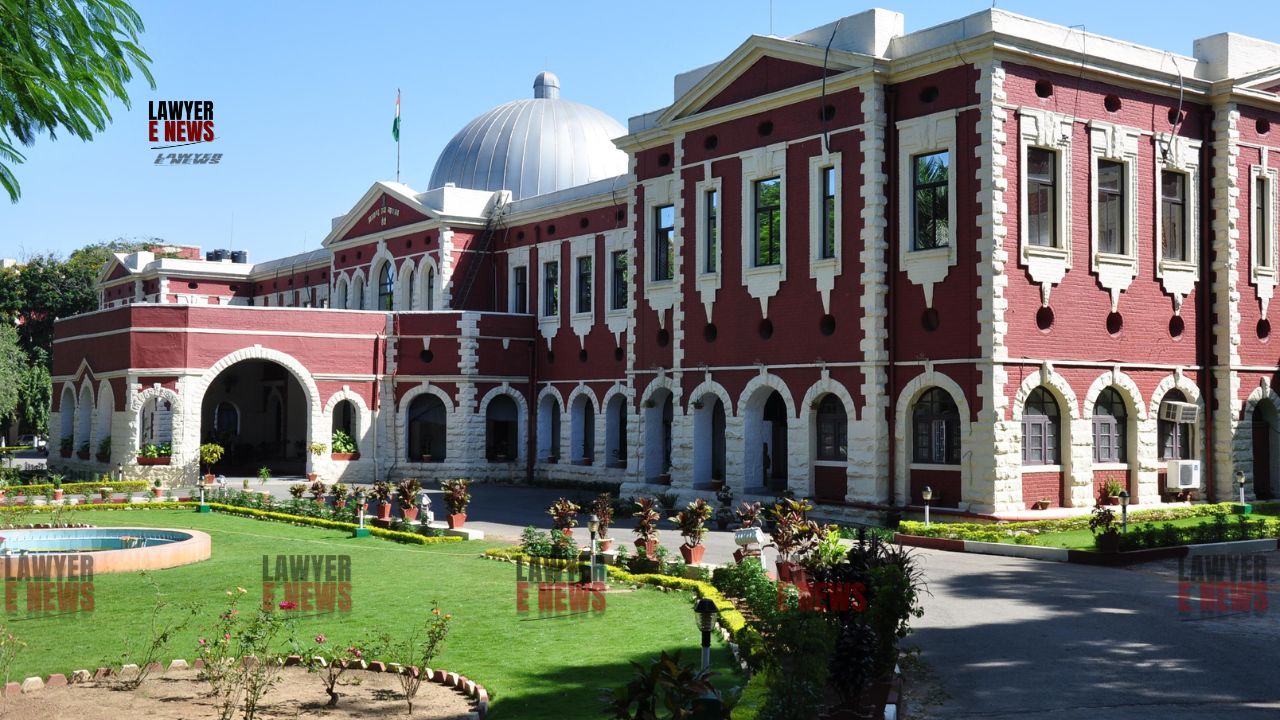
“Statutory Embargo Cannot Override Constitutional Liberty”, Jharkhand High Court in Baijnath Ganjhu v. Union of India through NIA (Criminal Appeal (DB) No. 152 of 2026) delivered a crucial ruling on the interplay between stringent bail restrictions under UAPA and the constitutional guarantee of personal liberty under Article 21.
The Court set aside the NIA Court’s order rejecting bail and directed release of the appellant, who had been in custody for over six years, holding that prolonged incarceration coupled with bleak prospects of trial violates the right to speedy trial, thereby softening the rigours of Section 43D(5) of the UAPA.
The prosecution case stemmed from a secret information received on 05 January 2020, alleging that the appellant along with co-accused had arrived to collect levy money for CPI (Maoist), a banned terrorist organisation.
Upon interception, the police recovered cash amounting to ₹5 lakhs, along with documents and a letter of demand allegedly issued by a Maoist commander. The appellant was described as a courier, messenger, and overground worker, involved in logistical support and fund collection for the organisation.
Following investigation by the NIA, a charge sheet was filed against six accused under multiple provisions of the UAPA and IPC, including Sections 17, 18, 20, 38, 39, 40 UAPA.
The appellant’s bail was rejected by the Special NIA Court, leading to the present appeal.
The primary issue before the Court was whether bail could be granted despite the statutory bar under Section 43D(5) UAPA, particularly in light of prolonged custody and delay in trial.
The NIA opposed bail, emphasizing the seriousness of allegations and recovery of incriminating materials, while also citing rejection of bail of a co-accused.
However, the Court drew a crucial distinction regarding the appellant’s role:
“The role… is that of a courier and messenger… providing logistical support.”
In contrast, the co-accused had been involved in direct extortion by putting contractors in fear of death, making the cases not comparable.
Rejecting the argument of parity, the Court clarified that: “Para 17.50.3 entails a larger role… which distinguishes the case of the present appellant.”
The High Court placed decisive reliance on the constitutional principles laid down in Union of India v. K.A. Najib (2021), emphasizing that statutory restrictions cannot eclipse fundamental rights.
Quoting the Supreme Court, the Court observed: “The presence of statutory restrictions like Section 43-D(5)… does not oust the ability of constitutional courts to grant bail…”
The Court further highlighted a critical doctrinal position: “The rigors of such provisions will melt down where there is no likelihood of trial being completed within a reasonable time.”
Applying this principle, the Court noted that:
The appellant had been in custody since 05.01.2020, and out of 160 witnesses, only five had been examined, making early conclusion of trial highly unlikely.
In a significant clarification of the legal standard, the Court observed:
“Section 43-D(5) of the UAPA is comparatively less stringent than Section 37 of the NDPS Act…”
This observation underscores that UAPA does not impose the rigid twin conditions of prima facie innocence, thereby allowing greater judicial discretion in appropriate cases.
The Court concluded that continued incarceration would amount to a constitutional violation, especially when:
“The chances of the trial being concluded in the near future [are] bleak.”
“Long Incarceration Cannot Become Punishment Before Conviction”: Bail Granted Despite Serious Allegations
Balancing the gravity of allegations with constitutional safeguards, the Court held that continued detention would defeat the very essence of fair trial rights.
It recognized that at the initial stage, bail may justifiably be denied in serious offences, but prolonged delay changes the legal landscape:
“Had it been a case at the threshold, we would have outrightly turned down the respondent’s prayer.”
Yet, after years of incarceration:
“The High Court appears to have been left with no other option except to grant bail.”
Accordingly, the Court allowed the appeal and directed that the appellant be released on bail upon furnishing bond of ₹10,000 with two sureties, with a strict condition of mandatory appearance before the trial court on every date.
The Jharkhand High Court’s judgment is a powerful reaffirmation that anti-terror laws, however stringent, cannot override constitutional guarantees. It reinforces that liberty cannot be sacrificed at the altar of delay, and that Section 43D(5) UAPA is not an absolute bar where Article 21 is at stake.
By granting bail after six years of incarceration, the Court struck a delicate balance between national security concerns and individual liberty, ensuring that pre-trial detention does not become punitive in nature.
Date of Decision: 18/03/2026





