-
by sayum
27 August 2026 3:32 PM







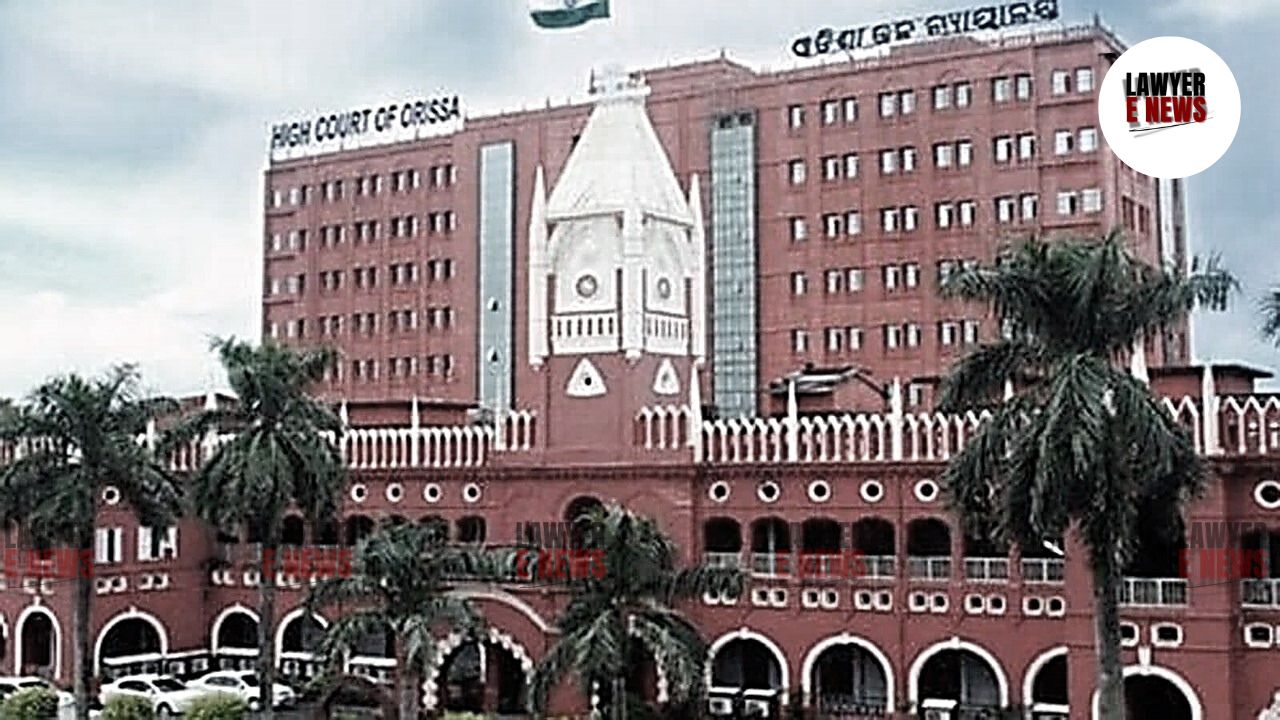
"When charge sheet has been submitted in this case, it is hardly material whether there is delay in lodging of FIR or not," Orissa High Court, in a significant ruling dated May 15, 2026, held that a delay in lodging a First Information Report (FIR) is of no consequence in motor accident claim cases once a police investigation has culminated in a charge sheet.
A single-judge bench of Justice G. Satapathy observed that the law does not mandate the examination of eyewitnesses to prove injuries, provided the claimant establishes that the injuries arose from the use of a motor vehicle.
The case originated from an accident on July 21, 2019, where the claimant, a 20-year-old BBA student, sustained grievous injuries after a Mahindra Bolero dashed against the motorcycle he was riding as a pillion passenger. The Motor Accident Claims Tribunal (MACT), Cuttack, had awarded a compensation of Rs. 16,71,800/-, which was challenged by the insurer on grounds of liability and by the claimant seeking enhancement. The High Court was ultimately tasked with reconciling the quantum of compensation and the validity of the insurer's objections.
The primary question before the court was whether a two-day delay in lodging the FIR and the non-examination of eyewitnesses rendered the claim fictitious or unsustainable. The court was also called upon to determine whether compensation for "loss of future earning capacity" can be granted in the absence of permanent disability.
Submission Of Charge Sheet Cures Delay In Lodging FIR
The court addressed the insurer's plea that the claim was fictitious due to a two-day delay in reporting the matter to the police. Justice Satapathy noted that while the insurer raised the issue of delay, the fact that a charge sheet had already been submitted following a police investigation made the timing of the FIR irrelevant.
The bench emphasized that in motor accident claims, the technicalities of criminal law reporting do not override the substantive evidence of an accident occurring. Since the investigation by the authorities resulted in a formal accusation through a charge sheet, the initial delay lost its significance in the eyes of the law.
Examination Of Eyewitnesses Not Mandatory To Prove Injuries
Regarding the insurer’s challenge against the non-examination of eyewitnesses, the court clarified that there is no absolute rule requiring such testimony to prove a claimant's injuries. The court observed that the law only requires proof that a person suffered injuries arising out of the use of a motor vehicle, provided other statutory conditions are fulfilled.
The bench further noted that the insurer failed to lead any evidence to prove that the accident did not occur or that the claim advanced was fictitious. In the absence of such rebuttal evidence, the court held that the claimant's version, supported by police papers and medical records, was sufficient to establish the claim.
Loss Of Future Earning Capacity Requires Proof Of Permanent Disability
A crucial legal point addressed by the court was the distinction between temporary and permanent disability. The claimant sought compensation for loss of earning, but the court noted that the disability suffered was not permanent in nature. Relying on the landmark Supreme Court precedent in Raj Kumar v. Ajay Kumar (2011), the court reiterated the established legal doctrine.
The bench observed that if a Tribunal concludes there is no permanent disability, there is no question of proceeding further to determine the loss of future earning capacity. Consequently, the court upheld the Tribunal's decision not to grant compensation under this specific head, as the claimant's injuries, while serious, did not result in a permanent loss of earning potential.
Court Recalculates Compensation For Medical Expenses And Diet
The court found the Tribunal’s grant of a lump sum of Rs. 9,00,000/- for medical expenses to be "erroneous" as it lacked proper justification for the additional amount beyond actual pharmacy bills. The High Court meticulously recalculated the entitlements, noting that the claimant was treated as an indoor patient for 53 days.
The court enhanced the amounts for special diet and conveyance, noting that the original awards were on the lower side. Justice Satapathy directed that the claimant be entitled to Rs. 750/- per day for special diet and Rs. 10,000/- for conveyance, totaling Rs. 39,750/-, while also granting attendant charges at the rate of Rs. 600/- per day for the period of hospitalization.
Grant Of Compensation For Pain, Suffering, And Future Medical Treatment
The High Court affirmed the Tribunal's grant of Rs. 5,00,000/- for pain and suffering and Rs. 2,00,000/- for future medical treatment. The bench noted the severity of the injuries, which included crushed injuries of the right lower limb, multiple fractures, and a compound open fracture of the patella.
The court observed that the medical procedures involved would "definitely require future treatment," justifying the substantial award under these heads. Furthermore, Rs. 1,00,000/- was granted for loss of amenities, considering the nature of the injuries and the claimant's future sufferance.
In the final result, the High Court modified the compensation to a total of Rs. 14,70,921/-. The court set aside the penal interest of 12% per annum imposed by the Tribunal, maintaining a simple interest rate of 7% per annum from the date of the claim application. The insurer was directed to deposit the modified amount within eight weeks.
Date of Decision: 15 May 2026