-
by sayum
27 August 2026 3:32 PM







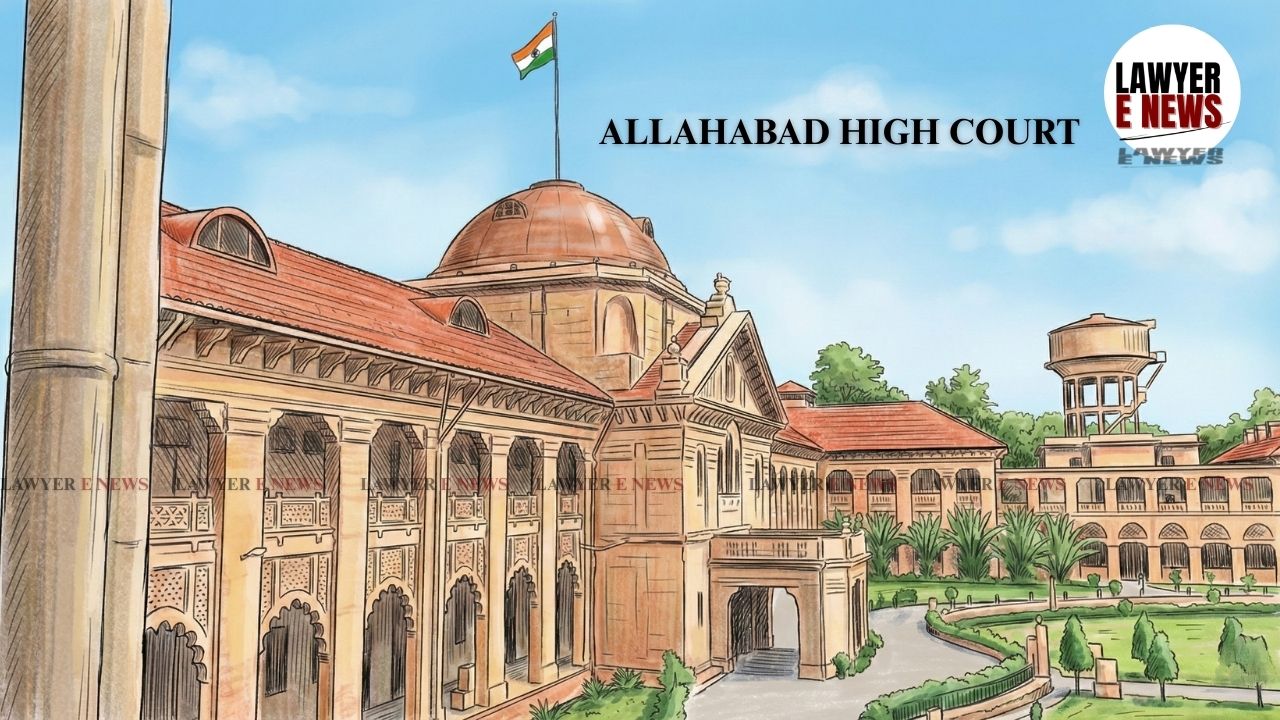
"Order of framing of charges is an interlocutory order, in which the conclusion is inescapable and the same does not terminate the proceedings or finally decides the rights of the parties," Allahabad High Court, in a significant ruling, has held that an order framing charges against an accused under the Scheduled Castes and Scheduled Tribes (Prevention of Atrocities) Act, 1989, is an "interlocutory order" and therefore not appealable under Section 14-A of the Act.
A Single Bench of Justice Madan Pal Singh observed that since the framing of charge does not terminate the proceedings but rather signals the commencement of the trial, it cannot be classified as a final or intermediate order subject to appellate jurisdiction.
The court was dealing with a criminal appeal filed by Rajan Chaurasia and others, who sought to quash an order dated September 15, 2025, passed by the Special Judge (S.C./S.T. Act), Deoria. Through the impugned order, charges had been framed against the appellants under Sections 427, 504, 506 of the IPC and relevant sections of the SC/ST Act. The State and the complainant raised a preliminary objection, arguing that the appeal was barred under Section 14-A(1) of the Act as it was directed against an interlocutory order.
The primary questions before the court were whether the order of framing charge constitutes an interlocutory order and whether an appeal under Section 14-A of the SC/ST Act is maintainable against such an order. The court was required to determine the nature of the trial process and the specific statutory bar created by the 1989 Act.
Distinction Between Inquiry And Trial Stages
The Court referred to the settled legal position that the trial in a warrant case starts only with the framing of charge, prior to which the proceedings are merely an inquiry. Citing the Apex Court’s decision in Ratilal Bhanji Mithani Vs. State of Maharashtra (1979), the Bench noted that once a charge is framed, the Magistrate or Special Judge has no power to cancel the charge or discharge the accused; the court must proceed to a logical end of acquittal or conviction.
"Once a charge is framed in a warrant case, the Magistrate has no power under the Code to discharge the accused, and thereafter, he can either acquit or convict the accused... the said issue is no longer res-integra."
Defining Interlocutory Orders In Criminal Jurisprudence
To define the scope of "interlocutory orders," the Court relied on the landmark judgment in Amar Nath VS. State of Haryana (1977). It noted that the term denotes orders of a purely interim or temporary nature which do not decide or touch upon the substantial rights or liabilities of the parties. The Bench reasoned that an order framing charge is one made during the progress of an action which does not finally dispose of the case.
Court Explains Why Framing Of Charge Does Not Terminate Proceedings
The High Court observed that an interlocutory order is one which only decides a particular aspect or matter in a proceeding but does not conclude the trial. Justice Madan Pal Singh emphasized that after an accused is charged, they are called upon to answer the allegations, and the trial remains "alive." Therefore, the order cannot be termed as a final order as it keeps the litigation pending for a determination on merits.
"If the Special Court refused to discharge the accused and framed charges against him, then the order would be interlocutory because the trial would still be alive."
Mandatory Bar Under Section 14-A Of SC/ST Act
The Court perused Section 14-A (1) of the SC/ST Act, which begins with a non-obstante clause but explicitly excludes "interlocutory orders" from the ambit of appealable orders. The Bench held that the legislative intent was clear: while an appeal lies on both facts and law against judgments or sentences, the statute specifically prohibits appeals against orders that are interlocutory in nature to ensure the speedy trial of atrocities cases.
Judicial Precedents On Maintainability Of Appeals
The Bench further anchored its reasoning on V.C. Shukla Vs. State through C.B.I. (1980), where the Supreme Court held that an order framing charge is purely interlocutory. The High Court also noted a recent decision by the Himachal Pradesh High Court in Lagnesh Verma Vs. State of H.P. (2026), which opined that the remedy for an aggrieved party against framing of charge lies in revisional or inherent jurisdiction, rather than a statutory appeal under the special Act.
"The order of framing of charge is an interlocutory order... and against an interlocutory order, the criminal appeal under Section 14-A (1) of S.C./S.T. Act shall not lie."
Concluding the analysis, the High Court maintained that even if it were assumed for the sake of argument that such an order could be challenged, the trial court loses the power to reverse its own decision once charges are framed. Since the impugned order does not terminate the proceedings, the preliminary objection raised by the State was upheld. The Court dismissed the appeal as not maintainable, while granting the appellants liberty to avail other legal remedies available under the law.
Date of Decision: May 14, 2026