-
by sayum
26 August 2026 12:18 PM







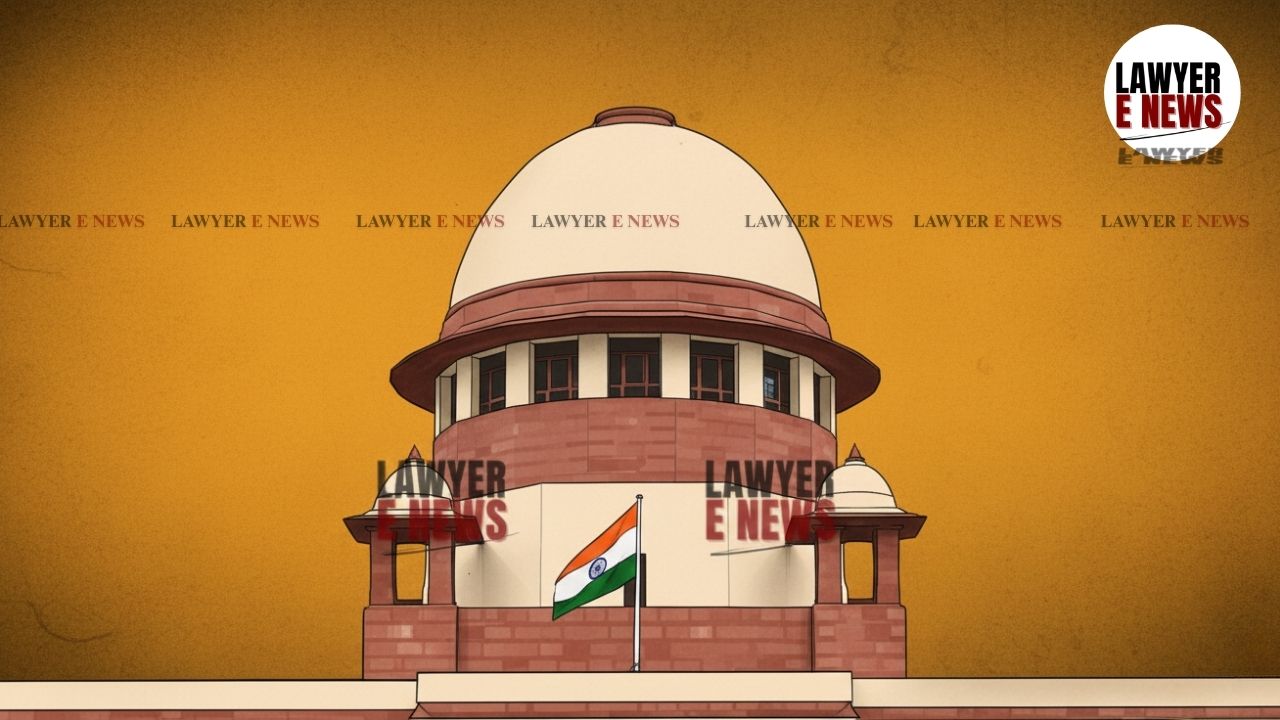
"Though termination was illegal, the unexplained delay of 16 years in raising an industrial dispute cannot be brushed aside” – Supreme Court in State of Uttar Pradesh vs. Krishna Murari Sharma delivered a crucial judgment on the limits of relief in industrial adjudication, holding that while the termination of the workman was illegal, the gross delay of over 16 years in raising the dispute disentitled him from reinstatement or full back wages. Instead, the Court awarded a lump-sum compensation of ₹2,50,000, noting that justice must be tempered with practical realities and fairness to both parties.
The appeal arose from a Labour Court award upheld by the High Court, which had ordered the reinstatement of the respondent-workman with back wages from 31 May 2006 to 1 April 2015, even though the termination dated back to October 1990 and the industrial dispute was raised only in 2006. The State of Uttar Pradesh challenged only the grant of back wages before the Supreme Court.
Justice Ahsanuddin Amanullah, writing for the Bench also comprising Justice K. Vinod Chandran, observed, “We are of the opinion that a lump-sum compensation of ₹2,50,000 would suffice, considering the fact that there was a 16-year delay in seeking reference.”
“Failure to Challenge Reference under Article 226 Does Not Preclude Employer from Raising Delay Before Labour Court”
The respondent's counsel had argued that the employer had not challenged the reference under Section 10 of the Industrial Disputes Act before the High Court, and thus could not later argue delay. The Court rejected this contention, making a clear distinction between the validity of the reference and the consequences of delay in adjudication.
“Mere failure or a conscious decision not to challenge the reference under Article 226 of the Constitution cannot bar the employer from raising the issue of delay before the Labour Court itself,” the Court said, holding that procedural restraint does not amount to waiver of substantive rights.
Referring to its earlier judgment in National Engineering Industries Ltd. v. State of Rajasthan, the Court held that while High Courts under Article 226 can quash stale references, Labour Courts are not powerless to consider the impact of delay when granting relief, even if the reference itself remains unchallenged.
“Labour Court Must Mould Relief When Delay Is Unexplained and Inordinate”
The Supreme Court reiterated the principle that delay in raising an industrial dispute does not automatically bar adjudication, but is a relevant factor in shaping the relief. Referring to precedents like Ajaib Singh v. Sirhind Cooperative Society and Mohan Lal, the Court noted that compensation may be more appropriate than reinstatement or full back wages in stale claims.
“There is no hard and fast rule that delay defeats the claim itself,” the Court observed, “but when the delay is gross and unexplained—as in this case where the dispute was raised after 16 years—the Labour Court must consider the equity of relief granted.”
The Court noted that Krishna Murari Sharma had not made any effort to raise the dispute or seek reinstatement until more than a decade and a half after termination. “There was no application, no letter, no claim. Silence for sixteen years cannot be rewarded with full back wages at the cost of public exchequer.”
“Finding of Illegal Termination Stands, But Equity Demands Measured Relief”
While upholding the Labour Court’s finding that the termination was illegal, the Supreme Court set aside the direction for reinstatement and full back wages, instead granting a lump-sum compensation of ₹2,50,000, to be paid within two months of receiving the certified copy of the order. Failing timely payment, the State would be liable to pay interest at 7% per annum.
The Court clarified, “This is not a case where the delay was raised for the first time before us. The State had already pleaded this ground before the Labour Court itself. The High Court ignored this relevant consideration.”
Legality of Termination Does Not Guarantee Restoration, Especially When Delay Defeats Equity
In crafting a balanced remedy, the Supreme Court reaffirmed a vital principle in service jurisprudence—that illegality of dismissal does not automatically translate to reinstatement or full back wages, especially when extraordinary delay goes unexplained.
“Justice must serve fairness to both employer and employee. When the past is buried for 16 years, the future cannot be resurrected entirely at the employer’s cost,” the Court concluded.
Date of Decision: 17 December 2025