Retrospective Withdrawal Of Tax Exemption Valid But No Penalty Or Interest For Past Period: Supreme Court Inclusion Of Royalty, DMF & NMET In 'Sale Value' To Compute Mining Dues Is Not Arbitrary Or Ultra Vires: Supreme Court Retracted Confession Cannot Form Foundation Of Conviction Without Strong Independent Corroboration: Supreme Court "Denial Of Legal Representation Strikes At The Root Of Fair Trial": Supreme Court Quashes Death Penalty In 1996 Samleti Blast Case, Orders De-Novo Trial Meaningful Pre-Prosecution Opportunity Notice Under FERA Is Mandatory, Cannot Be Mere Notional Compliance: Supreme Court Keeping Accused In 'Suspended Animation' Indefinitely Violates Article 21: Supreme Court Quashes 23-Year-Old FERA Complaint Over Inordinate Delay Interlocking Settlement Clauses Must Be Read Harmoniously; General Obligation To Maintain Child Cannot Rewrite Consent Decree: Supreme Court General Obligation To Maintain Cannot Be Invoked In Execution To Rewrite Concluded Settlement Terms: Supreme Court Wrong Statement" Not Always A "False Statement": Supreme Court Quashes Perjury Prosecution Over Typographical Errors In Pleadings High Court Cannot Improve Lower Court's Defective Section 340 CrPC Order In Appeal Filed By Aggrieved Party: Supreme Court Supreme Court Slams MHA's 'Apathetic Pen-Pushing' And Misinterpretation Of UPSC Advice, Grants Relief To Retired CRPF Officer Tenant Cannot Dictate Landlord's Choice Of Premises, Subjective Choice Over Alternative Accommodations Must Be Respected: Supreme Court "One Man's Trash Is Another Man's Treasure": Supreme Court Says Landlord's Choice Of Accommodation Must Be Respected, Revisional Court Can't Reappreciate Evidence Non-Recovery Of Dead Body Not Fatal To Murder Conviction If Other Evidence Proves Guilt: Supreme Court Courts Cannot Import Limitation Period Into Special Statute If Legislature Has Refrained From Prescribing One: Calcutta High Court Drawing NDPS Samples At Spot Instead Of Before Magistrate Merely A Procedural Irregularity, Does Not Vitiate Trial: Supreme Court Expert Opinion Not Sole Consideration, JJ Board Must Independently Assess All Material During Section 15 Preliminary Assessment: Supreme Court Offence Under Section 302 IPC Is A 'Heinous Offence' Under JJ Act; Life Imprisonment Implied As Minimum Punishment: Supreme Court No Demolition Of Accused's Property For Two Years Following FIR To Check 'Retributive' Action: Allahabad High Court Admission Of 'Making' A Will Not An Admission Of Its 'Genuineness': Delhi High Court Refuses Partition Decree Based On Counsel's Statement Direct Section 156(3) CrPC Application Before Exhausting Police Remedies A 'Procedural Irregularity', Not Illegal: Bombay High Court Ex-Parte Decree Obtained By Suppressing Vital Facts Is Nullity; Executing Court Can Examine Fraud Under Section 47 CPC: Andhra Pradesh High Court Revenue Authorities Cannot Cancel Long-Running Jamabandi, Only Competent Civil Court Can Decide: Jharkhand High Court Agency Terminates On Principal's Death; Power Of Attorney Holder Cannot Execute Gift Deed Without Explicit Authority: Gujarat High Court Cheque Issued As Security Towards Loan Repayment Attracts Section 138 NI Act If Debt Exists On Presentation Date: Himachal Pradesh High Court NDPS Act | Prosecution Cannot Rely Solely On Co-Accused's Statement When No Contraband Recovered From Accused: Calcutta High Court Quashes Criminal Proceedings Trial Courts Obligated To Consider Applications For Service Of Summons Via Email If High Court Circulars Are Complied With: Karnataka High Court Photographs Showing Wife Wearing Jewellery 'Cut The Root' Of Her Claim That Husband Misappropriated Gold: Kerala High Court Section 138 NI Act: Blank Cheques Obtained Under Coercion Do Not Constitute Legally Enforceable Debt: Madras High Court Cannot Presume Future Publications Will Be Defamatory: Delhi High Court Vacates Gag Order Against 'The Wire' In Former Chief Secretary's Suit Wife Cannot Claim 'Victim Card' For Cruelty Over Character Aspersions When Unchallenged Findings Show Her In Adulterous Act: MP High Court Agent Personally Liable On Cheques If Undisclosed Principal Cannot Be Sued; Plea Of Police Coercion Needs Proof: Kerala High Court Section 217 CrPC Not A Mere Formality; Trial Court Must Judicially Decide Plea To Recall Witnesses Upon Alteration Of Charges: Madras High Court First Appellate Court Must Address Suspicious Circumstances Surrounding Execution Of Will; Adverse Inference To Be Drawn If Propounder Fails To Testify: Himachal Pradesh High Court Passing Contrary Orders On Identical Land Acquisition Cases Violates Public Policy, Equal Treatment: Madhya Pradesh High Court Municipal Authorities Cannot Adjudicate Title Disputes While Granting Building Permissions: Telangana High Court Statutory Insurance Companies Can’t Be Treated As Illiterate Litigants; Procedural Red Tape No Ground To Condone Delay: Orissa High Court Section 22 Hindu Succession Act Applies To Agricultural Land; Right Of Pre-Emption Is An Incident Of Succession: Supreme Court Proceedings Under Senior Citizens Act Extinguish On Death Of Applicant, Civil Remedies Apply For Property Disputes: Punjab & Haryana High Court Being A Woman Not A Ground For Bail In Heinous Crimes Against Minors: Gujarat High Court Rejects Bail In Flesh Trade Case Woman Not Entitled To Maintenance Under Section 125 CrPC If First Marriage Subsists; Illegitimate Child Entitled: Allahabad High Court Contract Workers Performing Same Duties As Regular Staff Entitled To Minimum Regular Pay Scale Under CLRA Rules: Bombay High Court Power Of Review Is To Correct Mistakes, Not Substitute Views Or Act As 'Appeal In Disguise': Kerala High Court Futile Exercise Of Jurisdiction To Proceed With Contempt For Violating Ex-Parte Order Once It Is Vacated On Merits: Karnataka High Court Threat To Force Wife Into Prostitution Strikes At Core Of Human Dignity: Gujarat HC Denies Anticipatory Bail In Abetment To Suicide Case Injured Victim's Testimony Carries Built-In Guarantee Of Truthfulness, Requires No Corroboration For Conviction: Allahabad High Court Section 138 NI Act Offence Can Be Compounded At Revision Stage Under Section 147 Read With Section 320 CrPC: Punjab & Haryana High Court Suit For Declaration Involves All Co-Owners; Limitation Plea Cannot Be Decided At Interlocutory Stage Of Impleadment: Telangana High Court Mother Claiming Financial Capacity To Get Child Custody Cannot Fasten Entire Financial Burden On Father: Allahabad High Court Invalidity Of One Ground Does Not Vitiate Entire Detention Order Under PIT NDPS Act If Other Grounds Are Sustained: Andhra Pradesh High Court Silence Until Pregnancy Detection & Lack Of DNA Evidence Casts Doubt On Prosecution Case: Calcutta High Court Acquits Father In POCSO Case Mere Proof Of Proper Dispatch Sufficient: Bombay High Court Says Trade Marks Registrar Need Not Prove Actual Delivery Of Renewal Notice Casteist Remarks Inside Private Office Without Independent Witnesses Do Not Attract SC/ST Act: Delhi High Court Private Property Transfer Not Void Under Section 64 CPC If Made Before 'Effective' Execution Of Attachment Warrant: Karnataka High Court Statement Under Section 164 CrPC Is Not Substantive Evidence, Cannot Be Sole Basis For Conviction When Victim Turns Hostile: Madras High Court Second Wife Not Entitled To Family Pension, But Children From Void Marriage Can Claim Share: Kerala High Court Legal Representatives Cannot Withdraw Admissions Made By Deceased Defendant By Filing Fresh Written Statement: Madhya Pradesh High Court Police Can Search & Seize Suspected Proceeds Of Crime Even Without Warrant Under Section 185 BNSS: Orissa High Court Mere Photographs With Co-Accused Don't Establish Intent To Commit Terrorist Act: Punjab & Haryana High Court Grants Bail Under UAPA Transfer Is An Ordinary Incident Of Service, No Employee Has A Vested Right To A Specific Posting: Punjab & Haryana High Court Accused Cannot Seek Quashing Of Case Under Section 528 BNSS While Suppressing Pending Non-Bailable Warrants: Telangana High Court

Woman Not Entitled To Maintenance Under Section 125 CrPC If First Marriage Subsists; Illegitimate Child Entitled: Allahabad High Court

22 July 2026 2:14 PM

By: sayum


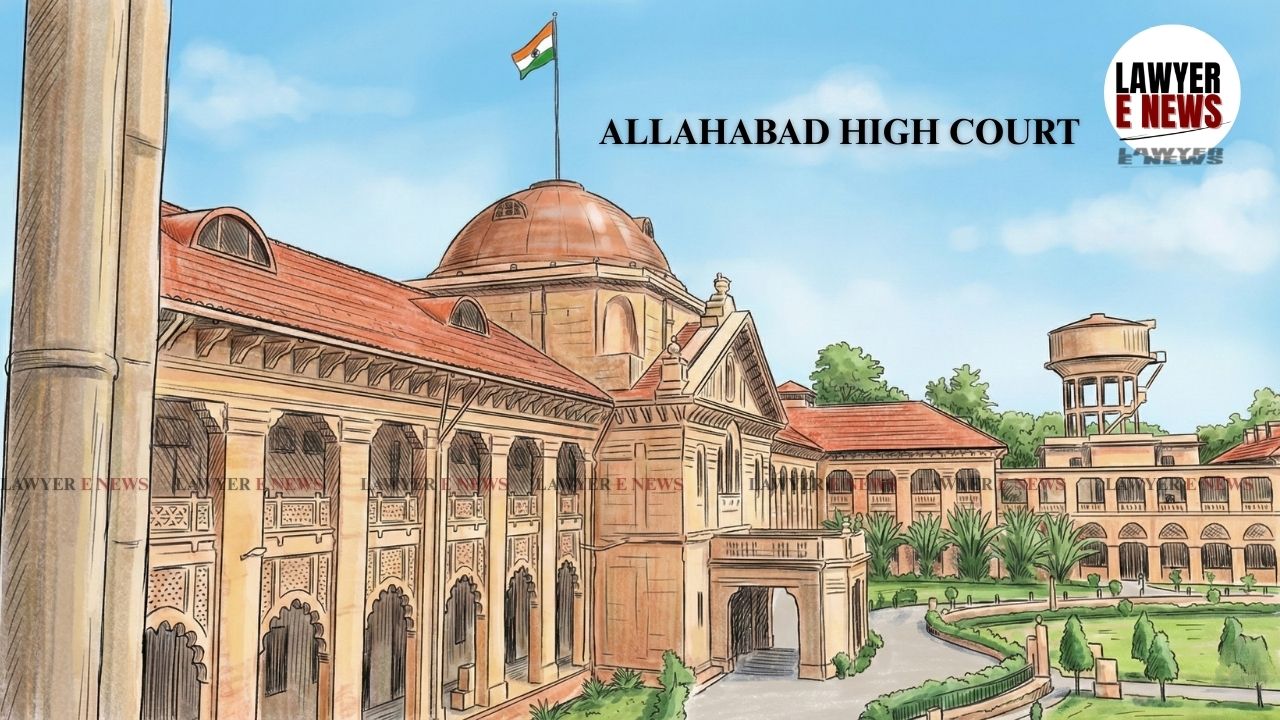
"It is the moral duty of father to maintain his children who are unable to maintain themselves, whether the children are legitimate or illegitimate, whether married or not, as provided u/s 125(1)(b) Cr.P.C." Allahabad High Court, in a significant ruling, held that a woman who enters into a second marriage while her first marriage is still subsisting does not qualify as a "legally wedded wife" and is therefore ineligible for maintenance under Section 125 of the Code of Criminal Procedure (CrPC).

A single-judge bench of Justice Achal Sachdev observed that while such a woman may be denied maintenance, the biological father remains legally and morally obligated to maintain his minor children, regardless of their legitimacy.

The matter arose from a criminal revision filed by one Santosh Kumar against an order passed by the Family Court, Chitrakoot, which had awarded maintenance of Rs. 2,000 per month to his alleged second wife (Applicant No. 1) and Rs. 1,000 to their minor daughter (Applicant No. 2). The revisionist contended that the woman was already married to another individual and had not obtained a legal divorce at the time she began residing with him, thereby making their union legally invalid.

The primary questions before the court were whether a woman who enters into a relationship without dissolving her prior marriage qualifies as a "wife" under the ambit of Section 125 CrPC. Furthermore, the court was called upon to determine if a father can be absolved of his responsibility to maintain a child born out of such a relationship if the marriage itself is found to be non-existent in the eyes of the law.

Subsistence Of Previous Marriage Negates Status As 'Legally Wedded Wife'

The court meticulously examined the evidence and noted that the applicant woman had admitted during cross-examination that she was previously married to one Sharda Prasad and had two children from that marriage. Crucially, she admitted that she had not obtained a divorce from her first husband before she started residing with the revisionist. The court found that her first husband was alive at the time she claimed to have married the revisionist through a notarized compromise and Hindu rituals.

"From the perusal of evidence on record, it is clear that the applicant no. 1 does not qualify the term 'legally wedded wife' of opposite party, and the trial court has erred in passing the maintenance order in favor of applicant no. 1."

Proof Of Marriage Rituals Essential For Maintenance Claims

The bench highlighted that the trial court had already given a finding that the woman was unable to prove her marriage to the revisionist according to Hindu rites and rituals. Since the essential ceremonies were not established and the prior marriage subsisted, the court held that the legal requirements for a valid marriage under the Hindu Marriage Act were not met, thereby stripping her of the right to claim maintenance as a spouse.

Adultery And Mutual Consent Bars Under Section 125(4) CrPC

The Court reproduced Section 125(4) CrPC to emphasize the conditions under which a wife is barred from receiving maintenance. The provision stipulates that no wife shall be entitled to an allowance if she is living in adultery, or if she refuses to live with her husband without sufficient reason, or if they are living separately by mutual consent. The court applied the logic that a "wife" in the context of this section must necessarily mean a legally wedded wife.

"The trial court has also given finding to the effect that the applicant no. 1 was unable to prove that she was married to opposite party as per Hindu rites and rituals, and it also observed that her husband Sharda was alive when she started residing with Santosh."

DNA Report Establishes Paternity And Liability For Child Maintenance

Moving to the issue of the minor daughter’s maintenance, the court noted that the trial court had relied on a DNA report (Paper 54 Kha) which confirmed that the revisionist and the applicant woman were the biological parents of the child. The court emphasized that the biological father cannot escape his financial responsibility toward his children based on the legality of the parental relationship.

Father's Moral And Legal Duty To Maintain Illegitimate Children

The Court held that Section 125(1)(b) CrPC explicitly provides for the maintenance of children, whether they are legitimate or illegitimate. The bench remarked that it is the moral duty of a father to maintain his children who are unable to maintain themselves. Consequently, the finding of the trial court regarding the maintenance of the minor daughter was deemed "very well reasoned and justified," requiring no interference.

"The trial court has placed reliance on the DNA report... from which it is clear that opposite party is father of applicant no. 2 and is responsible for providing maintenance to her."

The High Court concluded that while the maintenance awarded to the woman must be set aside due to the lack of a valid marriage, the maintenance for the minor daughter must be sustained. The court observed that the trial court had rightly concluded that the revisionist is the father and is legally bound to support the child until she attains majority.

The criminal revision was accordingly partly allowed. The order of the Family Court was set aside only insofar as it pertained to the maintenance of the woman, while the order in favor of the minor daughter was upheld.

Date of Decision: July 10, 2026

 

Latest Legal News