-
by sayum
29 August 2026 9:28 AM







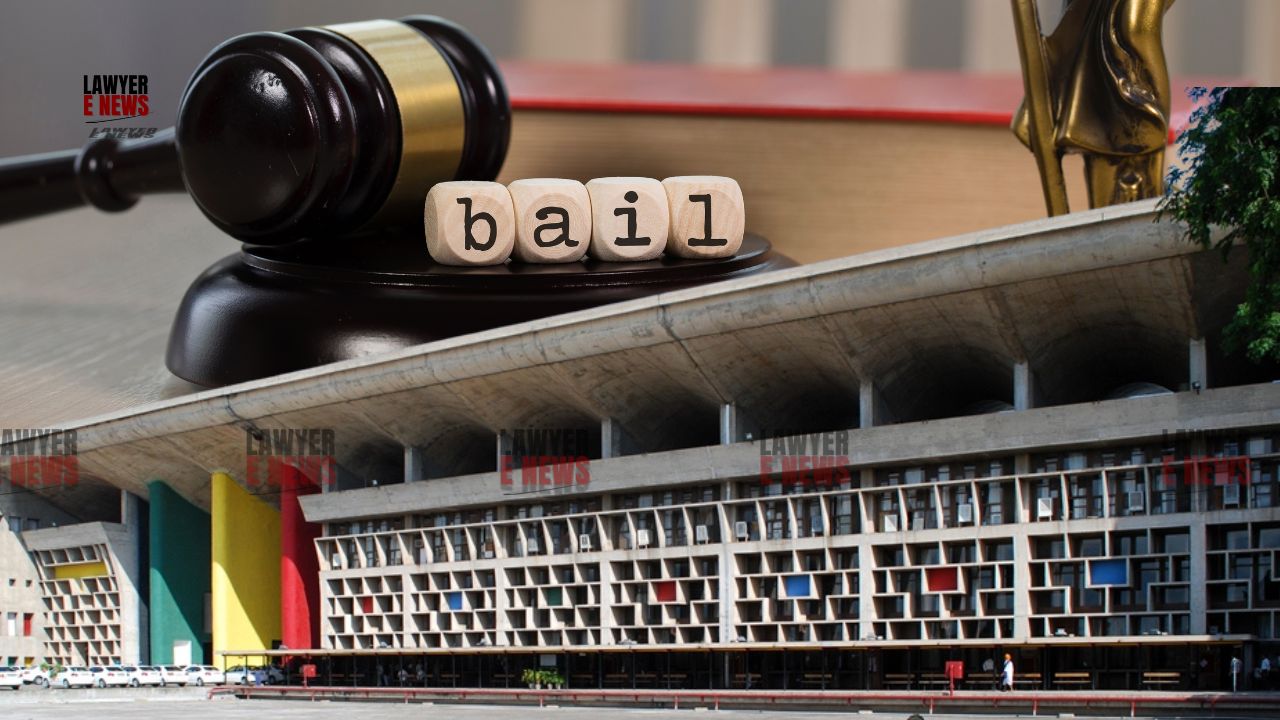
“Registry to Send Copies of This Order to All Judicial Officers of Punjab, Haryana, and Chandigarh” — Punjab and Haryana High Court, in a powerful and far-reaching judgment issued binding and system-wide directions to all Magistrates across Punjab, Haryana, and the Union Territory of Chandigarh, declaring that routine denial of bail in minor, non-heinous offences is a systemic failure that must be urgently corrected.
Justice Anoop Chitkara, while deciding a regular bail petition under Section 483 of the Bharatiya Nagarik Suraksha Sanhita, 2023 (BNSS), delivered a speaking and reasoned judgment that goes beyond the facts of the case and sets down codified principles for Magistrates to follow in bail adjudication. The Court observed that liberty is being systematically denied due to “fear, inertia, and misunderstanding of law,” and directed mandatory circulation of the order to all Judicial Officers.
“Bail Is a Right, Not a Charity” — Court Warns Against Institutional Paralysis in Magistracy
The case involved Suraj Kumar, arrested for the theft of a bicycle and a pair of shoes, both of which were recovered. Despite the trivial nature of the offence, he was kept in custody for over 110 days, and his bail was either withdrawn or rejected by subordinate courts, including the Additional Sessions Judge.
The Court noted: “This apparently poor person had to spend more than three months and twenty days in jail for stealing a bicycle and a pair of shoes… longer than if he had pleaded guilty… all for the sake of early release because of the failure of the system.”
Justice Chitkara took judicial notice of the unspoken crisis in bail jurisprudence at the Magistrate level:
“This Court is more concerned with the fear that plagues the Magistrates from granting bail. Perhaps it is the lack of assurance and requisite support from the higher judiciary that has created a tendency not to grant bail even in cases that are triable before them.”
“When Bail Is Denied in Petty Offences, the Justice System Turns Oppressor” — A Clarion Call for Course Correction
Invoking principles of fairness and liberty, the Court warned that:
“The criminal justice system ceases to be a guardian of liberty and becomes an agent of systemic oppression when bail is denied in petty matters.”
The Court observed that despite being fully empowered under Sections 478, 480, and 483 BNSS, many Magistrates shy away from exercising bail jurisdiction, especially in cases triable by them, or where the co-accused’s bail has been rejected by higher courts.
“Such reluctance stems not from the law, but from institutional habit and fear, which must now be dismantled.”
“Registry to Send Copies of This Order to All Judicial Officers” — Court Orders Immediate Implementation Across All Trial Courts
In an unprecedented move, the High Court ordered its Registry to circulate this judgment to all Judicial Officers across Punjab, Haryana, and Chandigarh. The Court stated:
“Registry to send copies of this order to all Judicial Officers of the District Judiciary of Punjab, Haryana, and Chandigarh.”
This move transforms the judgment from a case-specific decision to a binding directive for the subordinate judiciary — carrying the weight of precedent and the urgency of reform.
“Magistrates Must Not Wait for Sessions Courts to Act First” — High Court Declares Full Bail Powers in Triable Offences
The Court laid out clear doctrinal propositions:
Magistrates are competent to grant bail in all offences triable by them, irrespective of rejection by higher courts on different grounds.
In cases of prolonged custody, delay in trial, or victim compromise, Magistrates must grant bail, even if co-accused bail was rejected earlier.
When charges are reduced to bailable, or investigation suggests closure, Magistrates must act suo motu and release the accused under Section 480(2) BNSS.
Even where accused are declared proclaimed persons, if the underlying offence is compromised, Magistrates must grant bail in the FIR as well as for the proclamation offence under Section 174-A IPC / 209 BNSS.
“Compromise With Victims Must Not Be Ignored” — Court Declares Bail Should Follow Compromise, Regardless of Compoundability
The Court held that in all cases triable by Magistrates, where the victim has compromised, bail must follow:
“In all such cases, where the accused is in custody, the bail should be granted, irrespective of whether the offences were compoundable or not.”
“Recidivism Is a Factor, Not a Bar” — Court Clarifies Habitual Offenders Are Still Entitled to Bail in Minor Offences
While recognising that Suraj Kumar had multiple FIRs against him, the Court clarified: “Even if the accused is a habitual offender, such recidivism would not affect the powers of the Chief Judicial Magistrate or Judicial Magistrate to grant bail.”
Quoting the Supreme Court in Maulana Amir Rashadi v. State of U.P., the judgment reaffirmed: “Merely on the basis of criminal antecedents, the claim of the accused cannot be rejected.”
“Judges Must Not Be Passive Bureaucrats in Robes” — Court Says Magistrates Have Constitutional Duty to Protect Liberty
The judgment is laced with moral and constitutional urgency, declaring: “Arbitrariness is antithetical to the rule of law.”
And further: “Judicial officers are not clerks of the criminal procedure. They are guardians of constitutional liberty. They cannot abdicate their powers due to institutional fear.”
A Turning Point in India’s Bail Jurisprudence Under BNSS
This judgment is being hailed as a watershed ruling under the newly enacted BNSS, setting the tone for a liberty-centric application of criminal procedure at the Magistrate level.
By directing mandatory circulation of the order and issuing a binding framework of when bail must be granted, the Punjab & Haryana High Court has attempted to break the inertia that has long shackled judicial officers at the bottom tier.
As Justice Chitkara aptly summarized: “Bail is not a discretion to be withheld. It is a duty to be discharged in service of constitutional justice.”
Date of Judgment: 31.07.2025