-
by sayum
26 August 2026 5:53 AM







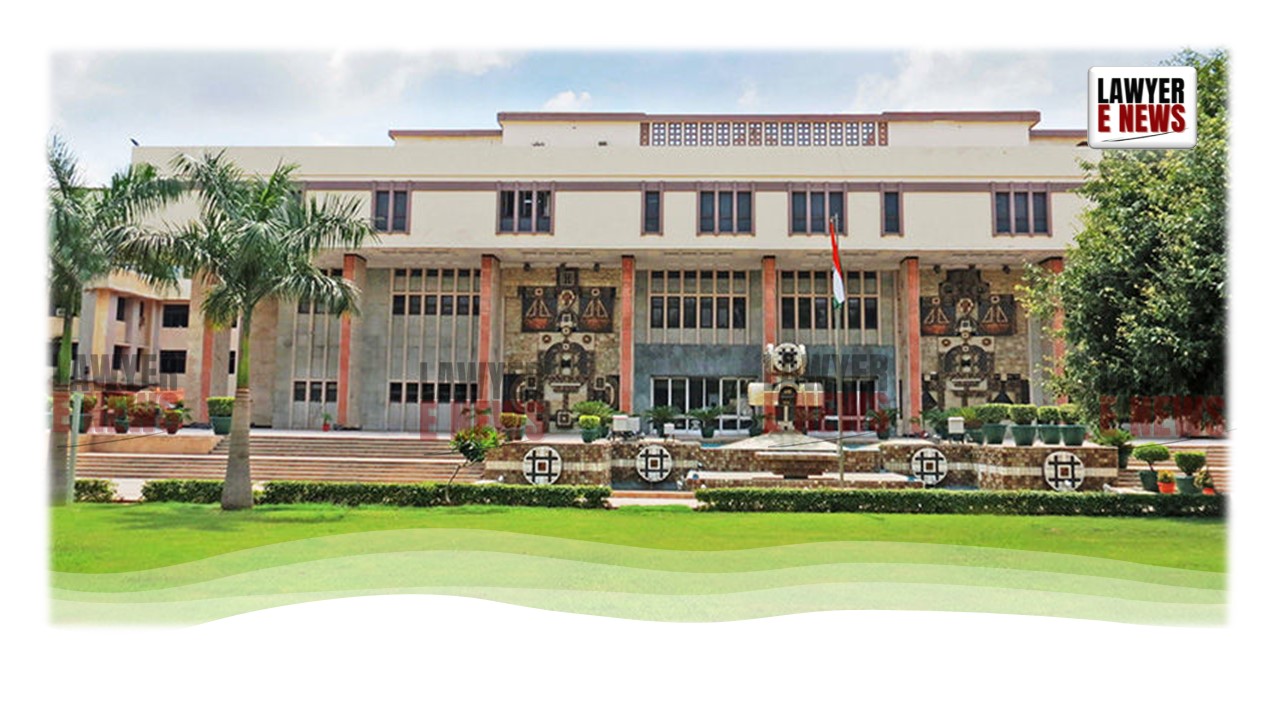
“To Dismiss the Suit Solely on a Curable Procedural Defect Would Amount to Elevating Procedure Over Substance”, In a significant pronouncement reinforcing the primacy of substantive adjudication over technical formalities, the Delhi High Court set aside the dismissal of a commercial recovery suit which had been rejected solely on account of non-compliance with Order VI Rule 15A of the Code of Civil Procedure, 1908.
The Division Bench of Justice Anil Khetarpal and Justice Amit Mahajan held that though the requirement of filing a Statement of Truth in commercial suits is mandatory, the defect arising from its non-filing is procedural and curable. The Court ruled that once a matter has been fully tried and findings on merits have been returned in favour of the plaintiff, dismissal of the suit merely on a technical defect would defeat the ends of justice.
The impugned judgment dated 06.10.2023 was accordingly set aside, and liberty was granted to the plaintiff to cure the defect within four weeks.
Dishonoured Cheques, Running Account and a Long-Standing Commercial Relationship
The dispute arose out of a business relationship between the plaintiff, proprietor of M/s Garg Papers, and the defendant, who regularly purchased craft paper on credit. A running account was maintained, reflecting payments over several years aggregating to Rs. 64,42,000/-.
According to the plaintiff’s ledger, a principal amount of Rs. 34,50,580/- remained outstanding. To discharge this liability, the defendant issued twelve cheques dated 08.05.2017. Most were dishonoured with the remark “funds insufficient,” while one cheque was returned with the remark “account closed.”
A legal notice followed, and proceedings under Section 138 of the Negotiable Instruments Act, 1881 were initiated. Simultaneously, a recovery suit for Rs. 45,35,025/- was instituted.
Though originally filed as a summary suit under Order XXXVII CPC, the matter was subsequently treated as a commercial suit. During its pendency, the original defendant expired and her legal heirs were impleaded, with liability confined to the inherited estate.
Trial Court Findings: Plaintiff Succeeds on Merits, Yet Suit Dismissed
The Trial Court framed issues on limitation under Section 19 of the Limitation Act, maintainability under Order VI Rule 15A CPC, entitlement to recovery, and interest.
On limitation, the Court held the suit to be within time, computing the limitation period from 10.02.2017, the date of last payment.
On merits, after scrutinising the ledger account, invoices, dishonoured cheques and oral evidence, the Court held that the plaintiff was entitled to recover Rs. 29,64,404/- as principal. The interest component reflected in the ledger was disallowed on factual appreciation.
However, despite recording findings in favour of the plaintiff on Issues 3 and 4, the Trial Court dismissed the entire suit holding that the pleadings were liable to be struck off for non-compliance with Order VI Rule 15A CPC, relying upon the Division Bench decision in M/s A.V. Industries v. M/s Neon Electricals Pvt. Ltd.
“Procedural Law Is Merely a Handmaid of Justice”
The High Court found the controversy to lie “in a narrow compass” — whether non-compliance with Order VI Rule 15A CPC could be fatal after a full-fledged trial culminating in findings on merits.
The Bench observed that while Order VI Rule 15A mandates filing of a Statement of Truth in commercial disputes, the real question was whether such non-compliance, in the absence of prejudice and after adjudication, could invalidate the entire proceedings.
In emphatic terms, the Court held:
“It is trite that procedural law, is merely a handmaid of justice, and as such a defect of form, unless it goes to the root of jurisdiction or causes irremediable prejudice, does not convince the conscience of this Court to eclipse the substantial rights of the party and consequently its adjudication.”
The Court noted that the lis had been fully crystallised. Evidence was led, witnesses cross-examined, documents examined and a categorical finding was recorded entitling the plaintiff to recovery of Rs. 29,64,404/-In such circumstances, the Court declared:
“To dismiss the suit, solely on account of a curable procedural defect… would amount to elevating procedure over substance.
“Use of the Word ‘May’ Confers Discretion”: Striking Off Pleadings Not Automatic
A crucial aspect of the judgment is its interpretation of Order VI Rule 15A(5) CPC. The Bench highlighted that the provision uses the word “may” while empowering the Court to strike out pleadings for non-compliance, thereby conferring discretion.
The earlier ruling in M/s A.V. Industries was distinguished on facts. The High Court observed that the said case concerned an ex parte decree and different factual circumstances. Moreover, no undertaking to cure the defect had been offered there.
In the present case, the plaintiff expressly undertook to file the Statement of Truth if granted an opportunity. The Court therefore held that discretion ought to have been exercised to permit rectification instead of dismissing the suit.
Conversion from Summary Suit to Commercial Suit: Defect Not Jurisdictional
Another significant factor was that the suit was originally instituted under Order XXXVII CPC and later treated as a commercial suit. The omission to file a Statement of Truth was attributed to this change in procedural regime.
The Court clarified that such omission did not strike at the root of jurisdiction nor render the proceedings void ab initio. It remained a curable procedural irregularity.
Relief Granted and Directions Issued
The High Court set aside the impugned judgment dated 06.10.2023. The plaintiff was granted four weeks to file an appropriate application to comply with Order VI Rule 15A CPC.
The Trial Court was directed to pass a fresh decree in accordance with the findings already returned on Issues 3 and 4 and to determine pendente lite and future interest in accordance with law.
The appeal was accordingly disposed of.
Substance Triumphs Over Form
This ruling stands as a reminder that commercial procedural discipline, though essential, cannot become a weapon to defeat adjudicated rights. By holding that dismissal of a fully tried suit for a curable defect “would amount to elevating procedure over substance,” the Delhi High Court has reaffirmed that the civil process exists to advance justice — not to obstruct it on technical grounds.
Date of Decision: 24/02/2026