-
by sayum
26 August 2026 5:53 AM








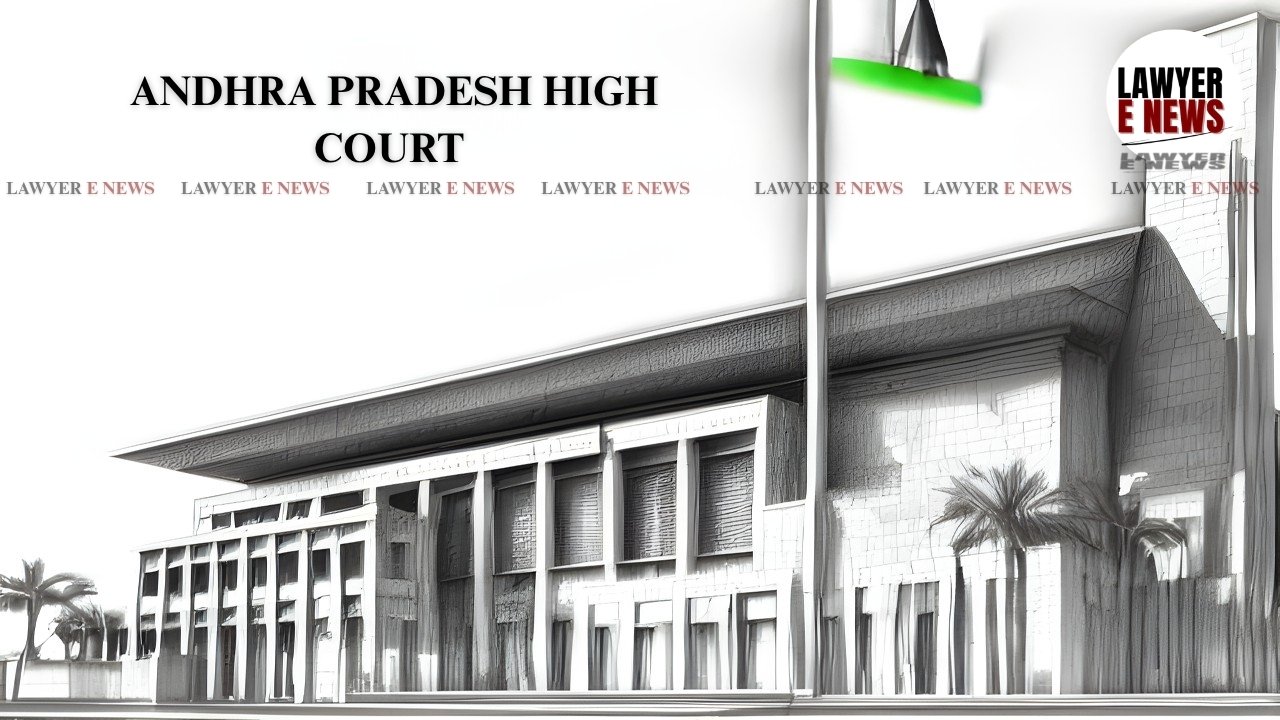
“Petitioner Was Not Allowed by the Portal to File Reply… Personal Hearing Was Not Offered” – On 23 February 2026, the Andhra Pradesh High Court delivered a significant ruling safeguarding procedural fairness under the faceless assessment regime of the Income Tax Act, 1961. The Division Bench comprising Justice R. Raghunandan Rao and Justice T.C.D. Sekhar set aside an assessment order passed under Sections 144 and 144B of the Act, holding that denial of effective opportunity to file a reply and absence of personal hearing amounted to a clear violation of principles of natural justice.
The Court quashed the assessment order dated 04.12.2025 and the consequential demand notice issued under Section 156, directing the authorities to complete the assessment afresh after granting the petitioner an effective opportunity of hearing.
In a ruling that reinforces procedural safeguards in faceless assessments, the Andhra Pradesh High Court held that technical disablement of the e-filing portal, which prevented the assessee from filing her reply to a show cause notice, vitiated the entire assessment proceedings. The Court observed that when an appellate authority remands a matter with specific directions to afford sufficient opportunity, strict adherence to those directions is mandatory.
The case arose from an assessment for the Assessment Year 2017-18, where the petitioner challenged the validity of an order passed under Section 144 read with Section 144B of the Income Tax Act on the ground that she was denied a meaningful opportunity to respond under the faceless assessment framework.
The petitioner, Reddy Rani Swapna, was subjected to an assessment order dated 23.12.2019 under Section 144 of the Income Tax Act, 1961, concerning alleged unexplained cash deposits made during the demonetisation period between 09.11.2016 and 31.12.2016.
Aggrieved by the ex parte assessment, she preferred a statutory appeal before the Commissioner of Income Tax (Appeals) on 21.01.2020, enclosing documentary evidence including bank statements and confirmations explaining the credits. By order dated 16.01.2025, the appellate authority set aside the assessment and remanded the matter for fresh consideration with a categorical direction to afford sufficient opportunity to the petitioner.
Pursuant to the remand, fresh proceedings were initiated under the faceless assessment mechanism. Notices under Section 142(1) were issued and the petitioner responded with documents. However, a subsequent show cause notice dated 16.10.2025 proposed to treat total credits of Rs.44,58,230/- as unexplained income and granted time until 23.10.2025 to respond.
The petitioner attempted to upload her reply on the last date, but the portal displayed that the e-submission facility had been closed by the assessing authority. Crucially, the option to seek a video conference hearing was also disabled.
Despite lodging an online grievance on 23.10.2025, access to the portal was not restored. Though she subsequently sent her reply by email on 28.10.2025, the impugned assessment order dated 04.12.2025 was passed without reopening the portal or granting a personal hearing.
The core legal issue before the Court was whether an assessment order passed under Sections 144 and 144B could be sustained when the assessee was denied effective opportunity to file a reply due to portal disablement and was not granted a personal hearing despite a remand direction.
The petitioner invoked Article 226 of the Constitution of India, contending violation of principles of natural justice and non-compliance with the mandatory procedure under the faceless assessment scheme.
The respondents argued that the assessment was completed based on earlier replies furnished by the petitioner.
However, the Court found the procedural lapses to be fatal.
The Bench categorically recorded:
"It is succinctly clear that the petitioner was not allowed to file reply by the portal and a grievance was also raised on 23.10.2025, to that effect. Admittedly, the said grievance was not redressed."
The Court further emphasized that before passing the impugned order, no personal hearing was offered, even though the appellate authority had directed that sufficient opportunity be granted.
In unequivocal terms, the Court held:
"In such circumstances, it has to be held that, the impugned assessment order had been passed in violation of principles of natural justice."
The judgment underscores that faceless assessment does not dilute the fundamental requirement of fairness. Technical closure of portal access cannot operate to the prejudice of an assessee, especially when the assessee has demonstrated bona fide attempts to comply within the stipulated time.
Non-Compliance with Remand Directions
An equally significant aspect of the ruling is the Court’s emphasis on compliance with appellate remand directions. The appellate authority had specifically set aside the earlier assessment and directed fresh consideration after affording sufficient opportunity.
By failing to ensure functional portal access and by not granting a personal hearing, the assessing authority effectively nullified the purpose of remand.
The Court held that such conduct renders the order legally unsustainable and cannot be cured by contending that earlier replies were available on record.
Operative Directions
Without entering into the merits of the additions proposed, the Court allowed the writ petition and set aside:
the assessment order dated 04.12.2025 passed under Section 144 read with Section 144B, and
the consequential demand notice dated 04.12.2025 issued under Section 156.
The Court permitted the petitioner to file her reply to the show cause notice dated 16.10.2025 and directed the respondents to provide an opportunity of hearing before passing fresh orders.
The Andhra Pradesh High Court’s ruling serves as a strong reminder that digitisation of tax administration cannot override foundational principles of natural justice. When access to the statutory response mechanism is technically denied and grievance redressal remains ineffective, any consequential assessment stands vitiated.
The judgment reinforces that faceless assessments must remain fair assessments, and that compliance with remand directions is not procedural formality but a binding obligation.
Date of Decision: 23.02.2026