-
by sayum
25 August 2026 12:32 PM







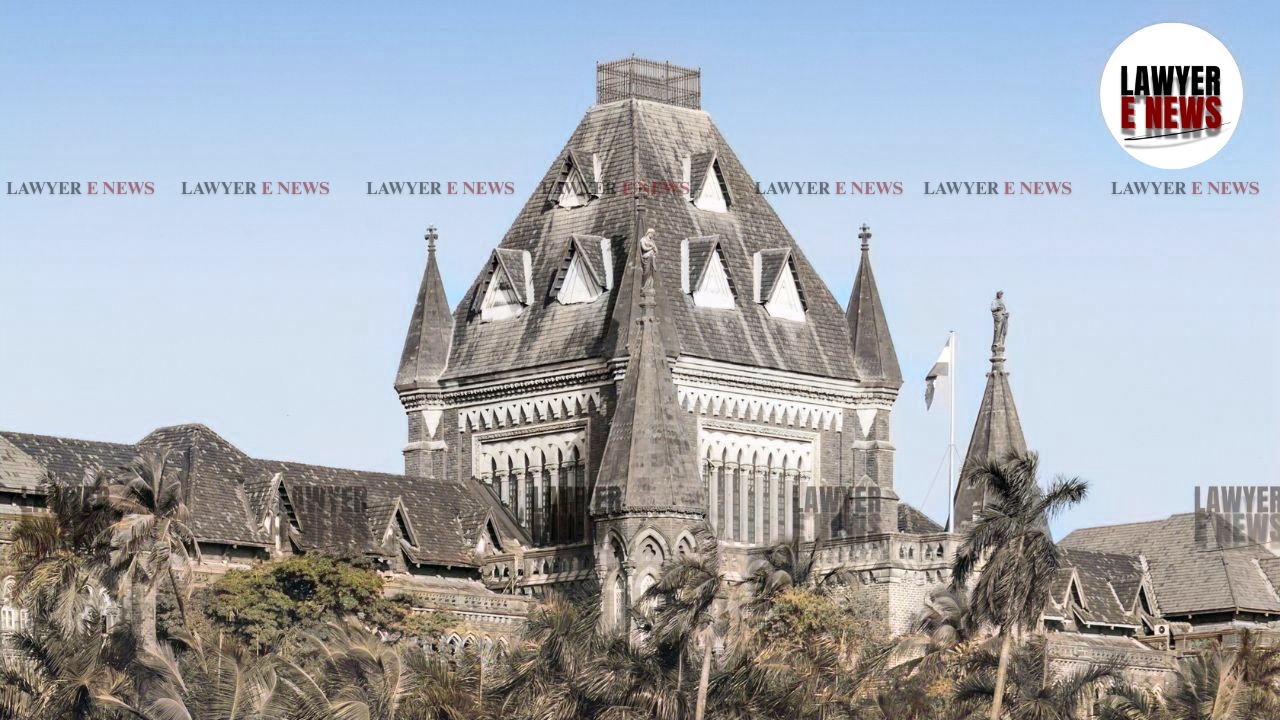
“Sale Certificate Under Section 32M is a Conclusive Document of Ownership”— Bombay High Court held that civil courts lack jurisdiction to reopen or question title conferred under the Bombay Tenancy and Agricultural Lands Act, 1948 unless fraud or misrepresentation is proved. The Court set aside concurrent findings of the trial and appellate courts that had erroneously decreed a partition suit in favour of the respondent, and restored the exclusive ownership of the appellant based on statutory proceedings concluded in 1961.
Justice Milind N. Jadhav, while allowing Second Appeal No. 394 of 2017, ruled:
“Once title is perfected under the Tenancy Act through a 32G order and a Sale Certificate under Section 32M, the jurisdiction of the Civil Court is ousted. No evidence has been placed on record to prove that Krishnabai was holding the tenancy rights in a representative capacity for the joint family.” [Para 12, 14, 24]
Partition Suit Filed 41 Years Later Dismissed as Barred by Law and Factually Unsupported
The plaintiff, Savitri Shankar Gharat (since deceased), had filed Regular Civil Suit No. 50 of 2002 seeking partition and a share in the suit property, claiming it was joint Hindu family property inherited from their deceased father (died in 1949) and mother (died in 1978). However, the defendant, Krishnabai, had already perfected title under the Bombay Tenancy and Agricultural Lands Act as far back as 1961, following due statutory process.
The suit, filed more than four decades after the Sale Certificate, was decreed by the Trial Court and affirmed by the First Appellate Court, both of which treated the property as part of the joint family estate. The High Court decisively overturned both judgments.
“Not a Thread of Evidence to Show Joint Cultivation”: Court Rejects Theory of Representative Tenancy
The Court meticulously examined the record, including revenue entries, mutation records, the Section 32G order, and the 32M sale certificate. Justice Jadhav held:
“Plaintiff has failed to show that the name of Krishnabai was mutated as tenant in a representative capacity on behalf of the family. There is virtually no iota of evidence to support the claim that the suit property was under joint cultivation.” [Para 14]
“A witness from the plaintiff’s side clearly admitted that there is no material or evidence to show joint cultivation by the plaintiff and the defendant. This virtually gives away the plaintiff’s case.” [Para 20]
The Court sharply distinguished the facts of this case from Ramakant Ganesh Naik v. Anusaya Shantaram Naik, relied upon by the plaintiff, where there was clear evidence and admissions by both tenant and landlord acknowledging joint family cultivation.
“In the present case, Plaintiff’s witness has categorically admitted there is no material to show joint cultivation. The facts are clearly distinguishable from Ramakant Naik.” [Para 22]
“Stoic Silence for 41 Years Cannot Revive Inheritance Claim”: Civil Court Has No Power to Revisit Title Under Tenancy Act
Krishnabai was granted protected tenancy status in 1957 and issued a Sale Certificate under Section 32M in 1961 after paying the full purchase price. From that point onward, she was the legally recognised owner of the agricultural land. There was no challenge to the 32G or 32M orders by either the mother or the plaintiff for over four decades.
The Court observed:
“The stoic silence of Plaintiff Savitribai from 1957 until 2002 speaks volumes. There is not a thread of evidence to justify her claim. The challenge to the Sale Certificate was rightly rejected by the competent authority.” [Para 19, 21]
Further, on the applicability of Section 85 of the Tenancy Act, which bars civil jurisdiction over matters decided by revenue authorities, the Court reiterated:
“Once statutory proceedings have conferred ownership under the Act, the Civil Court cannot override such title in the absence of fraud, collusion, or misrepresentation, none of which is proved here.” [Para 25]
Limitation Bars the Claim: "No Evidence of Possession, No Basis for Partition"
In addition to jurisdictional bar, the Court held that the suit was also barred by limitation under the Limitation Act, 1963. The plaintiff claimed that her right was denied only two years prior to the suit, but the Court found no supporting evidence.
“Prima facie, such contention without any substantive evidence is not tenable at all. There is no proof of joint possession or any cultivation by the plaintiff.” [Para 17]
The Court held that Article 110 of the Limitation Act could not aid the plaintiff because her case lacked the essential fact of shared possession, which is the linchpin of a maintainable partition suit filed decades after alleged exclusion.
High Court Criticises Lower Courts for Ignoring Statutory Title
Justice Jadhav found fault with both the trial and appellate courts for failing to apply the binding provisions of tenancy law and for treating the matter as a mere suit for succession.
“The learned Trial Court in the first instance ought to have made a reference to the Civil Court rather than treating the claim of Plaintiff for partition under the law of Succession in view of the existence of 32G Order and 32M Certificate.” [Para 25]
Ultimately, the Court answered both substantial questions of law framed at the time of admission in the affirmative, ruling that the findings of the lower courts were legally infirm.
“Both the judgments passed by the Courts below clearly suffer from the aforesaid legal infirmity and therefore I answer the twin law points for determination framed by this Court…in the affirmative.” [Para 26]
The High Court allowed the Second Appeal, quashed the judgments of the Trial Court (dated 08.02.2006) and First Appellate Court (dated 21.01.2017), and dismissed the partition suit filed in 2002 by Savitri Shankar Gharat.
“Suit filed by Plaintiff namely Regular Civil Suit No.50 of 2002 is dismissed. Title of Krishnabai as sole owner upheld.” [Para 27–28]
Date of Decision: 12 November 2025