
-
by sayum
26 August 2026 1:49 PM







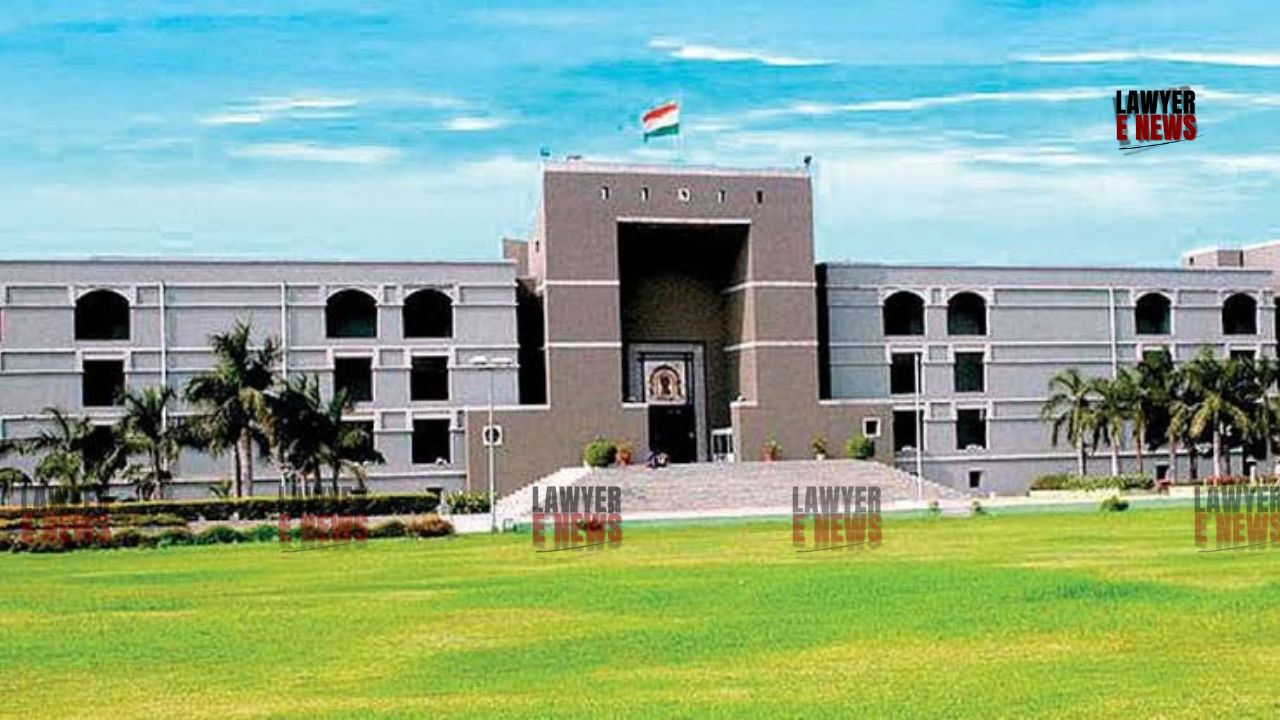
"The case appears to have been converted into a murder trial by joining all the interested persons as witnesses of the prosecution case", In a significant ruling reversing a three-decade-old conviction, the Gujarat High Court on March 16, 2026 set aside the conviction and sentence of three accused persons who had been held guilty of culpable homicide not amounting to murder under Section 304 Part II of the Indian Penal Code.
Justice Gita Gopi, finding the prosecution case riddled with contradictions, hostile witnesses, a doubtful FIR, and hospital records that consistently described the deceased's injuries as "accidental," acquitted all the appellants and simultaneously dismissed the State's cross-appeal seeking enhancement of their sentence.
The case, which originated from an alleged assault on the night of July 11, 1989, at the outskirts of village Saiwa in Jamnagar district, had culminated in conviction by the Additional Sessions Judge, Jamnagar as late as April 29, 2003 — a trial spanning over a decade. The accused before the High Court had served their sentence in the interim, making the acquittal not merely a legal vindication but a belated one.
Background of the Case
The prosecution alleged that on the evening of July 11, 1989, deceased Karsan Ranmal and one Naran Saiwa were returning on a motorcycle from village Narmana, where they had attended an engagement ceremony. Near the field of Bhimsi Sura on the road towards village Saiwa, the three accused — Hardas Dhana, Devarkhi Dhana, and Duda Dhana, who were nephews of the deceased — allegedly intercepted the motorcycle, dragged the deceased to the side of the road near a pit at the crossroad, and rained incessant blows on both his legs with sticks bearing nodes and a hoe. The deceased was taken to the Primary Health Centre, Bhanvad, and subsequently to Irwin Hospital, Jamnagar, where he died on July 17, 1989 — six days after the alleged assault.
The accused were originally charged under Section 302 IPC, which was ultimately converted to Section 304 Part II read with Section 34 IPC (culpable homicide not amounting to murder) along with Section 120B and Section 135(1) of the Bombay Police Act. The trial court convicted and sentenced them to three years' rigorous imprisonment. The accused challenged their conviction before the Gujarat High Court. The State simultaneously filed a cross-appeal seeking enhancement of sentence.
The undercurrent of the entire case was a bitter land dispute. A police head-constable, Khumansinh Balubha (PW17), whose father owned the agricultural land in dispute, had transferred that land — originally given to the accused's father Dhanabhai for cultivation — to the deceased Karsanbhai. Multiple civil suits and criminal cases between the two branches of the family were pending at the time of the incident. The defence case was one of complete false implication, contending that what actually occurred was a motorcycle accident converted into an assault case with the connivance of PW17, who misused his position in the police.
Medical Evidence: 11 Injuries Become 25, Hospital Records Say 'Accidental'
The Court subjected the medical evidence to a searching analysis and found it wholly inconsistent with the prosecution's narrative of a brutal assault.
PW1, Dr. S.V. Sapriya of the Primary Health Centre, Bhanvad, examined the deceased on the night of the incident and noted 11 injuries, all of which he classified as simple in nature. The doctor confirmed that the deceased was suffering from diabetes, a fact of critical significance as the case progressed. By the time of the post-mortem conducted by PW5, Dr. Satish Dinkarbhai Kalel on July 17, 1989, the number of external injuries had swelled to 25, with gangrene having developed in the right leg and foot.
What proved decisive for the Court was the consistent notation in the hospital records. The case papers produced by PW14, Dr. S.G. Mehta of Irwin Hospital, showed that on July 12, 1989 — the very day after admission — Dr. A.D. Khatri had examined the deceased and recorded the injuries as "accidental injury." On that same day, Dr. D.K. Vadiya had also examined the patient and equally described the injuries as accidental. On July 15, 1989 — the very day on which the Investigating Officer recorded the further statement of the deceased — the hospital papers again reflected "accidental injury."
The Court noted with emphasis that "the medical evidence showed the injuries as because of accident" and that the treating doctors, who were admittedly available, were not even examined by the prosecution. The post-mortem doctor, when cross-examined, candidly admitted that he could not attribute the injuries to any specific weapon — not to a hoe, not to a stick — and confirmed that gangrene is an independent disease that can afflict a diabetic patient even without external injury, and that death from gangrene can occur even if no assault had taken place.
"The case appears to have been converted into a murder trial by joining all the interested persons as witnesses of the prosecution case," the Court held.
Every Independent Eye-Witness Turned Hostile — None Saw Any Assault
The Court's examination of the ocular evidence was equally damaging to the prosecution. The alleged assault took place on a public road. The prosecution examined four witnesses — PW3, PW10, PW11, and PW12 — who were traveling in a tractor that was following the deceased's motorcycle on the same road at the same time. All four turned hostile and were declared so by the prosecution.
PW3 Lakha Meraman stated that from his moving tractor, he saw the deceased lying in a pit beside the road and saw some persons running away from the western side of the field, but could not identify them and categorically denied seeing any assault. PW11 Markhi Narang likewise stated he only saw Karsan Ranmal lying by the roadside from the passing tractor and denied any beating by the accused. PW12 Puna Pala admitted seeing Karsanbhai in the pit with his motorcycle nearby, nothing more. PW10 Meghji Hirabhai, the tractor owner, stated that deceased Karsan's motorcycle was ahead of his tractor on the road, the motorcycle had fallen down, Karsan was on the ground, four to five persons were standing nearby, and — crucially — he had not seen the accused.
The Court noted a further contradiction that the prosecution narrative described Naran Saiwa as a pillion rider on the deceased's motorcycle, yet PW10, who was directly behind the motorcycle, made no mention of any pillion rider. Simultaneously, PW3 named Seiwa Naran as one of the persons traveling with him in the tractor — a direct contradiction of the prosecution's case.
The Court found the conduct of Naran Saiwa itself to be suspicious and unnatural. According to the prosecution's own case, Naran Saiwa was present when three men with sticks and a hoe were attacking the deceased. Yet he suffered no injury, made no attempt to intervene or protect the deceased, fled the scene, walked 2-3 kilometres to the village, and then informed the family. "The role of Naran Saiwa becomes suspicious," the Court observed, adding that the case becomes doubly doubtful when the tractor witnesses — some of whom were themselves named as persons accompanying Naran Saiwa in the tractor — denied seeing any assault by the accused.
Applying the Supreme Court's settled principle in Krishnegowda and Ors. v. State of Karnataka, (2017) 13 SCC 98, the Court reiterated that "when the contradictions in the evidence of prosecution witnesses prove to be fatal to the prosecution case, such contradictions go to the root of the matter, and in such cases the accused is entitled to the benefit of doubt."
The Doubtful FIR: No Signature, No Mental Fitness Certificate, No Dying Declaration
"The doctor has only made an endorsement of patient being conscious, but no such endorsement was there of patient being in fit state of mind"
The FIR itself, which was the foundation of the prosecution case, was found by the Court to be a document that did not inspire confidence.
The complaint (Exh.49) was recorded at the Primary Health Centre, Bhanvad on the night of the incident. Though the deceased was stated to be conscious, the complaint bore only a thumb impression — not a signature. PW1, the attending doctor, had endorsed the patient's consciousness but explicitly confirmed in cross-examination that he had not certified the deceased's fitness of mind to give a statement. Critically, the doctor also admitted in cross-examination that he was not even present when the complaint was recorded, contradicting his examination-in-chief. The Court found the accounts of the son PW13 and the doctor to be inconsistent on this point.
The deceased survived for six days following the incident. Despite this, no dying declaration was ever recorded through an Executive Magistrate. The Investigating Officer's explanation — that since the injuries were not grievous, it was not deemed necessary — was rejected as untenable given that the deceased eventually died from the injuries.
Adding to the suspicion, a further statement of the deceased was recorded on July 15, 1989 — two days before his death. This statement introduced entirely new weapons and new injuries that were absent from the original FIR: stones causing chest injuries, a hoe (which the deceased now claimed he had initially mistaken for a stick), and injuries to the right hand fingers. The Investigating Officer recorded this further statement without obtaining any medical certificate of the deceased's fitness of mind, in plain violation of basic investigative fairness. The Court observed that this appeared to be a deliberate effort "to improve the case by bringing more weapons to the incident."
Investigating Officer's Conduct: Present Before the Complaint, Filing the Chargesheet at the End
The Court's scrutiny of the Investigation Officer's conduct was unsparing. PW18, the PSI at Bhanvad Police Station, handled every aspect of the case — he arrived at the scene even before the family of the deceased, recorded the FIR, drew the Panchnama, recorded witness statements, and ultimately filed the chargesheet. The Court noted that "in order to show the fairness of the matter after recording the complaint, the officer was required to hand over the investigation to some independent person" — a step that was never taken in any meaningful sense.
The I.O.'s claim that he was present at the scene because he was on patrolling duty was found unsubstantiated. No Vehicle Log Book, no station diary entry, no documentary proof of the claimed patrolling in the area of Tran Patiya and Saiwa villages was produced. The Court specifically invoked Section 44 of the Police Act, 1861, which obliges every officer in charge of a police station to maintain a general diary recording all complaints, names of persons arrested, weapons seized, and witnesses examined. The Investigating Officer's admission that it was not necessary to make an entry in the police station diary each time they left the station was found to be contrary to this statutory duty.
Equally damning was the failure to seize the motorcycle — a critical piece of evidence that could have established whether the injuries were consistent with a road accident or an assault. The I.O. acknowledged he had made no proceedings regarding the motorcycle. No fingerprints of the accused were lifted from the alleged weapons. No soil from the place of offence was sent for forensic examination despite blood stains being seen at the crossroad. The four panch witnesses (PW6, PW7, PW8, PW9) uniformly refused to support the prosecution's case — the two panchas for the recovery of weapons (PW8 and PW9) testified that when they were taken to the guest house near the bus stand, they found only some clothes and a bedsheet; no weapons were produced before them and no seizure took place in their presence.
Relying on Rameshbhai Hajabhai Chachiya v. State of Gujarat, 2012 (3) GLR 2250, the Court affirmed that "mere discovery of weapon is not sufficient to infer authorship of concealment by person who discovered it and further, discovery evidence, by itself, is subsidiary and cannot sustain conviction." With the panchas having turned hostile, the recovery of weapons itself was held to be unproved.
Interested Witnesses Cannot Substitute for Independent Corroboration
The prosecution's case ultimately rested on the testimony of the son (PW13), brother (PW16), and nephew (PW15) of the deceased — all of whom had a direct stake in the outcome and none of whom were present at the scene when the incident allegedly occurred. PW17, Khumansinh Balubha, the head-constable who testified about the deceased's condition in hospital, was himself a deeply interested party — his land was at the centre of the dispute, he had filed a civil suit against the accused's father, and a defamation case had been filed against him by the accused's father. The Court found that "his evidence also becomes corrupt, owing to his interest in the result of the civil litigation of the land and the defamation case."
Quoting the Supreme Court in Krishnegowda, the Gujarat High Court reiterated that while there is no absolute rule that the evidence of related witnesses must be corroborated by independent witnesses, "it would be trite in law to seek independent witnesses when the evidence of related eyewitnesses is found to be incredible and not trustworthy." In this case, the independent witnesses were not merely absent — they were present, examined, and had categorically denied the prosecution's case.
Reversing the trial court's judgment, Justice Gita Gopi held that the prosecution had utterly failed to establish guilt beyond reasonable doubt. The conviction and sentence under Section 304 Part II, Section 120B read with Section 34 IPC, and Section 135(1) of the Bombay Police Act were set aside. The Court found that the trial court had failed to discern the true character of the witnesses, that the medical evidence consistently pointed to accidental injuries rather than a culpable assault, and that the investigation was tainted from its very inception by the presence and conduct of an Investigating Officer who had a clear stake in the outcome of the matter.
The State's appeal for enhancement of sentence stood dismissed as a natural consequence.
The case stands as a sobering reminder of the criminal law's foundational principle — that the prosecution must prove guilt beyond reasonable doubt, that interested testimony cannot substitute for independent corroboration, and that "a criminal offence is not only an offence against an individual but also against society — there would be a failure of justice if an innocent person is punished."
Date of Decision: March 16, 2026





