-
by sayum
29 August 2026 9:28 AM







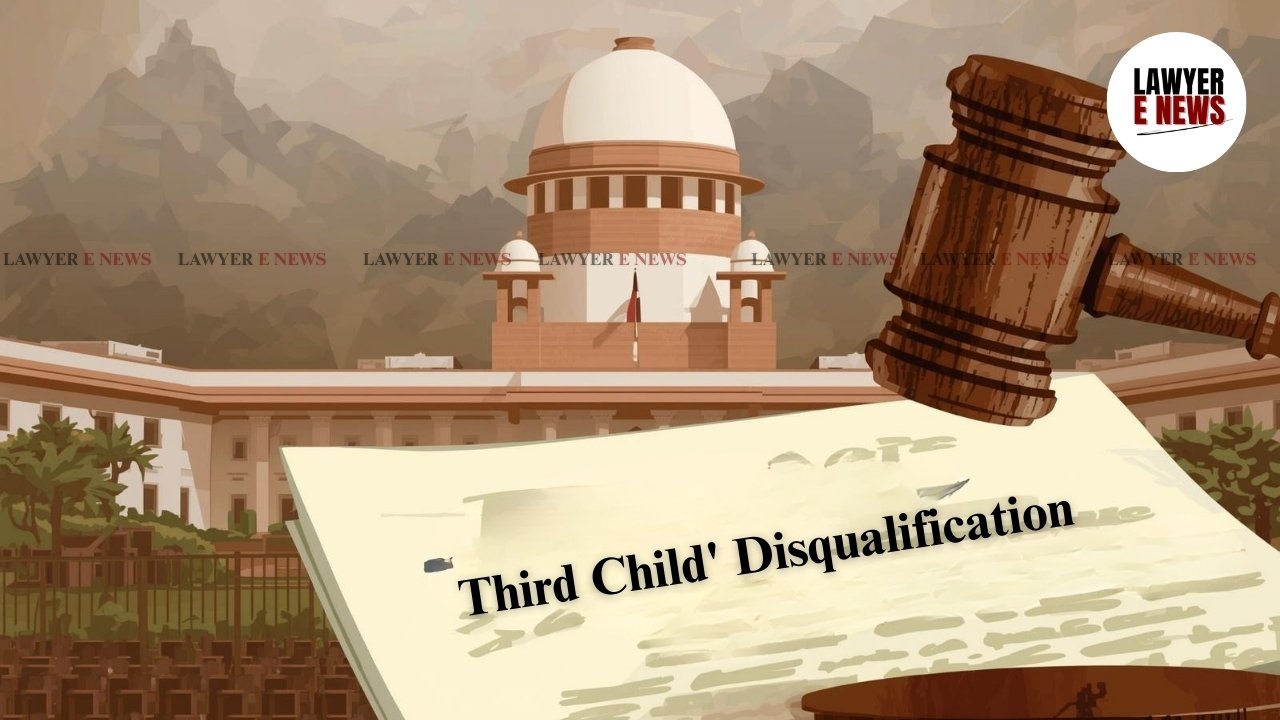
"If At This Stage, The Appellant Is Deprived Of The Fruits Of Her Successful Challenge…That Would Amount To A Travesty Of Justice", In a significant ruling reinforcing the integrity of panchayat elections and the binding nature of statutory disqualification under the two-child norm, the Supreme Court of India declared the election petitioner, Ramadebi Rautray, as the duly elected Chairman of the Delang Panchayat Samiti in Odisha — restoring the Election Tribunal's original order that had been reversed by both the Election Appellate Tribunal and the High Court of Orissa.
A bench of Justice Vikram Nath and Justice Sandeep Mehta held that where a returned candidate deliberately avoids cross-examining the election petitioner's witnesses in order to delay the inevitable, the uncontroverted evidence must be accepted, and the statutory disqualification under Section 45(1)(v) of the Orissa Panchayat Samiti Act, 1959 must be given full effect — including the consequential relief of declaring the election petitioner as the winner.
Background of the Case
The appellant, Ramadebi Rautray, and the respondent, Basanti Sahoo, both contested elections for the post of Panchayat Samiti Member in 2022 — from Delang Kothabad Gram Panchayat and Harirajpur Gram Panchayat respectively — and were both elected. They subsequently contested against each other for the post of Chairman of the Delang Panchayat Samiti, a two-candidate contest, which the respondent-returned candidate won.
The appellant filed an election petition before the Civil Judge (Senior Division), Pipili, challenging the respondent's election on the ground that she had given birth to a third child after the statutory cut-off date, thereby incurring disqualification under Section 45(1)(v) of the 1959 Act.
The Election Tribunal declared the respondent's election void and further declared the appellant as the duly elected Chairman. On appeal, the Election Appellate Tribunal upheld the disqualification but reversed the consequential relief, directing a fresh election instead. The High Court of Orissa affirmed this position. The Supreme Court was called upon to correct what it ultimately found to be a grave error in denying the appellant the fruits of her successful legal challenge.
Legal Issues and Court's Observations
On Jurisdiction of the Election Tribunal
The respondent-returned candidate raised a preliminary objection challenging the jurisdiction of the Election Tribunal. The Court swiftly dismissed this contention, observing that "the issue of jurisdiction of the Election Tribunal was not seriously contested by the respondent-returned candidate on any valid legal ground and thus, the same does not merit consideration."
On the Effect of Non-Cross-Examination
The most forensically significant aspect of the case was the respondent's deliberate strategy of repeatedly seeking adjournments and ultimately failing to cross-examine the appellant's three witnesses, including the appellant herself. The Election Tribunal was compelled to close cross-examination after multiple opportunities were extended and wasted.
The Court held that the respondent, "by avoiding cross-examination of the witnesses…was attempting to buy time and defer the inevitable consequence i.e., declaration of her election as Panchayat Samiti Member, Harirajpur Gram Panchayat, invalid on account of the disqualification contained in Section 45(1)(v) of the 1959 Act."
The Court noted that the appellant had led "clinching evidence (which remained uncontroverted) of facts necessary to prove such disqualification," and the necessary consequence was the respondent's disqualification. The three concurrent findings of the Election Tribunal, the Appellate Tribunal, and the High Court on the disqualification were upheld without interference.
On the Respondent's Claim That Only One Child Was Hers
The respondent's counsel attempted to argue that only one child was biologically born to her, while the other two were children of her husband from his first marriage. The Court found this submission wholly unsupported in the face of the uncontroverted documentary and oral evidence produced before the Tribunal — evidence the respondent had every opportunity to rebut through cross-examination but chose not to.
On the Consequential Relief — Declaration of the Appellant as Elected Chairman
This formed the heart of the Supreme Court's intervention. Both the Election Appellate Tribunal and the High Court had refused to declare the appellant as the duly elected Chairman, holding instead that other members of the Delang Panchayat Samiti should be given a fresh opportunity to contest.
The Court examined Sections 44-E and 44-J of the Orissa Panchayat Samiti Act, 1959 in detail.
Section 44-E expressly permits an election petitioner to claim "a further declaration that he himself or any other candidate, has been duly elected," in addition to claiming that the returned candidate's election is void. Section 44-J(2)(b) confers jurisdiction upon the Election Tribunal to "declare another candidate to have been duly elected" when the election of the returned candidate is found invalid.
The Court held that a plain reading of these provisions "makes it amply clear that the former provision permits the election petitioner to claim relief not only for having the election of the returned candidate declared invalid, but also for declaring the election petitioner duly elected to the post."
The Court then applied this to the undisputed factual matrix: only the appellant and the respondent had contested the post of Chairman. Once the respondent was disqualified, "no other contestant except the appellant-election petitioner remained in fray for the post of Chairman of the Delang Panchayat Samiti."
On the Travesty of Denying Relief After Three Years of Litigation
The Court placed particular emphasis on the delay caused by the very respondent who had sought to protract proceedings. Elections had been held in 2022, and the litigation had consumed over three years by the time the matter reached the Supreme Court.
"If at this stage, the appellant-election petitioner is deprived of the fruits of her successful challenge to the election of the respondent-returned candidate, by asking her to contest a fresh election, that would amount to a travesty of justice," the Court said firmly.
The Court found the Election Appellate Tribunal's reasoning — that other members of the Panchayat Samiti deserved a chance to contest — to be "wholly unwarranted and uncalled for," since no other member had been a candidate in the original election for Chairman. The High Court's affirmation of this reasoning was equally erroneous, the Court held.
Decision
Allowing the appeal, the Supreme Court set aside the judgments of the High Court dated December 15, 2025 and the Election Appellate Tribunal dated February 3, 2025, to the extent that they denied consequential relief to the appellant. The Court restored the Election Tribunal's original order declaring Ramadebi Rautray as the duly elected Chairman of the Delang Panchayat Samiti and quashed the direction for fresh election. Compliance was directed within two weeks.
The connected special leave petition filed by the respondent-returned candidate was dismissed.
The ruling reaffirms two vital principles of election law: first, that a disqualified candidate cannot escape the full legal consequence of her disqualification by procedural evasion; and second, that where only two candidates contest, disqualification of one leaves no room for a fresh election — the next valid candidate must be declared elected. The judgment also sends a clear message that courts must ensure the fruits of litigation are not lost to successful petitioners through the passage of time manufactured by the very party whose election is under challenge.
Date of Decision: March 10, 2026