-
by sayum
27 August 2026 3:32 PM







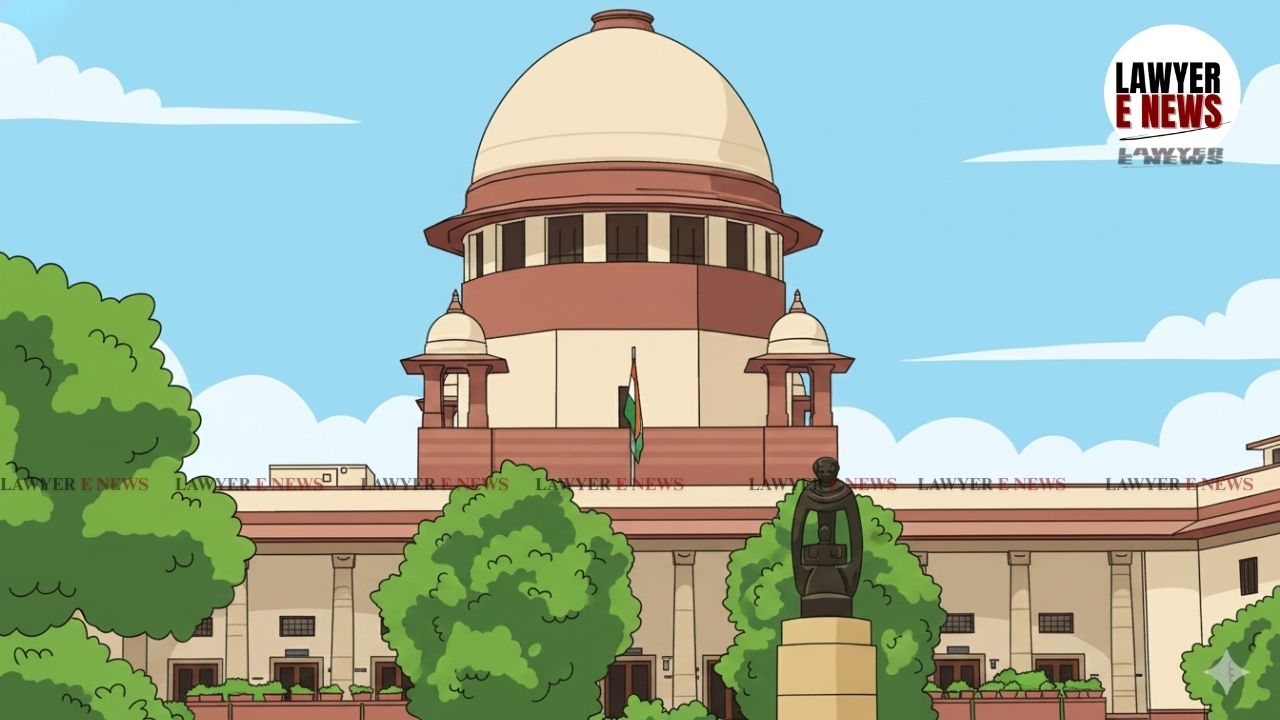
“Once Interim Stay Was Operating, Adverse Observations Cannot Survive—Especially When Tenure Has Lapsed,” Supreme Court of India, speaking through a bench of Justice B.V. Nagarathna and Justice Ujjal Bhuyan, set aside scathing observations passed by the Allahabad High Court against a former MLA and a returning officer in a 2012 election dispute. While the Court refrained from deciding the appeal on merits owing to the lapse of the legislative term (2012–2017), it made it clear that the High Court’s remarks penalizing the appellant for “delaying tactics” and denying him post-tenure benefits could not stand in the face of a subsisting interim stay.
“In view of the interim stay... and the fact that we do not propose to consider the appeal on merits as the tenure... has also lapsed, we think it is in the interests of justice to set aside the observations made by the High Court in paragraphs 53 to 56 of the impugned order,” held the Supreme Court in Ram Singh v. Rajendra Pratap Singh @ Moti Singh & Ors., Civil Appeal No. 8357 of 2016.
“Merits of the Challenge Need Not Be Gone Into Once Legislative Term Has Expired” — Apex Court Allows Appeal In Part, Declines To Revisit Ballot Rejection Controversy
The election petition stemmed from the 2012 Uttar Pradesh Assembly polls, in which Ram Singh had been declared elected from the 249 Patti Assembly Constituency in Pratapgarh district. His rival, Rajendra Pratap Singh, challenged the result under Section 100(1)(d)(iv) of the Representation of the People Act, 1951, alleging improper rejection of 955 postal ballots by the Returning Officer.
The High Court, in its decision dated 9 August 2016, upheld the challenge and declared the election void under Section 98 of the 1951 Act. However, the Supreme Court had promptly stayed the order on 5 September 2016.
That interim relief, which protected the appellant for the remainder of the term, became central to the final outcome. The top court held that, with the term of the MLA having ended in March 2017, and in view of the long-operating stay, there was no point in adjudicating the controversy on merits.
“Appeal is admitted... In the peculiar facts and circumstances of the case, there shall be stay of operation and implementation of the impugned judgment,” the earlier interim order had recorded, which was now reinforced by the final ruling.
“To Withhold MLA Pension And Label Him As A Delaying Litigant—That Too Despite A Stay—Is Unjust”: Supreme Court Deletes High Court's Stigmatic Remarks
One of the key reliefs sought by Ram Singh in the appeal was expungement of paragraphs 53 to 56 of the High Court’s judgment — remarks which were not only critical of his conduct during litigation but also carried direct consequences, including forfeiture of his MLA pension and benefits.
The High Court had accused the appellant of using “numberless delaying tactics”, burdening the court with “multiple adjournments” and “filing applications one-by-one”. It had even directed that his salary and “Vidhyak Nidhi” be withheld for non-cooperation and declared that he “must not be allowed any benefits of this election and also pension as Member of Legislative Assembly.” It also recommended that the then Returning Officer, Sharda Prasad Yadav, not be given any “important duties” in future due to procedural lapses.
But the Supreme Court found these remarks unnecessary, especially in light of its own stay order and the fact that the tenure was over. It accepted the appellant’s argument that if the case was not to be decided on merits, adverse conclusions based on alleged conduct during trial would become disproportionate and prejudicial.
“The appellant cannot be denied the benefit of the interim order of this Court,” held the Bench, striking down the High Court’s censure in entirety.
“Adverse Directions Can’t Outlive The Stay, Especially When The Main Relief Becomes Academic”
While the Supreme Court refused to delve into whether the rejection of the 955 postal ballots was justified under the 1961 Rules or the Returning Officer’s Handbook, it made it clear that the High Court’s instructions—particularly those aimed at punishing the appellant for litigation conduct—had lost all operative force.
“Having regard to the interim stay... and the fact that the tenure has lapsed, the said portions may be set aside,” the Court concluded.
Significantly, the Court also shielded the Returning Officer from disciplinary action, clarifying that no penal recommendation would stand in absence of a final adjudication.
Thus, the appeal was allowed “in part” — not on the question of the validity of the 2012 election, but solely to clear the reputational and financial consequences attached to the High Court's critical remarks.
“Judicial Observations Must Not Outlive Their Purpose Once Relief Has Become Infructuous” — Supreme Court’s Clean Slate For MLA After Decade-Old Poll Dispute
This decision underscores a key principle in election law jurisprudence — where the term of office has expired, courts may exercise restraint in reopening settled electoral disputes unless larger public or constitutional issues are at stake. The Supreme Court’s calibrated intervention here protects procedural fairness by ensuring that a litigant, even one accused of stalling trial, is not stripped of statutory benefits absent a conclusive finding.
By drawing a clear line between pending appeals and punitive judicial commentary, the Court has reaffirmed that even in heated election battles, “justice must be tempered with proportionality and guided by finality.”
Date of Decision: 29 January 2026