
-
by sayum
26 August 2026 1:49 PM







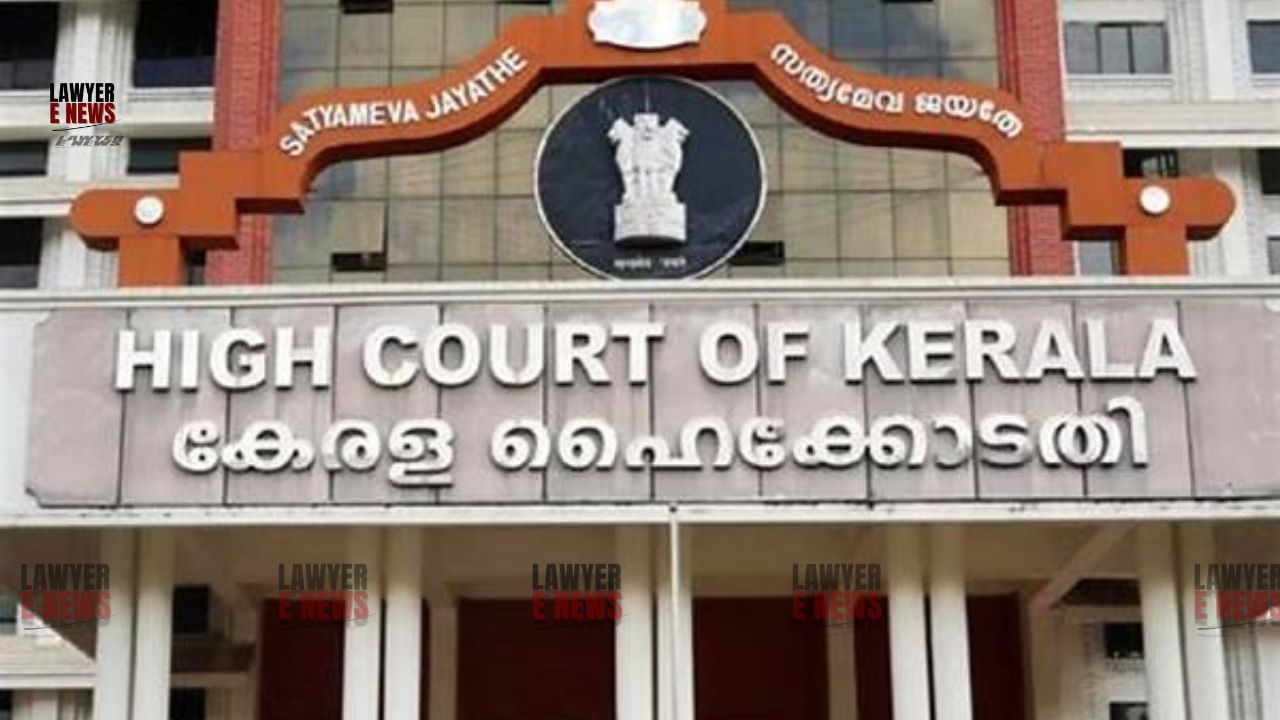
“Individuals react differently when confronted with traumatic situations and the testimony of injured witnesses carries a special evidentiary value,” observed the Kerala High Court while dismissing criminal appeals filed by five accused convicted in a politically motivated murder case from Kannur district.
A Division Bench of Justice A.K. Jayasankaran Nambiar and Justice Jobin Sebastian upheld the conviction and life imprisonment imposed by the Additional Sessions Court-II, Thalassery, holding that the prosecution had successfully proved that the accused formed an unlawful assembly and murdered the victim by hurling a country-made bomb at his head.
The Court emphasized that the consistent testimony of eyewitnesses, particularly injured witnesses, supported by medical evidence and surrounding circumstances, clearly established the guilt of the accused beyond reasonable doubt.
Background of the Case
The deceased Yackoob, a CPI(M) activist, was allegedly targeted due to political rivalry with RSS/BJP activists. On 13 June 2006 at about 9:15 p.m., the accused allegedly formed an unlawful assembly armed with deadly weapons including country-made bombs and trespassed into the courtyard of a house where the deceased and his friends were present.
During the attack, the deceased attempted to flee towards a nearby house. The fifth accused allegedly hurled a bomb aimed at his head, which exploded and caused fatal blast injuries resulting in his death. Two eyewitnesses (PW2 and PW3) also sustained injuries during the incident.
After trial, the Sessions Court convicted accused Nos.1 to 5 for offences under Sections 143, 147, 148, 447, 324 and 302 read with Section 149 IPC and under Sections 3 and 5 of the Explosive Substances Act, sentencing them to life imprisonment. The accused challenged the conviction before the High Court.
Court’s Findings
The High Court held that the prosecution had established the homicidal death of the victim through the medical evidence of the doctor who conducted the post-mortem examination. The autopsy revealed extensive blast injuries to the head with destruction of the skull and brain, clearly indicating death caused by a bomb explosion.
The Court relied heavily on the testimonies of PW1, PW2 and PW3, noting that the injured witnesses (PW2 and PW3) provided consistent accounts of the incident. Their injuries were corroborated by medical records and wound certificates.
The Bench reiterated the settled legal principle that testimony of injured witnesses carries greater evidentiary value as their presence at the scene is guaranteed and they are unlikely to falsely implicate innocent persons.
Rejecting the defence argument regarding delay in medical treatment, the Court held that the witnesses had explained the delay satisfactorily, stating that they had attended the funeral of their deceased friend and their injuries were comparatively minor.
The Court also rejected arguments regarding alleged unnatural conduct of witnesses in not immediately approaching the police, observing that human reactions to traumatic events vary and there is no fixed pattern of behaviour.
Further, minor discrepancies in the narration of events by eyewitnesses were held to be natural and did not affect the core prosecution case that the fifth accused hurled the bomb at the deceased.
The Bench also held that the delay of about six hours in lodging the FIR was adequately explained as the police first prioritized shifting the injured to hospital and preventing escalation of political violence in the area.
Common Object of Unlawful Assembly
The Court held that although the overt act of hurling the bomb was attributed specifically to the fifth accused, the other accused were equally liable under Section 149 IPC as members of an unlawful assembly acting in furtherance of the common object of murdering the deceased.
The Bench observed that hurling a bomb aimed at the victim’s head clearly demonstrated the intention to cause death and therefore the act squarely fell within the definition of murder.
The Kerala High Court dismissed Criminal Appeal Nos. 775 of 2019, 913 of 2019 and 1040 of 2019 and affirmed the conviction and sentences imposed by the Additional Sessions Court-II, Thalassery.
Accordingly, the life imprisonment awarded to the accused for offences under Sections 143, 147, 148, 447, 324 and 302 read with Section 149 IPC and under Sections 3 and 5 of the Explosive Substances Act was upheld.





