
-
by sayum
26 August 2026 1:49 PM







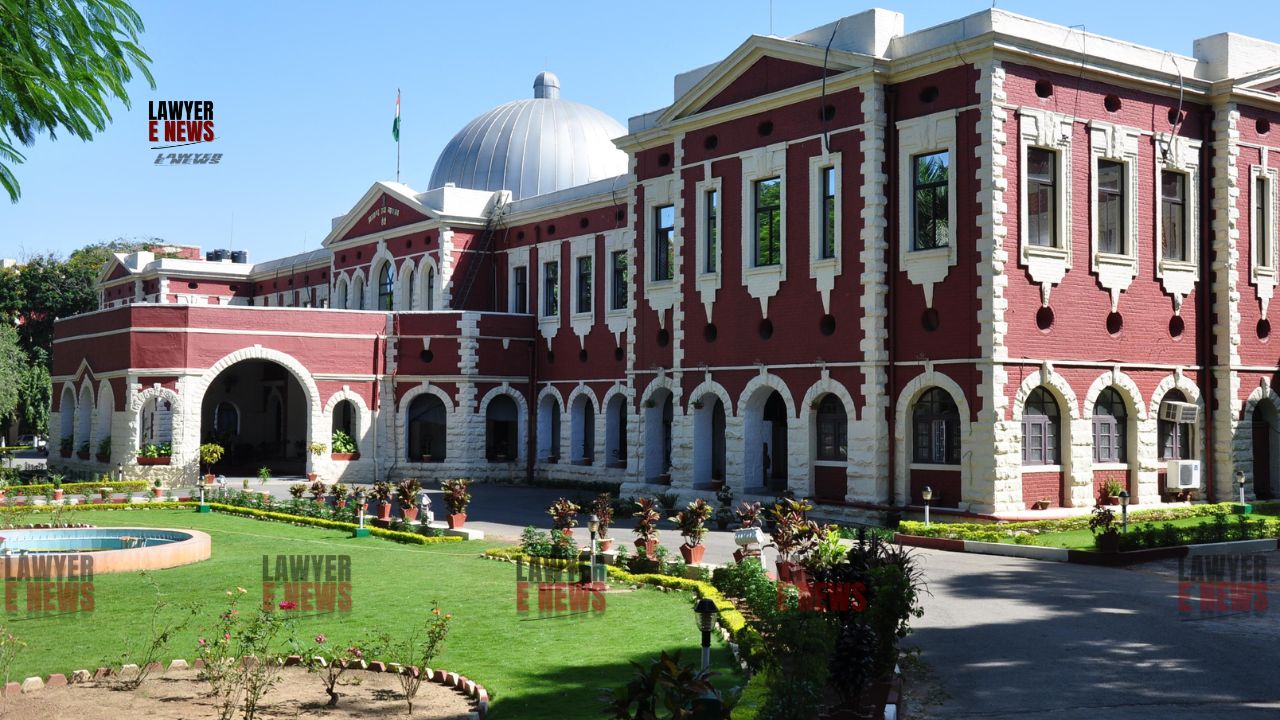
Jharkhand High Court has reiterated that bail in cases involving offences under the Unlawful Activities (Prevention) Act (UAPA) is subject to strict statutory restrictions, and where the allegations against the accused appear prima facie true on the basis of material collected during investigation, courts cannot grant bail.
Jharkhand High Court dismissed a criminal appeal filed under Section 21(1) of the National Investigation Agency Act, 2008 challenging the rejection of bail by the Special NIA Court. The Division Bench comprising Justice Sujit Narayan Prasad and Justice Gautam Kumar Choudhary held that the statutory embargo under Section 43D(5) of the UAPA squarely applied, as the investigation and supplementary charge-sheet disclosed prima facie involvement of the appellant in a terrorist conspiracy involving supply of arms, harbouring of accused persons and facilitating activities of criminal gangs.
“Bail Will Be An Exception And Jail The Rule In Serious UAPA Cases” – Court Relies On Supreme Court Precedents
While examining the statutory framework governing bail under special anti-terror laws, the Court referred to the Supreme Court decision in Gurwinder Singh v. State of Punjab (2024 SCC OnLine SC 109) and observed that the statutory parameters under Section 43D(5) must be strictly applied.
The Court observed:
“Where the allegations appear prima facie true on the basis of the material collected during investigation, the privilege of bail cannot be extended.”
The Bench emphasised that in cases implicating national security, organised criminal networks, and terrorist activities, the legislative intent behind UAPA requires courts to exercise heightened caution before granting bail.
Background of the Case
The case originated from an incident on 18 December 2020, when unknown assailants allegedly set vehicles on fire and fired indiscriminately near Check Post No.1 at Tetariakhand Colliery in Jharkhand. During the attack, four trucks and one motorcycle were burnt and four civilians were injured.
Investigators recovered fragments of a cane bomb, spent cartridges, fuel containers and pamphlets threatening coal transporters and mining companies. The pamphlets allegedly carried the name of Pradeep Ganjhu, indicating involvement of organised criminal networks engaged in extortion from coal transporters and contractors operating in the mining belt.
Initially, Balumath Police Station registered an FIR on 19 December 2020 under multiple provisions of the Indian Penal Code, Arms Act, Explosive Substances Act and UAPA.
Considering the seriousness of the allegations and the possible inter-state ramifications, the Ministry of Home Affairs transferred the investigation to the National Investigation Agency (NIA), which re-registered the case as RC Case No.01/2021/NIA/RNC.
Allegations Against the Appellant
During investigation, the NIA filed a second supplementary charge-sheet implicating the appellant Kundan Kumar as accused no.28.
According to the prosecution, the appellant was allegedly associated with the criminal gang led by Aman Sahu and Sujit Sinha and played an active role in facilitating terrorist activities.
The investigation allegedly revealed that the appellant:
• arranged a flat in Namkum, Ranchi for the gang’s activities
• harboured absconding accused Shahrukh Ansari
• received and distributed arms and ammunition supplied by another accused
• assisted in supplying weapons to gang members involved in the conspiracy
The prosecution further alleged that six country-made pistols and cartridges were recovered from the flat where the appellant was present when police conducted a raid on 19 July 2021.
Earlier Bail Applications and Successive Pleas
The Court noted that the appellant had filed multiple bail applications earlier, including an appeal before the High Court which had already been rejected on merits on 30 June 2023.
Subsequent bail applications were either withdrawn or dismissed, and the present appeal was another attempt to challenge the rejection of bail by the Special NIA Court.
The Bench emphasised that judicial discipline requires courts to give due weight to earlier findings of coordinate benches, especially where the previous order had already examined the merits of the case.
The Court observed:
“Although principles like res judicata do not strictly apply in criminal proceedings, courts must give due weight to the grounds which weighed with the former court while rejecting the bail application.”
Court on Long Incarceration and Delay in Trial
The appellant argued that he had been in custody since July 2021 (over four years and seven months) and that the trial was unlikely to conclude soon due to a large number of witnesses.
However, the High Court rejected this argument and held that mere long incarceration cannot override the statutory restrictions imposed by Section 43D(5) of the UAPA.
Referring to Gulfisha Fatima v. State (Govt. of NCT of Delhi), 2026 LiveLaw (SC) 1, the Court observed:
“Delay does not operate as a trump card that automatically displaces statutory restraint.”
The Bench clarified that constitutional courts must balance the right to personal liberty under Article 21 with concerns relating to national security and societal interest.
Court on Parity with Co-Accused
The appellant also sought bail on the ground that several co-accused had already been granted bail.
However, the High Court rejected this argument, noting that the role attributed to the appellant was materially different from those accused who were granted bail.
The Court held that the appellant’s role involved recovery of arms and active participation in the conspiracy, making his case comparable to another accused whose bail had already been rejected.
The Court reiterated the settled principle:
“The principle of parity applies only when the role and circumstances of the accused are identical.”
Court’s Findings on Prima Facie Case
After examining the supplementary charge-sheet and the material collected during investigation, the Court concluded that the allegations against the appellant were supported by prima facie evidence.
The Bench noted that the appellant was allegedly involved in:
• harbouring absconding accused persons
• facilitating supply of arms and ammunition
• arranging safe houses for gang members
• assisting criminal networks involved in extortion and violent activities
In such circumstances, the Court held that the statutory embargo under Section 43D(5) UAPA prevented the grant of bail.
Decision of the Court
The Jharkhand High Court held that no interference was warranted with the order of the Special NIA Court rejecting bail.
Accordingly, the Court dismissed the criminal appeal, affirming that the accusations against the appellant were prima facie true and the statutory bar under Section 43D(5) applied.
The Court clarified that the observations made in the order were limited to the consideration of bail and would not affect the merits of the trial.
The judgment reinforces the stringent approach adopted by courts in terrorism-related prosecutions under the UAPA, highlighting that bail will ordinarily be denied where the investigation discloses prima facie involvement of the accused in serious offences affecting national security.
The decision also reiterates that long custody, delay in trial, or parity with co-accused cannot override statutory restrictions when the allegations involve organised criminal networks and terrorist activities.
Date of Decision: 11 March 2026





