-
by sayum
10 October 2026 6:25 AM







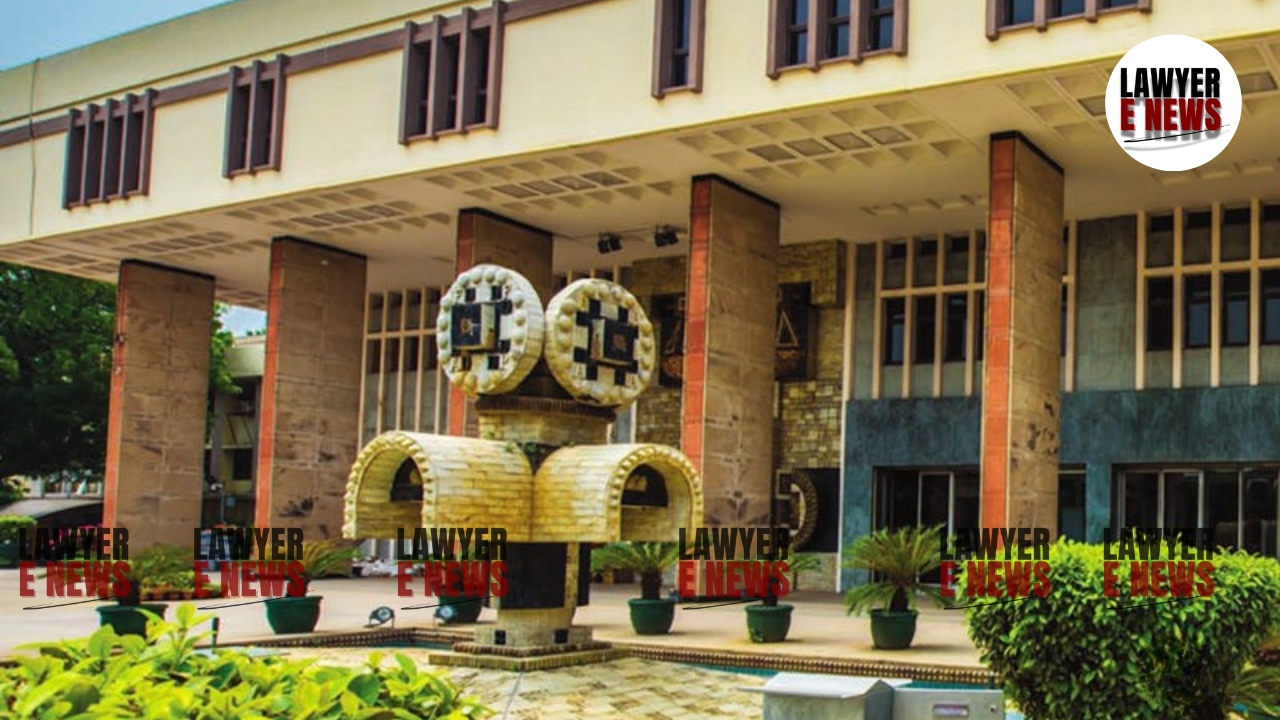
"The mere assertion of violation of the principles of natural justice, where the existence and effect of the alleged procedural violation depend upon disputed questions of fact, does not by itself warrant bypassing the statutory appellate mechanism." Delhi High Court, in a significant ruling delivered on August 19, 2026, held that the extraordinary writ jurisdiction under Article 226 of the Constitution of India cannot be invoked to bypass the efficacious statutory appellate remedy under Section 128 of the Customs Act, 1962, when claims of procedural infractions and natural justice violations turn on disputed questions of fact.
A Division Bench comprising Justice Anil Kshetarpal and Justice Shail Jain observed that where an adjudicating authority has passed a consolidated order covering multiple noticees, individual grievances relating to non-receipt of hearing notices or non-consideration of replies are matters that must be properly examined on the complete original record by the statutory appellate forum.
The Directorate of Revenue Intelligence (DRI) initiated an investigation into the import of information technology and networking equipment by Zenlayer Networks India Private Limited, alleging third-party Importer Exporter Code (IEC) abuse, undervaluation, misdeclaration, and non-compliance with Bureau of Indian Standards (BIS) norms. The investigation culminated in the issuance of three distinct Show Cause Notices (SCNs) concerning live consignments, past cleared consignments, and equipment discovered at various data centres. Following the Central Board of Indirect Taxes and Customs (CBIC) appointing a Common Adjudicating Authority (CAA) for only one notice, the customs authorities at New Delhi proceeded with the adjudication of the remaining two notices, culminating in a consolidated Order-in-Original dated November 14, 2025, which confirmed duty demands and slapped hefty penalties on Zenlayer, its director Amit Singh, and co-noticee Rahi Systems Private Limited.
The primary questions before the High Court were whether Zenlayer was entitled to the appointment of a single Common Adjudicating Authority for all three SCNs under CBIC Circular No. 30/2015, and whether the pendency of a prior writ petition rendered the subsequent adjudication without jurisdiction. The Court was also called upon to determine whether the consolidated Order-in-Original was liable to be quashed under Article 226 of the Constitution of India on grounds of natural justice violations and limitation, notwithstanding the availability of a statutory appellate remedy under Section 128 of the Customs Act.
Common Adjudication Not Mandatory For Every Interconnected SCN
Dealing with the initial challenge to the non-appointment of a single CAA, the Bench acknowledged that while common adjudication is desirable to prevent contradictory findings when notices arise from common investigations, it cannot be claimed as an absolute right in every instance.
The Court observed that although the principle laid down in Star Delta Exim (P) Ltd. v. Union of India recognizes the administrative utility of common adjudication founded on common evidence, it cannot be construed to mean that every show cause notice emanating from a single probe must invariably be assigned to one officer regardless of distinct subject matters, stages of import, or statutory implications.
"The principle, however, cannot be understood as laying down that every show cause notice emanating from a common investigation must, irrespective of the nature of the allegations and reliefs proposed therein, necessarily be adjudicated by one authority."
Interlocutory Adjournment Does Not Oust Adjudicating Authority's Jurisdiction
The Bench rejected Zenlayer's contention that the continuation of adjudication by the Principal Commissioner of Customs at New Delhi was impermissible due to an earlier interim order dated August 19, 2025.
The Court clarified that the earlier order had only recorded prima facie observations and contained an operative direction adjourning proceedings before the Mumbai Commissionerate, without staying or restraining the New Delhi authorities from adjudicating the notices pending before them.
"The said order did not expressly stay the adjudication proceedings in respect of SCN Nos.24/2022-23 and 40/2023-24 before the competent authority at New Delhi. Consequently, the pendency of the Writ Petition, by itself, did not render the subsequent adjudication without jurisdiction."
Alternative Remedy Bar Applies Where Natural Justice Violations Involve Disputed Facts
Addressing the challenges raised by Amit Singh and Rahi Systems regarding the alleged denial of hearing opportunities and non-service of notices at updated email addresses, the Bench firmly declined to exercise its extraordinary writ powers.
The Court noted that while precedents like Jupiter Exports v. Commissioner of GST and Alaknanda Steel v. Commissioner mandate that hearing opportunities must be real and effective, determining whether notice was duly served or if replies were overlooked involves an examination of contested facts and complete departmental records.
The Bench underscored that the statutory appellate authority under Section 128 of the Customs Act is fully empowered to examine the complete record, appreciate evidence, and rectify any procedural prejudice caused to individual noticees.
"Setting aside the consolidated Orders-in-Original only qua Mr. Amit Singh or Rahi Systems, on disputed questions concerning the receipt or consideration of particular communications and the opportunities afforded to them, would not be an appropriate exercise of the extraordinary jurisdiction of this Court."
Statutory Appellate Authority Better Placed To Examine Consolidated Orders
The Court highlighted that the impugned Order-in-Original was a consolidated order encompassing twenty-three firms and individuals, with Zenlayer having been given sufficient notice and opportunity throughout the proceedings.
In the absence of any inherent lack of jurisdiction or pure legal defect apparent on the face of the record, the High Court held that piecemeal interference under writ jurisdiction based on individual factual grievances was unwarranted and that all substantive defenses, including limitation under Section 28(4) of the Customs Act, must be raised before the appellate forum.
The High Court dismissed all four writ petitions, upholding the continuation of the adjudication and relegating Zenlayer, Amit Singh, and Rahi Systems to the statutory appellate forum under Section 128 of the Customs Act. The Court granted the petitioners full liberty to raise all substantive and procedural grounds before the appellate authority, clarifying that it had expressed no opinion on the merits, valuation, penalties, or limitation.
Date of Decision: 19 August 2026