-
by sayum
30 July 2026 6:56 AM







"Order VII Rule 7 CPC authorizes the Court to grant a smaller relief than the larger relief claimed, if entitlement therefor is made out on facts." Supreme Court, in a significant ruling dated July 29, 2026, held that a plaintiff seeking declaration of title over an entire property under a gift deed is entitled to a declaration of title in respect of an undivided half share if entitlement is made out on facts, while ruling that recovery of possession cannot be granted without partition by metes and bounds.
A bench of Justices Sanjay Kumar and Sanjeev Sachdeva observed that while the lower courts rightly found the gift deed valid for a moiety, the plaintiff must seek partition through appropriate proceedings.
The Underlying Real Estate Dispute
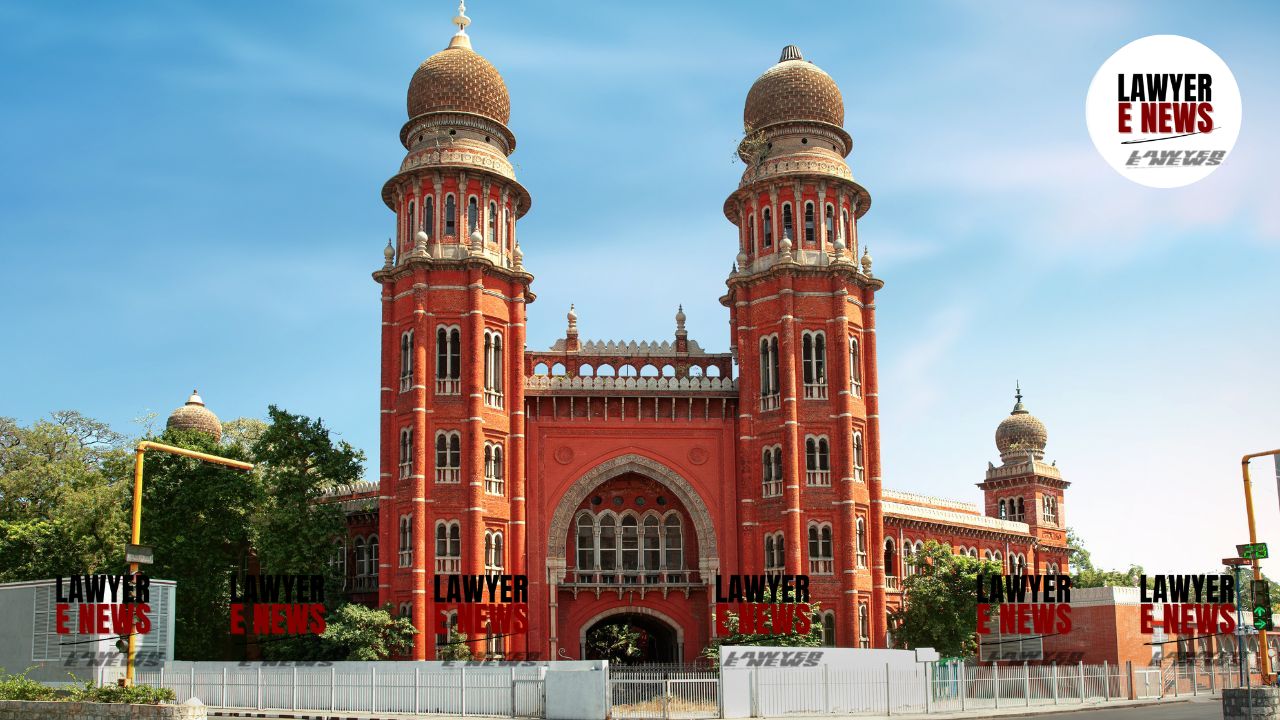
The litigation arose from Original Suit No. 697 of 1996 filed by the appellant-plaintiff, Maragadham, seeking declaration of title and recovery of possession over lands in Vellore District based on a 1990 registered gift deed executed by her grandfather, Kuttiyappa Goundar. The suit was contested by defendant Nos. 2 to 4, who argued that the property originally belonged to Kuttiyappa Goundar's first wife Muniyammal via 1949 deeds, meaning Kuttiyappa Goundar had no exclusive right to gift the entire property. While the Trial Court decreed the suit, the First Appellate Court and the Madras High Court reversed the decision, non-suiting the plaintiff on the ground that the gift of the entire extent was void.
Core Legal Questions Before The Court
The primary question before the court was whether a co-sharer's gift deed covering the entirety of a property is completely void or valid to the extent of his share under the Hindu Succession Act, 1956. The court was also called upon to determine whether lesser relief can be granted under Order VII Rule 7 of the Code of Civil Procedure, 1908, when a plaintiff claims ownership over an entire property but establishes title only over an undivided half share.
Hindu Succession Act Governs Devolution
The court affirmed the concurrent findings of the High Court and First Appellate Court that upon the death of Muniyammal intestate, her properties devolved under Section 15(1)(a) of the Hindu Succession Act, 1956, upon her only daughter and her husband in equal shares.
"Undivided Half Share Constitutes Absolute Property"
The bench noted that the undivided half share in the hands of Kuttiyappa Goundar did not partake the character of coparcenary property and belonged to him absolutely. Consequently, he had every right in law to alienate his share without the consent of the co-owner Muniammal.
"No Need For Co-Sharer's Consent"
The court observed that the requirement for consent would arise only in the case of coparcenary property, stating that "there was no need for him to take the consent of the co-owner, Muniammal, before parting with his undivided half share in the suit properties."
Limitations Of Granting Lesser Relief Under CPC
Addressing the applicability of Order VII Rule 7 CPC, the bench clarified that while smaller reliefs can be granted, such discretion is unavailable when a plaintiff sets up an altogether different case from the one established on facts.
"Ownership Over Entire Property Not Established"
The court ruled that since the plaintiff claimed absolute ownership over the entirety of the property and failed to prove delivery of possession, she cannot be granted the relief of recovery of possession without the property being partitioned by metes and bounds.
"Liberty Granted To Institute Partition Suit"
The Supreme Court allowed the appeal in part, setting aside the lower courts' dismissal to the extent of denying title, and declared that the plaintiff is entitled to a declaration in respect of an undivided half share, leaving her at liberty to institute a separate suit for partition.
Date of Decision: 29 July 2026