-
by sayum
17 November 2026 9:07 PM







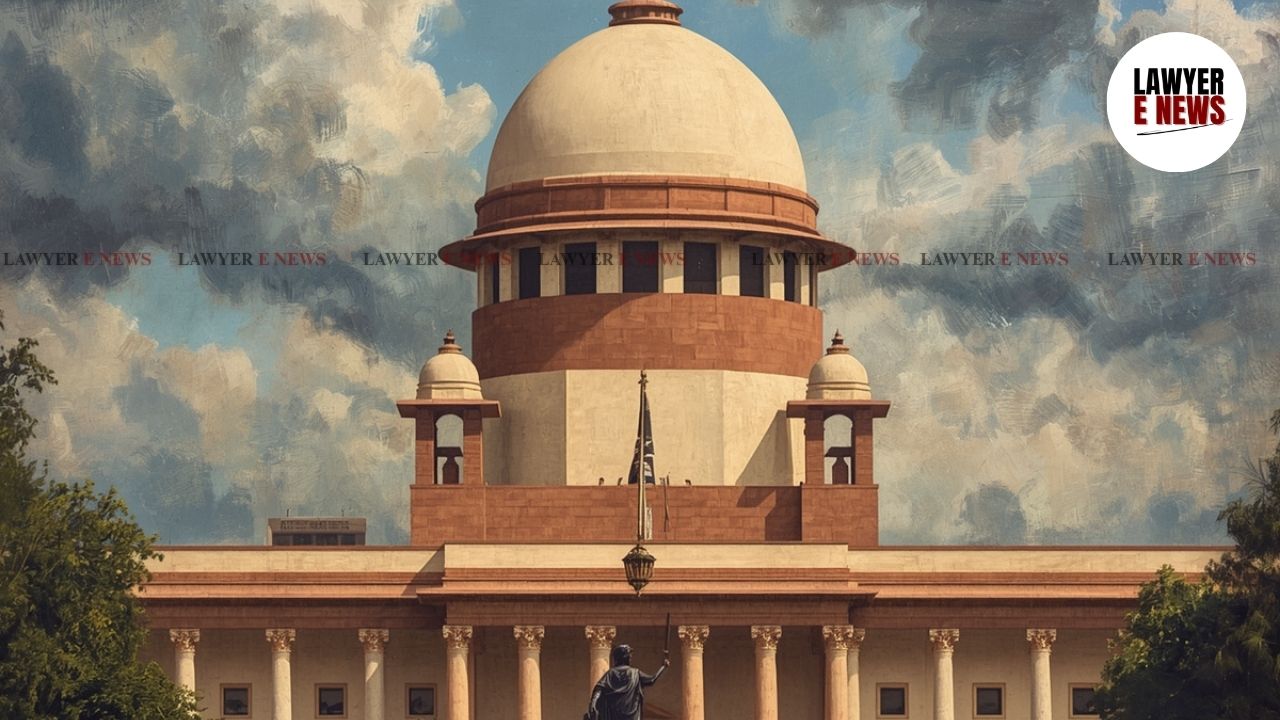
NEW DELHI — Exercising its plenary powers under Article 142 of the Constitution of India to grant complete and effective quietus to protracted matrimonial warfare, the Supreme Court on November 16, 2026, dissolved a marriage following a comprehensive amicable settlement between the parties. A Bench comprising Justice Satish Chandra Sharma and Justice Nongmeikam Kotiswar Singh held that the invocation of Article 142 was just and expedient to bring an end to an array of cross-criminal complaints, maintenance proceedings, and disputes under the Protection of Women from Domestic Violence Act, 2005.
The dispute stemmed from proceedings initiated by the wife under Section 12 read with Section 23 of the DV Act, wherein the Magistrate directed payment of interim maintenance and alternative accommodation charges aggregating to Rs. 1,50,000 per month. The husband subsequently moved an application under Section 25(2) of the DV Act questioning the grant of accommodation charges while the wife retained possession of the matrimonial home. After the Calcutta High Court ruled that alternative accommodation charges could not be claimed while in possession of the shared household, the husband approached the Supreme Court seeking quietus to all pending disputes.
Whether the Supreme Court should exercise its extraordinary plenary jurisdiction under Article 142 of the Constitution of India to dissolve the marriage, enforce an amicable custody and financial compromise, and terminate multiple criminal and civil proceedings pending across multiple fora under the DV Act and general law?
Parties Arrive At Comprehensive Settlement To Terminate Inter-Se Litigation
During the pendency of the appeal, the top court encouraged both sides to explore an amicable resolution to resolve their deep-seated matrimonial differences. Pursuant to negotiations, the parties formalized a comprehensive settlement package resolving all disputes relating to permanent alimony, maintenance, property possession, and child custody.
Under the terms of the settlement, a sum of Rs. 30 crores was agreed to be paid to the wife as permanent alimony via demand draft, simultaneously with the handover of keys and vacant possession of the shared matrimonial household in Kolkata.
Child Welfare Safeguarded Through Dedicated Trust And Parenting Plan
To secure the minor child's future, the parties agreed that a sum of Rs. 45 crores would be deposited and held by the mother in trust for the minor child. Out of these trust funds, residential accommodation valued up to Rs. 5 crores would be purchased in the ownership of the trust, subject to specific residence rights for the mother until the child attains 25 years of age or until her remarriage.
The Bench closely reviewed the parenting plan governing the father's visitation rights, affirming that the welfare of the child remains paramount in resolving custody dynamics.
The Court held that in the event of any disagreement regarding the implementation or modification of the parenting plan, the parents must make a good-faith effort to resolve issues amicably keeping the child's best interests as the paramount consideration, reserving liberty to approach the competent court only upon failure of such efforts.
Invocation Of Article 142 To Grant Complete Justice And Close Criminal Cases
Recording the consent terms, the Bench emphasized that terminating the multiplicity of actions across lower courts was necessary to prevent harassment and abuse of judicial process.
The Court directed the closure and termination of fourteen distinct proceedings, including civil suits, maintenance execution petitions, complaint cases under the DV Act, and cross-FIRs registered before the Alipore police authorities.
Emphasizing the necessity of putting a final quietus to the deadlock, the Court held that exercising jurisdiction under Article 142 of the Constitution was appropriate to dissolve the marital tie solemnized in 2013 and give binding effect to all compromise covenants.
The Supreme Court accordingly allowed the interlocutory application under Article 142 of the Constitution of India, dissolved the marriage by a decree of divorce, directed strict compliance with the settlement terms and parenting plan, and closed all fourteen pending criminal and civil cases between the parties.
Date of Decision: November 16, 2026