-
by sayum
23 August 2026 2:32 AM







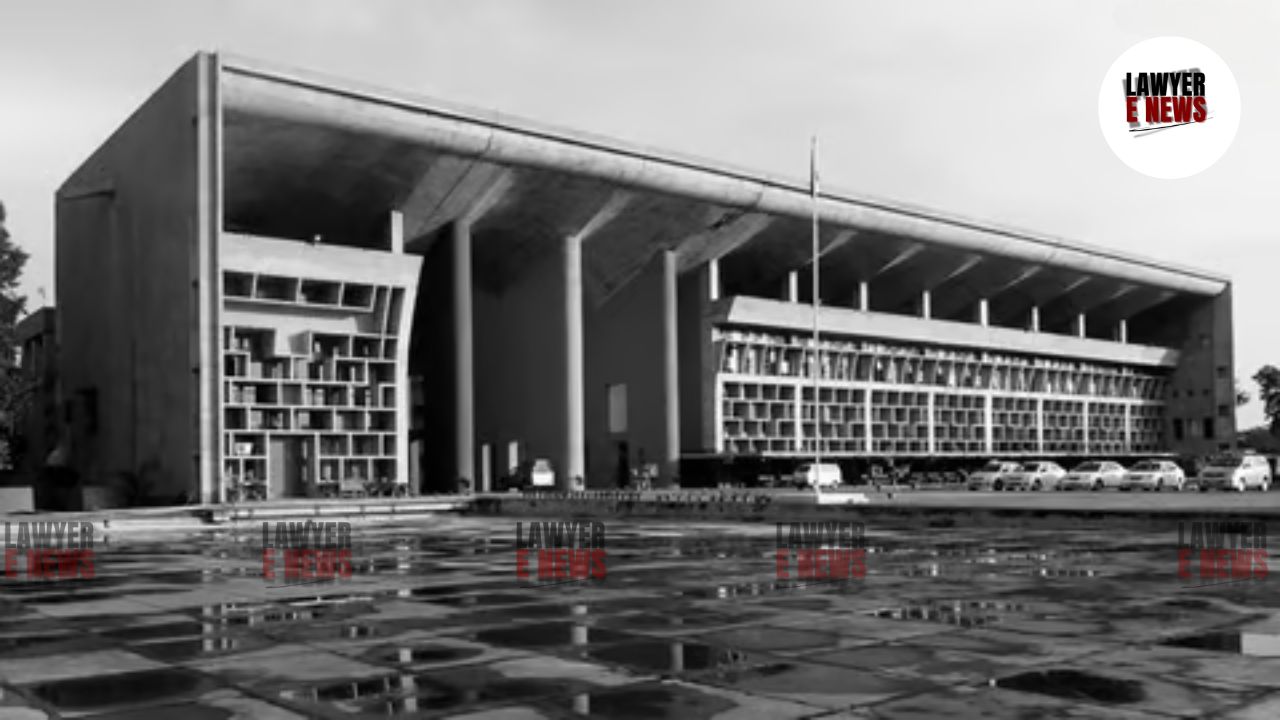
“Even today, counsel is unable to explain how a suit for mandatory injunction was maintainable when the proper relief was specific performance” – Punjab and Haryana High Court dismissed a Regular Second Appeal, who sought to enforce an alleged agreement to sell through a suit for mandatory injunction, instead of seeking specific performance, which the law requires. The Court found the appeal not only legally misconceived but also factually unsupported, as the plaintiff himself was an attesting witness to a rival sale deed, which he never challenged.
Justice Alka Sarin, sitting in a reportable bench, observed: “There is no explanation forthcoming as to why the sale deed on which the plaintiff-appellant was an attesting witness had not been challenged in the present suit.”
“You Can’t Be the Witness to a Sale Deed and Then Claim the Property” – Plaintiff’s Case Collapses Under His Own Signature
The appellant, Suresh Goel, filed a suit in 2009 seeking mandatory injunction directing the original sellers (respondents no.1 and 2) to execute a sale deed in his favour, based on an alleged agreement to sell dated 24.12.2008 (Ex.P1). He claimed to have paid ₹24,00,000/-, comprising ₹4 lakh as earnest money and ₹20 lakh as further payment.
However, the Trial Court (31.05.2018) and First Appellate Court (16.12.2019) concurrently held:
The agreement to sell was never proved—no attesting witness, no corroborative evidence.
The plaintiff himself was an attesting witness to a registered sale deed dated 22.04.2009, executed by the sellers in favour of respondents no.3 and 4, which the plaintiff never challenged.
The entire case rested on self-serving testimony with no documentary or independent support.
The Court found the contradiction fatal: if the plaintiff was truly the buyer, why did he sign the rival sale deed as a witness, and never challenge it?
“The plaintiff-appellant himself was the attesting witness to the sale deed… even today learned counsel is unable to explain this contradiction.”
“Wrong Remedy is Fatal in Civil Litigation – Mandatory Injunction Can’t Enforce a Contract to Sell”
Justice Sarin emphasized that the relief sought itself was legally unsustainable. The plaintiff ought to have filed a suit for specific performance under the Specific Relief Act, not for mandatory injunction.
“Both the Courts concurrently found that instead of filing a suit for specific performance, the plaintiff-appellant had filed a suit for mandatory injunction, which itself was not maintainable.”
This fundamental flaw in the legal strategy undermined the entire suit. The Court highlighted that mandatory injunctions are not substitutes for contractual enforcement and cannot be used to compel sale deeds on disputed or unproven agreements.
“Plea of Fraud Cannot Survive Without Proof” – Court Finds Allegations Baseless and Unsupported
The plaintiff had also alleged coercion, physical assault, and threats by the defendants to force his signatures on blank documents. He referred to FIRs filed by both sides as a consequence of the incident.
However, the Court found no credible evidence:
No medical or police records were produced.
No independent witnesses were examined.
The alleged coercion was contradicted by the plaintiff’s own voluntary act of attesting the sale deed.
The Court observed: “Except for the self-serving statement of the plaintiff-appellant, no other evidence was led… The plea of fraud stands rejected.”
No Substantial Question of Law, No Relief – A Misconceived Case Built on Contradictions
The High Court concluded that the findings of both courts were purely factual, based on evidence (or lack thereof), and raised no substantial question of law under Section 100 CPC. The second appeal was held meritless and dismissed in totality.
Justice Sarin sealed the matter with the following conclusion:
“No question of law, much less any substantial question of law, arises in the present case. The appeal being devoid of any merit is accordingly dismissed.”
The ruling reinforces two settled legal principles:
Proper remedy must be pursued — A suit for specific performance is the correct legal route to enforce an agreement to sell, not mandatory injunction.
One cannot be both witness and challenger — A party who attests a rival transaction cannot later claim rights in contradiction unless the attestation is challenged and set aside.
Date of Decision: 09.09.2025