
-
by sayum
17 November 2026 9:07 PM







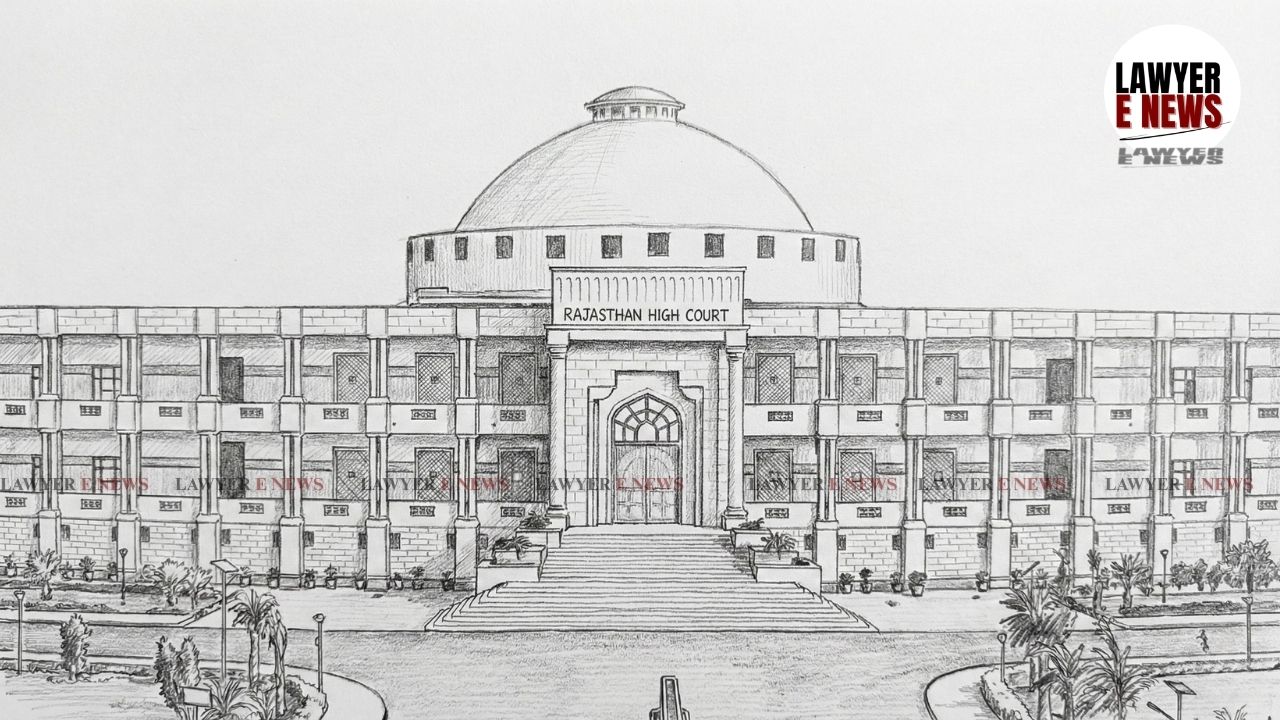
"Rule 28 of the Rules of 1951 cannot independently create a tax liability unless the parent charging provision and rates are notified under Section 4(1)(c) of the Act of 1951. It is a well settled law that a rule cannot enlarge the scope of the main charging provision as the delegated legislation and executive directions may regulate procedure, but they cannot impose tax where the Act does not validly do so." Observing that subordinate legislation cannot create an independent tax liability or expand the charging provisions of a parent statute to restrict inter-state vehicular movement, the Rajasthan High Court bench comprising Chief Justice Sanjay K. Agrawal and Justice Sameer Jain, on November 2, 2026, held that the State authorities lack statutory jurisdiction to seize, impound, or demand road tax on private non-transport vehicles registered outside Rajasthan in the absence of a specific rate notification under Section 4(1)(c) of the Rajasthan Motor Vehicles Taxation Act, 1951.
The batch of writ petitions arose after transport authorities and flying squads in Rajasthan intercepted and impounded various private non-transport vehicles bearing registration numbers from Haryana, Delhi, Gujarat, Uttar Pradesh, and other States. The authorities invoked Rule 28(1)(i) of the Rajasthan Motor Vehicles Taxation Rules, 1951, demanding one-time entry and road tax amounting to lakhs of rupees on the allegation that the vehicles had remained in the State beyond thirty days without paying local road taxes. Aggrieved by the summary seizure and coercive compound notices issued without statutory assessment, the vehicle owners approached the High Court.
The primary legal issues framed for determination were whether the State of Rajasthan is justified in impounding out-of-State private vehicles and demanding road tax in the absence of a gazetted rate notification issued under Section 4(1)(c) of the Rajasthan Motor Vehicles Taxation Act, 1951; whether the notification dated July 10, 2024, issued under Section 4(1)(b) satisfies the statutory mandate to levy entry tax on non-transport private vehicles registered outside the State; and whether executive enforcement officers can summarily seize private vehicles under Section 17 without complying with the procedural safeguards and assessment mechanisms stipulated under Sections 8A, 13, and 13A of the Act.
Examining the constitutional benchmark governing fiscal legislation, the bench underscored that Article 265 of the Constitution of India operates as a substantive jurisdictional bar against executive overreach. The court observed that no pecuniary liability can be enforced without clear legislative authority encompassing the taxable event, the person liable, and the specific rate or measure of tax.
Subordinate rules cannot enlarge the parent charging section or independently create fiscal liability
The Division Bench highlighted that Section 4(1) of the Act of 1951 establishes distinct and mutually exclusive statutory compartments for taxation. While Section 4(1)(b) applies strictly to non-transport vehicles registered within Rajasthan, Section 4(1)(c) is the sole statutory provision governing motor vehicles registered outside the State and using roads in Rajasthan.
The court observed that the delegated rule-making power exercised under Rule 28 cannot override the substantive requirements of the parent statute. The bench noted that although the State had notified rates for out-of-State commercial goods and passenger vehicles under Section 4(1)(c), it had failed to issue any corresponding notification prescribing tax rates for out-of-State private non-transport cars.
Rebuffing the State's reliance on the general notification dated July 10, 2024, the bench held that administrative mechanisms and depreciation clauses framed under Section 4(1)(b) cannot cure the total absence of a gazette notification under Section 4(1)(c). The court observed that subordinate legislation and executive directions may regulate procedure, but they cannot impose tax where the Act does not validly do so.
Inter-state movement cannot be impeded by unauthorized vehicular seizures at State borders
Invoking the constitutional guarantee of national integration and free movement across federal boundaries, the court emphasized that administrative zeal must yield to statutory discipline and the cherished ethos of hospitality.
The bench remarked that Rajasthan's cultural ethos of welcome must reflect in governance, ensuring that every visitor, irrespective of the State of registration of their private vehicle, encounters the warmth of welcome rather than an impediment unsupported by law.
Summary impounding without statutory assessment violates mandatory procedural safeguards
Addressing the summary impounding of vehicles under Section 17 of the Act, the bench observed that executive officers had acted in blatant disregard of procedural due process. The court highlighted that Section 17(2) permits seizure only where a competent officer has reason to believe that tax is due and unpaid pursuant to a determinable liability.
The bench observed that the authorities bypassed the mandatory mechanism of Section 8A, which mandates recording objective satisfaction, affording a reasonable opportunity of being heard, and passing a speaking computation order before initiating recovery under Sections 13 and 13A.
Allowing the batch of writ petitions, the High Court quashed the impugned challans, compounding letters, and seizure orders issued against the petitioners' vehicles. The Division Bench directed the respondent authorities to immediately refund any tax or penalty collected from the vehicle owners within thirty days from the date of submission of the order.
Date of Decision: November 2, 2026