
-
by sayum
26 August 2026 1:49 PM







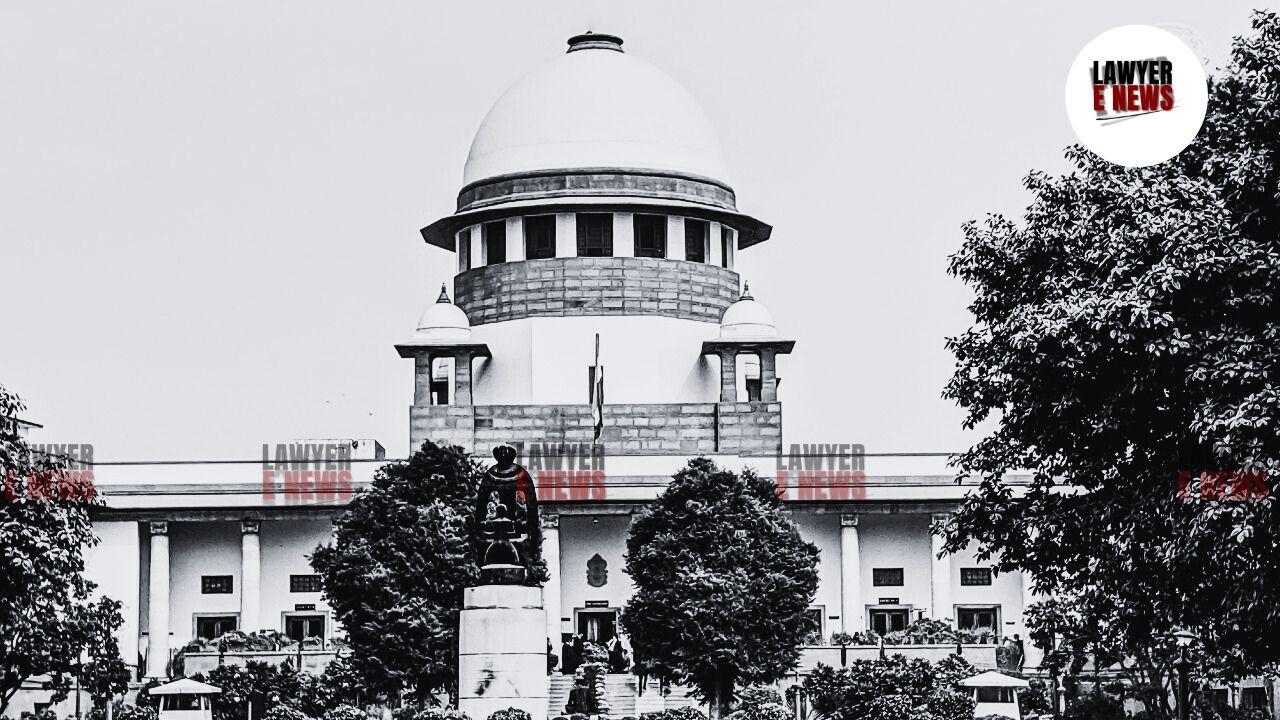
“Strong and cogent evidence is essential to deny bail to an accused summoned under Section 319 CrPC” – Supreme Court of India delivered a notable judgment clarifying the legal standards governing bail applications filed by accused persons who are summoned during the trial under Section 319 of the Code of Criminal Procedure (CrPC). The Bench comprising Justice J.B. Pardiwala and Justice K.V. Viswanathan allowed the bail plea of Md Imran @ D.C. Guddu, and concurrently dismissed the State of Jharkhand’s appeal seeking cancellation of anticipatory bail granted to two other co-accused.
The Court, in Criminal Appeal No. ___ of 2026 arising out of SLP (Crl.) No. 12110/2025, held that:
“When a person is added as an accused under Section 319 CrPC, the test to be applied for granting bail is higher than a prima facie case at the time of framing charges but short of evidence sufficient for conviction.” [Para 14]
This pronouncement is significant in guiding courts on how to approach bail for persons not originally charge-sheeted but later summoned based on fresh evidence during trial, especially in serious offences such as murder.
Named in FIR but Not Chargesheeted – Later Summoned Under Section 319 CrPC
The case arises from Daily Market Police Station Case No. 46 of 2018 (S.T. No. 100239 of 2019) involving the alleged murder of a man in Jharkhand. The FIR named nine accused persons, including the appellant Md Imran @ D.C. Guddu. However, during investigation, police charge-sheeted only three accused, and dropped the remaining six, including the appellant, by filing a closure report.
In the trial, eyewitnesses who were family members of the deceased deposed that all nine named in the FIR, including Md Imran, were involved in the murder. On the strength of these depositions (recorded in 2020 and 2021), the first informant moved an application under Section 319 CrPC in 2022, seeking summoning of the six dropped accused.
The trial court allowed the application partially, summoning three persons – including the appellant – based on the evidence. This summoning order attained finality, as it was not challenged by any party.
"Person Added Under Section 319 Is in a Distinct Position From Original Accused" – Supreme Court Highlights Higher Threshold for Bail Refusal
In its detailed analysis, the Supreme Court underlined the distinct legal position of an accused who is summoned mid-trial under Section 319 CrPC, and the stringent evidentiary threshold applicable for denying bail in such cases.
The Court observed:
“The relevant consideration… should be the strong and cogent evidence than mere probability of his complicity. The test… is more than prima facie case… but short of satisfaction to an extent that the evidence, if goes unrebutted, would lead to conviction.” [Para 14]
Further, the Court held that the nature of the offence, quality of evidence, and likelihood of the person absconding or tampering with evidence must be duly weighed before denying or granting bail.
This legal standard reaffirms the doctrine laid down in earlier precedents where Section 319 summons are treated as exceptional measures, and bail must not be denied automatically merely because an individual has been added during trial.
Trial to Proceed Afresh – Charges Framed Against Newly Added Accused
The Court took note of the procedural status and clarified that, following the summoning under Section 319, the trial against the newly added accused – including Md Imran – will commence afresh, and charges have already been framed.
Accordingly, the Court ordered:
“It is ordered that Md Imran @ D.C. Guddu shall be released on bail subject to terms and conditions that the trial court may deem fit to impose.” [Para 17]
The Court further directed all three accused, including those on anticipatory bail, to cooperate with the trial proceedings and attend hearings regularly. [Para 20]
Anticipatory Bail of Co-Accused Upheld – No Grounds Made Out for Cancellation
In the connected appeal (Criminal Appeal No. ___ of 2026 arising out of SLP (Crl.) No. 19548/2025), the State of Jharkhand had challenged the anticipatory bail granted by the High Court to Md Shamsher and Md Arshad, the two co-accused summoned under Section 319 CrPC.
The State contended that bail should be cancelled given the gravity of the offence. However, the Supreme Court found no substance in the plea and noted:
“We are informed that they have been appearing before the trial court on all dates… No case is made out by the State for cancellation of anticipatory bail.” [Paras 15, 18]
Thus, the State’s appeal was dismissed, and the High Court’s order granting anticipatory bail remained undisturbed.
Observations Not Binding on Trial – Trial Court Directed to Decide Case Independently
To prevent any prejudice to the ongoing trial, the Bench clarified:
“The observations in this order are only for the purpose of deciding the bail application… The trial court will proceed in accordance with law and shall not be influenced by the observations made in this order.” [Para 21]
This reaffirmed the settled principle that bail orders do not have evidentiary value in the trial
With this judgment, the Supreme Court has delivered crucial clarity on bail jurisprudence related to accused persons summoned during the trial under Section 319 CrPC. The decision lays down a well-calibrated standard, balancing the rights of the accused with the seriousness of allegations, particularly in murder trials.
“The test… is more than a prima facie case but short of satisfaction to an extent that the evidence, if goes unrebutted, would lead to conviction.” [Para 14]
The appeal filed by Md Imran @ D.C. Guddu was allowed, and he was granted regular bail, while the State’s appeal challenging anticipatory bail to co-accused was dismissed, marking a twin ruling on the bail rights of those summoned post-charge sheet.
Date of Decision: 07 January 2026





