-
by sayum
10 October 2026 6:25 AM







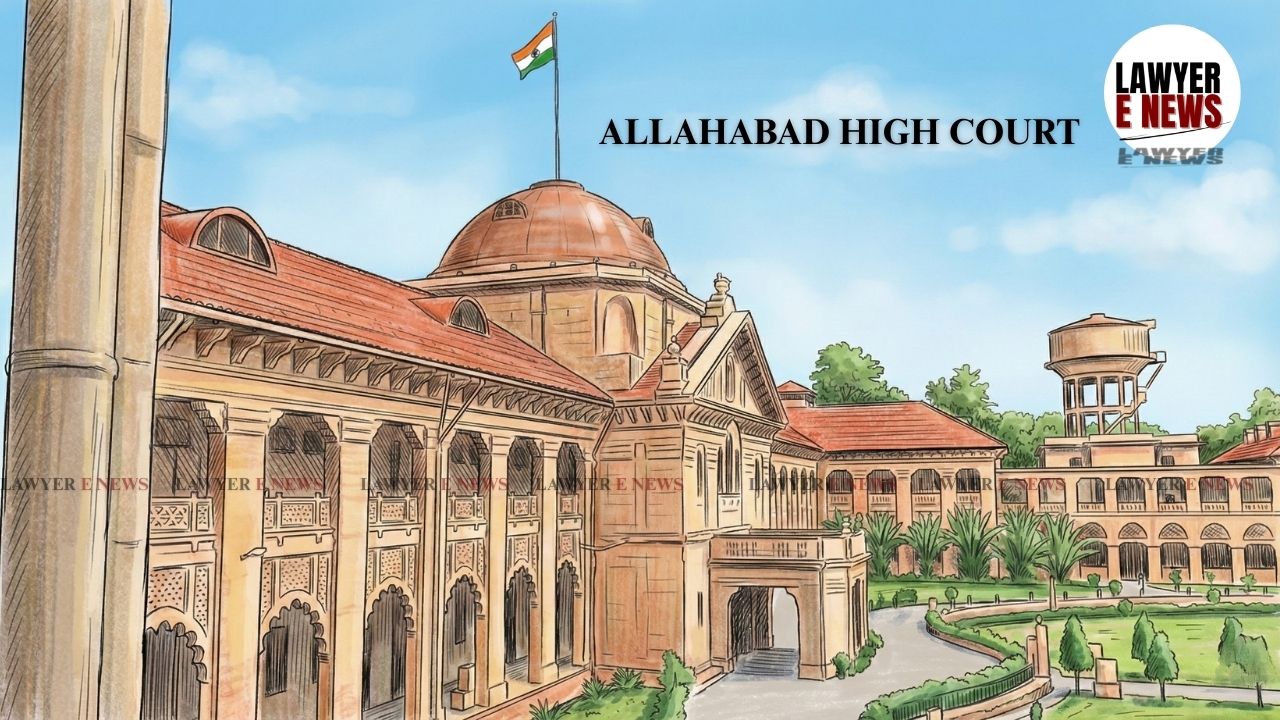
"The slogan 'Gushtakh-e-Nabi Ke Ek Hi Saja, Sar Tan Se Juda' is nothing but a challenge to the authority of law as also to the sovereignty and integrity of India and incites the people for an armed rebellion which is punishable under the law." Allahabad High Court, in a significant ruling dated September 7, 2026, denied bail to Maulana Tauqeer Raza Khan, holding that slogans inciting violence and challenging the sovereignty of the nation cannot be equated with traditional religious expressions.
A bench of Justice Ashutosh Srivastava observed that the applicant, by organizing mass gatherings without permission and applauding violent acts against police personnel, prima facie acted as the "mastermind" of the Bareilly riots.
The applicant, Maulana Tauqeer Raza Khan, was arrested on September 27, 2025, following a violent protest in Bareilly. The FIR alleges that despite the imposition of Section 163 of the BNSS, the applicant mobilized a crowd to march toward the Islamia Inter College to protest against state action, leading to rioting, stone-pelting, use of petrol bombs, and attacks on police personnel. The applicant contended that he was not physically present at the scene and was under house arrest, arguing that his calls for protest were legitimate political expressions.
The court was primarily called upon to determine whether the applicant, despite his absence from the actual site of violence, was criminally liable as an instigator for the ensuing riots. Additionally, the court addressed whether the specific slogans raised during the protests constituted protected speech or incitement to violence against the state’s integrity.
The court examined the nature of the mobilization efforts and the subsequent conduct of the applicant. While the applicant claimed he had retracted his call for a protest, the court noted that his overall conduct, including his post-incident speech thanking the mob for their response, indicated a deeper role.
Mastermind Of The Riots
The court observed that the applicant’s influence was the driving force behind the mass assembly that directly culminated in the breakdown of public order. The bench rejected the contention that the applicant was merely a political figure exercising free speech, noting that the assembly was held in direct defiance of prohibitory orders issued under Section 163 of the BNSS.
Distinguishing Slogans From Religious Expression
A critical aspect of the court's reasoning was the distinction between religious slogans and those inciting violence. The court clarified that the slogan "Gustakh-e-Nabi Ke Ek Hi Saja, Sar Tan Se Juda" cannot be equated with religious chants such as "Jai Shri Ram" or "Har Har Mahadev."
"The said slogan cannot be equated to other slogans like 'Nara-e-Takbir, AllahuAkbar' 'Jo Bole So Nihal Sat Sri Akal', or for that matter 'Jai Shri Ram' or 'Har Har Mahadev', which are slogans expressing respect to the concerned God or Guru."
No Tolerance For Armed Rebellion
The bench emphasized that the incitement of mobs to engage in violent confrontations with state authority, particularly when involving the use of illegal firearms and petrol bombs, strikes at the heart of the nation’s stability. The court held that such acts of rebellion are not protected by any constitutional right.
The court noted that the applicant's criminal antecedents and his role in instigating the public, despite knowing the potential for violence, outweighed the arguments for his release. Given the severity of the charges, which include rioting, assault on public servants, and destruction of public property, the court deemed the applicant’s continued incarceration necessary for the ongoing trial.
The court concluded that the evidence collected by the Investigating Officer, including videos and the trajectory of the protests, provided sufficient material to link the applicant to the criminal activity. Consequently, the bail application was rejected, and the applicant remains in custody.
Date of Decision: 07 September 2026