-
by sayum
25 August 2026 11:12 PM







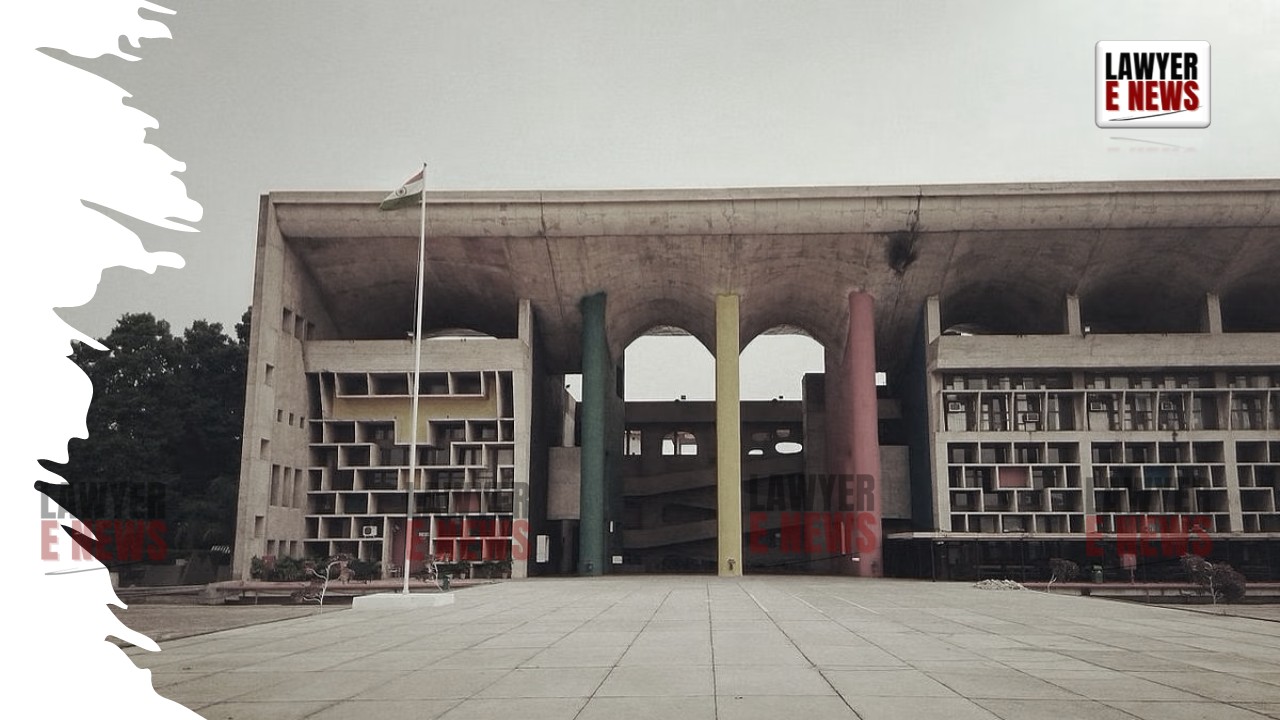
“A Lost Life Is Not a Private Commodity”, On 19/02/2026, the Punjab and Haryana High Court delivered a powerful and reportable judgment refusing to quash an FIR under Section 304-A IPC on the basis of compromise between the accused and the complainant.
Justice Sumeet Goel held that an offence involving death by negligence is not a private dispute but a crime against society, and that the primary victim being deceased cannot consent to any settlement. The Court categorically ruled that criminal proceedings arising from workplace accidents resulting in death cannot be terminated merely because financial compensation has been paid and the complainant has entered into a compromise.
The petition seeking quashing of FIR No. 0392 dated 07.10.2021 and consequential proceedings was dismissed.
Factory Accident Resulting in Death of Two Workmen
The case arose out of a tragic incident dated 06.10.2021 at a factory premises where two labourers, Om and Rampal, allegedly fell from a shuttering beam after part of the structure collapsed. Both succumbed to their injuries.
On the complaint of the brother-in-law of deceased Om, an FIR under Section 304-A IPC was registered. The petitioners approached the High Court under Section 482 Cr.P.C. seeking quashing of the FIR and charge-sheet on the basis of a compromise dated 09.05.2023.
It was contended that the petitioners were merely contractual employees without supervisory control, that the accident was purely accidental, and that substantial financial assistance of Rs. 3,00,000/- each had been extended to the families of the deceased. The complainant supported the plea, stating that the FIR was lodged under a misunderstanding.
The State opposed the petition, arguing that the offence involved loss of human life and could not be treated as a private dispute.
“In Cases of Death, the Deceased Is the Real Victim”
The Court undertook an elaborate analysis of the law governing quashing of criminal proceedings on the basis of compromise, referring to Gian Singh, Narinder Singh, Parbatbhai Aahir, Laxmi Narayan and its own decision in Satnam Singh (2025).
Justice Goel observed that the foundational requirement for quashing on compromise is the consent of the victim. However, in cases under Section 304-A IPC, the primary victim is the deceased.
“In offence under Section 304-A of the IPC… the primary victim is the deceased… The deceased, being the primary aggrieved party, is no longer capable of expressing consent or grievance.”
The Court held that surviving family members or informants cannot assume the mantle of primary victim for the purpose of extinguishing criminal liability.
Victimology and Article 21: Justice Must Embrace the Injured and the Afflicted
The judgment contains a deep reflection on victimology and constitutional balance under Article 21. Referring to Justice Krishna Iyer’s observation in Rattan Singh v. State of Punjab, the Court recalled:
“It is a weakness of our jurisprudence that the victims of crime… do not attract the attention of the law.”
Justice Goel emphasized that criminal jurisprudence has evolved to recognize the rights of victims and that courts must adopt an equipoise approach balancing rights of accused and victims.
He observed that crimes involving death transcend private injury and implicate societal interest.
“Crimes involving death transcend the boundaries of a private injury and rather fall in the category of crime against society at large.”
“Criminal Justice System Cannot Be Commodified”
Rejecting the argument that compensation justifies quashing, the Court warned against commercialization of criminal liability.
The Court observed that compromise in such cases often involves pecuniary consideration and creates a perception that “penal absolution is a purchasable commodity.”
Such an outcome, the Court held, is antithetical to the Rule of Law and erodes public confidence in the justice delivery system.
“The law, being a guarantor of equity and fairness, cannot afford to be subjugated to the influence of wealth.”
The Court further remarked that inherent powers under Section 482 Cr.P.C. must not be employed for “privatization of criminal liability.”
Workplace Accident or Road Accident — Legal Principle Remains the Same
The petitioners argued that a factory mishap is different from a roadside accident and therefore distinguishable from earlier precedents.
The Court rejected this distinction, holding that while the factual matrix may differ, the ratio decidendi remains identical. The core issue is the impossibility of compromise where the primary victim is no longer alive.
“The silence of the grave cannot be substituted by the signatures of the heirs on a compromise deed.”
Defence on Merits to Be Tested at Trial
The Court clarified that arguments regarding lack of supervisory role, absence of negligence, or placement of other accused in Column No. II are matters for trial and require appreciation of evidence. Such defences cannot be adjudicated in proceedings under Section 482 Cr.P.C.
Payment of financial assistance, the Court held, does not efface allegations of criminal negligence.
The High Court dismissed the petition seeking quashing of FIR No. 0392 of 2021 under Section 304-A IPC and the consequential proceedings on the basis of compromise.
It clarified that observations made in the order would not influence the trial court on merits.
The ruling stands as a significant reaffirmation that offences resulting in death cannot be settled privately, and that the criminal justice system cannot be reduced to a forum for negotiated absolution in cases impacting public safety and societal conscience.
Date of Decision: 19/02/2026