-
by sayum
24 August 2026 3:22 PM







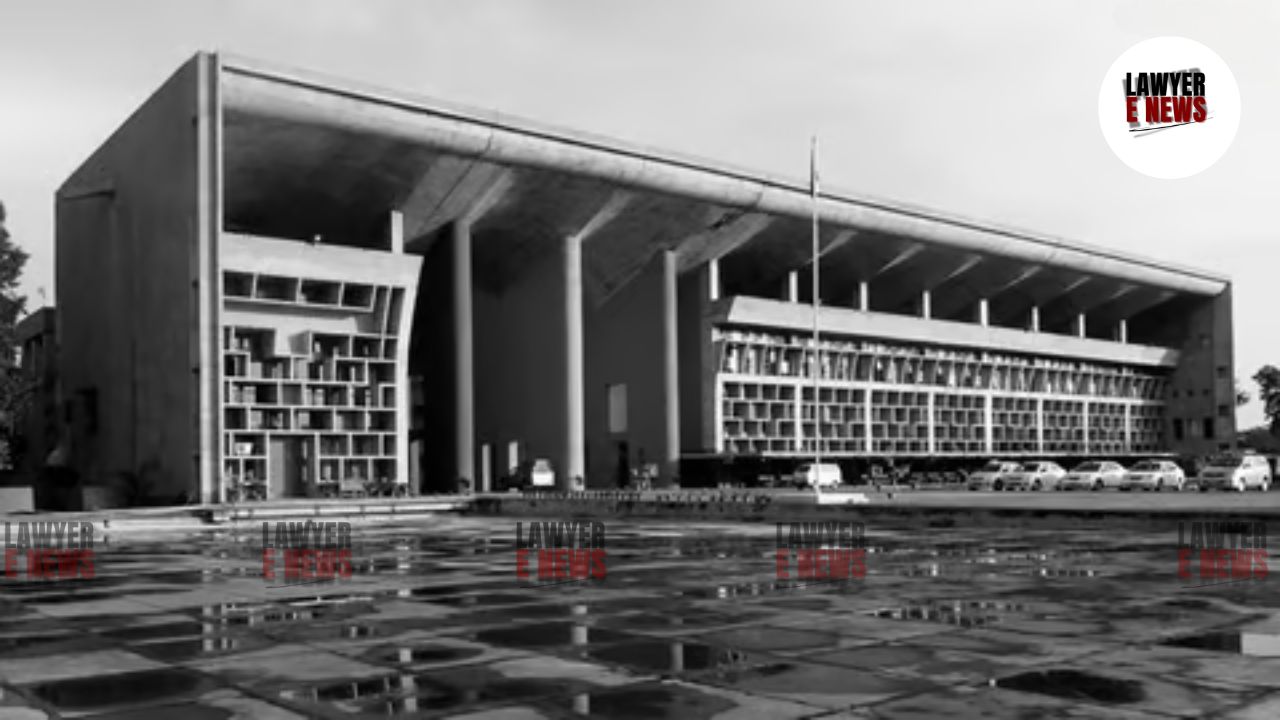
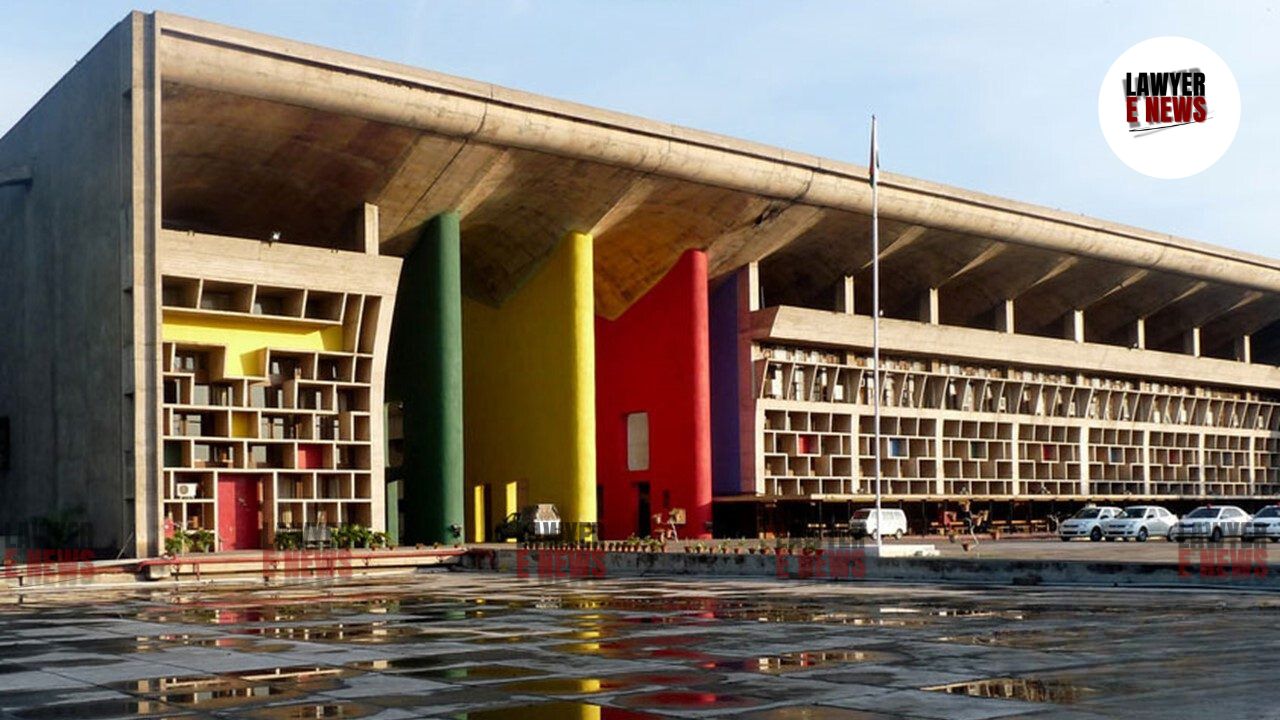
“Bail is the rule, jail is the exception—even under UAPA, Article 21 cannot be rendered meaningless by procedural stagnation” - Punjab and Haryana High Court, in a significant judgment, set aside the order of the Special NIA Court denying bail and ordered the release of the appellant who had been in jail for over five years under various sections of the Unlawful Activities (Prevention) Act, 1967 (UAPA) and the Indian Penal Code, including sedition and conspiracy charges.
The Division Bench of Justice Deepak Sibal and Justice Lapita Banerji emphatically held that the prolonged incarceration of the appellant without meaningful trial progress was a grave violation of Article 21 of the Constitution, warranting judicial intervention even in the face of UAPA’s stringent bail restrictions.
“No Incriminating Material Except a Phone Call; Trial Becoming Punishment Itself”: Court Questions Prosecution’s Delay and Weak Evidence
The appellant, Jagwinder Singh, was accused of assisting and harbouring two persons who, on August 14, 2020, allegedly hoisted a “Khalistan” flag atop the Deputy Commissioner’s office in Moga and cut down the Indian National Flag. The prosecution claimed that this act was orchestrated under the direction of Gurpatwant Singh Pannu, the declared terrorist and head of the banned outfit Sikhs for Justice (SFJ).
While the FIR invoked multiple penal provisions including sedition, criminal conspiracy, abetment, and offences under the POINTH Act, as well as Sections 10 and 13 of UAPA, the Court noted a glaring absence of substantive evidence against the appellant.
“There is only one telephonic conversation between the appellant and his cousin (main accused) a day prior to the incident. No recovery has been made except his mobile phone. No independent material corroborates the allegation that he radicalized or abetted the co-accused,” observed the Court.
The investigation also failed to establish any direct act by the appellant constituting terrorist activity or unlawful association beyond mere ideological sympathy expressed online.
“Liberty Must Not Be Lost to Delay—Statutory Bail Restrictions Cannot Override Constitutional Rights”: High Court Applies K.A. Najeeb Doctrine
Citing the Supreme Court’s landmark decision in Union of India v. K.A. Najeeb, the Bench reiterated that statutory restrictions under Section 43-D(5) of UAPA do not bind constitutional courts when there is unjustified delay in trial and violation of the right to life and liberty.
“The appellant has been in custody for over five years. Out of 149 prosecution witnesses, only 20 have been examined. The end of the trial is nowhere in sight. Such prolonged incarceration offends the right to a speedy trial guaranteed under Article 21,” the Court held.
Referring to Vernon v. State of Maharashtra and Shoma Kanti Sen v. State of Maharashtra, the Court emphasized that even in grave cases under anti-terror laws, bail cannot be denied solely on the seriousness of allegations if trial is indefinitely delayed and evidence is insufficient.
“Bail is not to be withheld as a form of punishment. Criminals are not born but made. The humanist fundamental must not be ignored while dealing with prolonged pre-trial detention,” the Court quoted from Javed Gulam Nabi Shaikh v. State of Maharashtra, another recent Supreme Court precedent.
“Only 20 of 149 Witnesses Examined in 5 Years—Right to Speedy Trial Not an Illusion”: Bench Slams Procedural Delay
The Court sharply criticized the prosecution for offering no explanation for the slow pace of trial, observing that “despite filing of the chargesheet in 2020, the trial has barely moved. The Special Public Prosecutor could not give any timeline for its conclusion.”
The delay, the Court held, “cannot become a tool to extend pre-trial detention indefinitely, particularly when the allegations are not backed by sufficient prima facie evidence.”
The Court noted that while Section 43-D(5) of UAPA imposes restrictions on bail, “such restrictions must yield to constitutional principles when liberty is crushed under the weight of endless incarceration.”
It concluded that “trial cannot become punishment itself. To do so would be to make a mockery of Article 21.”
“Allegations Cannot Substitute Proof; Liberty is the Fundamental Axis of Justice”: Bail Granted with Strict Safeguards
Setting aside the Special NIA Judge’s order dated June 6, 2024, the High Court directed the appellant’s release on regular bail, subject to strict conditions, including appearance before authorities, surrender of passport, and non-interference with witnesses.
The Court clarified that “in case of any breach, inducement, or fresh unlawful activity, the prosecution shall be at liberty to seek cancellation of bail.”
The Bench closed with a reaffirmation of constitutional principle:
“Pre-trial incarceration must be proportionate, justified, and never arbitrary. The liberty of a citizen cannot be sacrificed to prosecutorial delay and procedural apathy.”
Date of Decision: November 4, 2025