-
by sayum
10 October 2026 6:22 AM







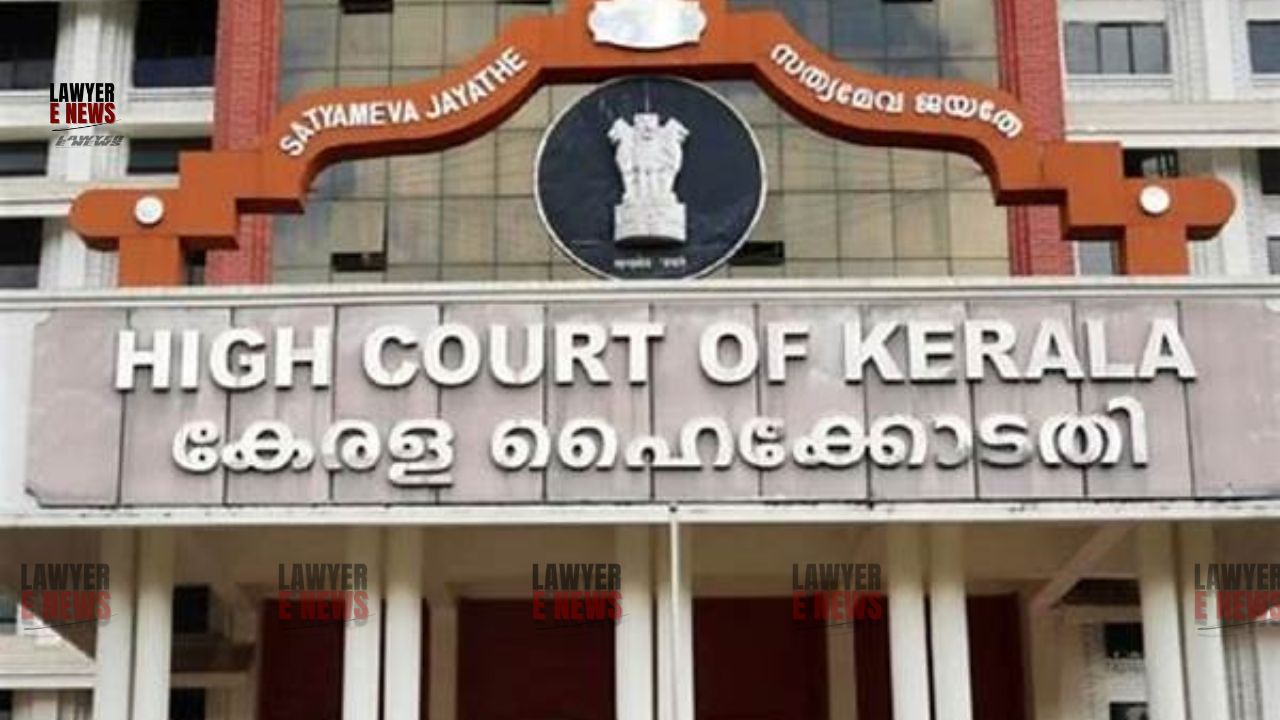
"The remedy of the auction purchaser seeking refund of the EMD or the amount deposited, is to approach the DRT under Section 17 of the SARFAESI Act and not under Article 226 of the Constitution of India." Kerala High Court, in a judgment dated September 8, 2026, has reaffirmed that disputes arising from the forfeiture of Earnest Money Deposit (EMD) by a secured creditor under the SARFAESI Act must be adjudicated exclusively by the Debts Recovery Tribunal (DRT).
A division bench comprising Chief Justice Soumen Sen and Justice Syam Kumar V.M. held that the statutory framework provides an efficacious alternative remedy that precludes the invocation of the High Court's writ jurisdiction under Article 226 of the Constitution.
The appellant, a prospective auction purchaser, challenged the decision of the State Bank of India to forfeit his EMD after the property auction process. The appellant contended that the Bank had committed fraud by failing to disclose a subsisting order of attachment on the subject property in the sale notice. The learned Single Judge had dismissed the writ petition, citing the availability of an alternative statutory remedy under the SARFAESI Act as established by the Supreme Court in Agarwal Tracom Private Limited v. Punjab National Bank.
The Court was called upon to determine whether the non-disclosure of a property attachment in a sale notice constitutes a "material fact" sufficient to bypass the statutory remedy before the DRT. Furthermore, the bench examined whether the writ jurisdiction could be invoked when the limitation period for filing an application before the Tribunal had potentially lapsed, and whether such non-disclosure falls under the obligations set out in Rule 8(7) of the Security Interest (Enforcement) Rules, 2002.
Statutory Duty of Disclosure Under Rule 8(7)
The Court emphasized that Rule 8(7)(f) of the 2002 Rules mandates the disclosure of any information that an authorized officer considers necessary for a purchaser to understand the nature and value of the property. The bench noted that while an encumbrance and an attachment are distinct legal concepts, the duty to provide an informed sale process is paramount.
"Non-compliance with the statutory rules would be fatal for a secured creditor. A secured creditor cannot auction the asset and issue a sale certificate and thereafter simply wash its hands off the matter."
The Mandatory Nature of the DRT Remedy
The bench underscored that the SARFAESI Act is a complete code for addressing grievances arising from enforcement actions. Relying on Agarwal Tracom Private Limited, the Court held that the Tribunal is the appropriate forum to evaluate whether the omission of an attachment order in a sale notice constitutes a material irregularity that would entitle a bidder to a refund of their EMD.
Court Explains Scope Of Section 17 Application
The Court clarified that it is the specific domain of the DRT to determine whether the non-disclosure of an attachment amounts to a violation of Rule 8(7)(f). The bench noted that the Tribunal must weigh whether such a fact was material enough to influence the decision of a reasonable bidder at the time of participation in the tender process.
"Whether such disclosure is material for an intending auction purchaser in deciding whether he would participate in the tender process is for the Tribunal to consider and decide."
Relaxation of Limitation Period
Acknowledging that the appellant had been pursuing the matter in good faith through writ proceedings, the High Court exercised its discretion to ensure justice. The bench granted the appellant three weeks to approach the DRT, specifically directing that the Tribunal accept the application without insisting on a formal application for condonation of delay, given that the appellant was acting under a bona fide belief regarding the maintainability of his writ petition.
The appeal was disposed of with the modification that the appellant is at liberty to approach the DRT within three weeks. The Tribunal was directed to decide the merits of the case in accordance with law, remaining uninfluenced by the observations made by the High Court during the writ proceedings.
Date of Decision: 08 September 2026