
-
by sayum
19 August 2026 9:34 AM







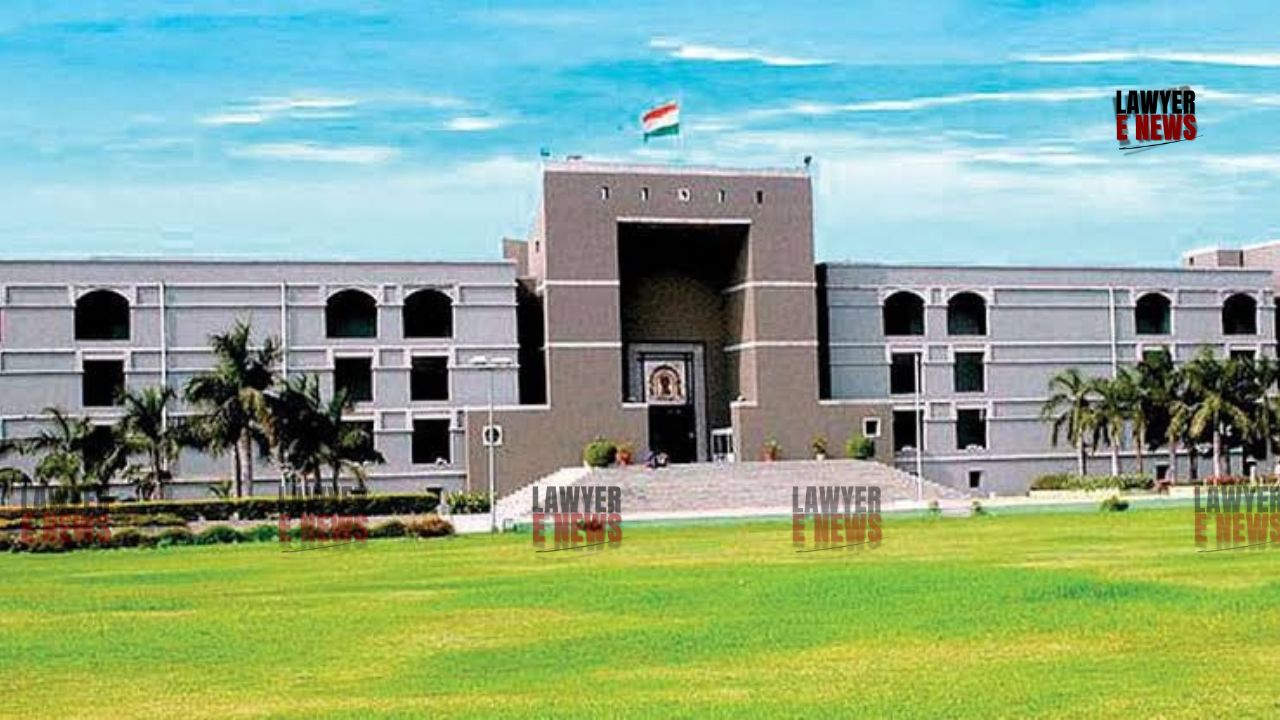
"A sale with a condition of retransfer is not a mortgage since the relationship of debtor and creditor does not exist and there is no debt for which the transfer is made as a security." Gujarat High Court, in a significant ruling, held that a registered sale deed accompanied by a contemporaneous agreement to reconvey does not constitute a mortgage by conditional sale unless the condition of mortgage is explicitly embodied in the principal sale deed itself.
A bench of Justice Maulik J. Shelat observed that the lower appellate court committed a patent illegality by treating a clean transaction of absolute sale as a mortgage merely because a separate buy-back agreement was executed on the same day.
The litigation arose from a 1982 civil suit concerning a suit property in Junagadh, where the original plaintiff had executed a registered sale deed in favor of the defendant on February 18, 1972, while simultaneously obtaining an unregistered agreement to sell providing a five-year window for repurchase. Decades of legal battle ensued after the plaintiff sought redemption of a mortgage rather than specific performance of the buy-back agreement, leading to conflicting judgments between the trial court and the first appellate court.
The primary questions before the high court were whether the principal sale document could be construed as a mortgage by conditional sale under Section 58(c) of the Transfer of Property Act, 1882, and what legal impact the contemporaneous agreement to sell had on the absolute nature of the primary conveyance.
Statutory Bar Under Section 58(c) Proviso
Analyzing the core statutory framework, the court emphasized that the proviso to Section 58(c) of the TP Act acts as an absolute legislative bar against importing conditions from separate documents. The bench noted that no transaction shall be deemed to be a mortgage unless the condition is embodied in the document which effects or purports to effect the sale.
"Proviso To Section 58(c) Is Ostensibly Clear"
The court explained that if a sale deed does not stipulate any condition regarding the borrowing of money or the creation of a security, a separate agreement for reconveyance cannot alter the character of the principal document. The bench observed that the legislature deliberately excluded transactions embodied in more than one document from the category of mortgages to prevent protracted disputes over hidden intentions.
Intention Must Be Gathered From Recitals
Highlighting the well-settled doctrine of document interpretation, the court reiterated that the intention of the parties must be gathered primarily from the recitals of the document itself and not from extraneous inquiries. The sale deed in question contained categorical admissions of absolute transfer, hand-over of possession, and intimation to tenants, leaving no room to infer a debtor-creditor relationship.
"No Reference Of Any Kind Of Mortgage In Sale Deed"
The bench pointed out that the absence of any recital regarding interest rates, redemption periods, or compelling financial distress decisively negates the theory of a mortgage. The court observed that the plaintiff had transferred his one-third share absolutely for a consideration of Rs. 7,000, complementing the defendant's prior acquisition of the remaining two-thirds share from other co-owners.
Distinction Between Mortgage And Repurchase
Relying heavily on the Supreme Court precedents in Prakash v. G. Aradhya and Dharmaji Shankar Shinde v. Rajaram Shripad Joshi, the high court underscored the fundamental distinction that a mortgage secures a subsisting debt, whereas a sale with a condition of repurchase reserves merely a personal right to the vendor which stands extinguished upon the expiry of the stipulated period.
"Personal Right Lost If Not Exercised In Time"
The court observed that because the plaintiff failed to exercise the repurchase option within the agreed timeframe and failed to seek specific performance of the agreement to sell, the right to reclaim the property stood permanently forfeited. The bench criticized the lower appellate court for misapplying the ruling in Indira Kaur v. Sheo Lal Kapoor, noting that the unique factual matrix and specific pleadings of that case had no application to a pure suit for redemption.
Perverse Appreciation Of Evidence Set Aside
Concluding that the lower appellate court's findings were perverse, grossly erroneous, and contrary to settled law, the high court exercised its limited jurisdiction under Section 100 of the CPC to rectify the miscarriage of justice. The high court allowed the second appeal, quashing and setting aside the judgment of the Second Extra Assistant Judge, Junagadh, and restoring the trial court's judgment which dismissed the plaintiff's suit.
Date of Decision: 12 August 2026