-
by sayum
19 August 2026 9:34 AM







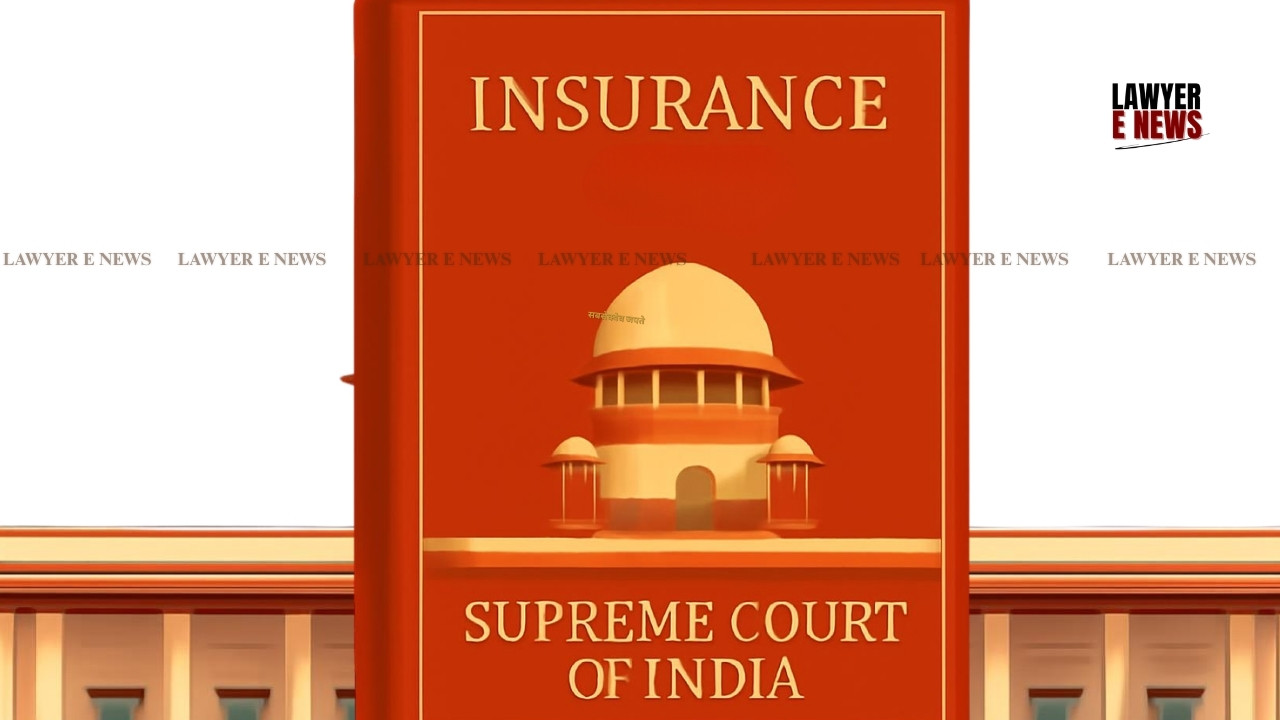
"An agent cannot acquire, by implication, authority to do that which the principal has not authorised, or to undertake a liability which the governing statute does not permit the principal to assume in that manner." Supreme Court, in a significant ruling dated August 18, 2026, firmly held that insurance companies cannot assume risks prior to the receipt of premium under Section 64VB of the Insurance Act, 1938, ruling out any possibility of retrospective regularisation.
A bench comprising Justice Sanjay Karol and Justice Nongmeikapam Kotiswar Singh observed that statutory mandates cannot be bypassed through informal managerial assurances or subsequent endorsements. The court allowed appeals filed by The New India Assurance Company, setting aside a contrary ruling by the NCDRC.
The dispute arose out of a Marine Cargo Annual Turnover Policy secured by M/s Louis Dreyfus Commodities for a sum insured of INR 1,200 crores. During the policy period, the respondent's actual turnover heavily surpassed the insured amount well before a fire accident occurred at the Container Freight Station on November 7, 2010. Although additional premium was paid weeks after the incident, the insurer repudiated the multi-crore liability, prompting legal action that culminated before the apex court.
The primary questions before the court were whether an insurance risk could be assumed retrospectively under Section 64VB of the Insurance Act, and whether an employee's informal email assurance could bind the principal insurer beyond statutory limitations. The bench was also called upon to examine the true scope of agent authority under the Indian Contract Act, 1872.
Statutory Bar Under Section 64VB
Examining the core statutory framework, the court emphasized that Section 64VB creates a strict legislative embargo against the assumption of risk without advance payment or guaranteed receipt of premium. Statutory Embargo On Risk Assumption The bench noted that sub-section (2) explicitly dictates that risk cannot be assumed earlier than the date on which the premium has actually been paid. The court highlighted that insurance companies are legally incapacitated from underwriting risks on credit or through informal understandings not sanctioned by the statute.
"There is a statutory embargo on an insurer assuming risk if the premium has not been paid to them, either prior to such assumption or within the stipulated time period."
Limits of Agent Authority and Estoppel
Addressing the respondent's heavy reliance on an email issued by the insurer's Divisional Manager, the court drew a sharp distinction between administrative duties and substantive policy alterations. Managerial Designation Does Not Confer Power To Rewrite Policy Supplementing the main judgment, Justice Kotiswar Singh analyzed the law of agency under Sections 182, 188, and 237 of the Contract Act. The court held that while an officer may possess implied authority to explain a policy, such authority does not extend to creating new risks or waiving statutory preconditions.
"An internal restriction upon the officer's authority is relevant to the relationship between the principal and the agent, but if such restriction was never communicated, it cannot defeat an otherwise established case of ostensible authority."
No Estoppel Against Statute
The court firmly rejected the argument of waiver by conduct and equitable estoppel raised by the insured. Statute Overrides Equitable Doctrines The bench reiterated that equitable doctrines like estoppel cannot be invoked against a mandatory statutory provision. Since the additional endorsement explicitly took effect prospectively from December 17, 2010, it could not cure a lack of active coverage on the date of the November incident.
"The rule of estoppel cannot apply against or in contravention of a statute."
Concluding the matter, the Supreme Court allowed both appeals filed by the insurance company, setting aside the NCDRC's order. The ruling reinforces financial discipline in commercial insurance and establishes that statutory timelines governing premium payments brook no exception through informal corporate correspondence.
Date of Decision: 18 August 2026