-
by sayum
25 August 2026 6:11 AM







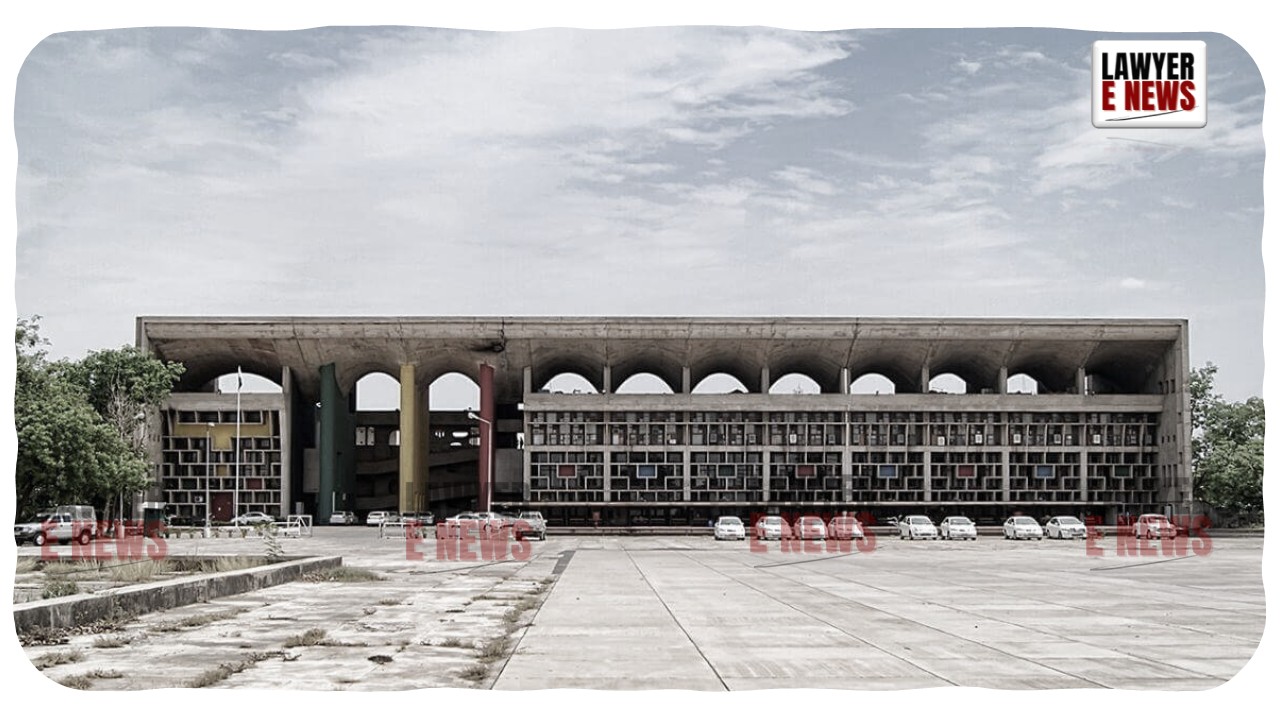
“The preservation of human life is of paramount importance – Denial of reimbursement for life-saving treatment violates Article 21” – In a significant verdict reinforcing the constitutional guarantee of healthcare as a fundamental right, the Punjab and Haryana High Court quashed the Haryana Government’s refusal to reimburse the full medical claim of a government employee, whose wife had undergone life-saving emergency surgeries at a private hospital.
Justice Sandeep Moudgil observed that “technical objections cannot override the State’s constitutional obligation under Article 21,” and held the denial of reimbursement as arbitrary, illegal, and violative of the right to life.
“Medical Reimbursement Is Not a Charity But a Constitutional Duty” – Court Orders Payment With Interest
The petitioner, Suresh Kumar, a Haryana government employee, had incurred ₹4,63,770 for the emergency treatment of his wife at Indraprastha Apollo Hospital, New Delhi, in 2014. She was admitted in a critical condition, requiring immediate surgeries for uterus removal, gallbladder removal, and hernia. Due to the emergency, there was no time to obtain prior government approval or approach an empanelled hospital.
Despite later submitting an emergency certificate and all required documentation, the authorities reimbursed only ₹43,005, citing policy limitations linked to non-empanelled hospital treatment. The balance claim of ₹4,20,766 was denied without any reasons.
Terming this refusal as “unjustified,” the Court held: “The right to medical reimbursement flows directly from the fundamental right to life guaranteed under Article 21 of the Constitution.” [Para 11]
Referring to the Supreme Court’s ruling in State of Punjab v. Mohinder Singh Chawla [(1997) 2 SCC 83], the Court emphasized that:
“It is settled law that right to health is integral to the right to life. Government has a constitutional obligation to provide health facilities… Expenditure incurred requires to be reimbursed by the State.” [Para 11]
“Once Emergency Is Established, Reimbursement Cannot Be Denied for Non-Empanelled Hospital Treatment”
The High Court firmly rejected the Haryana Government’s argument that reimbursement must be restricted to PGIMER/AIIMS rates, stating that such a position “defeats the very object of the medical reimbursement policy.”
Justice Moudgil cited multiple Supreme Court and High Court decisions, including:
Paschim Banga Khet Mazdoor Samity v. State of West Bengal [(1996) 4 SCC 37], where the apex court held that:
“Preservation of human life is of paramount importance. The State has a constitutional obligation to provide timely medical treatment.” [Para 12]
Shiva Kant Jha v. Union of India [(2018) 16 SCC 187], in which the Court declared:
“Once it is established that treatment was genuine, reimbursement cannot be denied on technical grounds.” [Para 13]
In the same vein, the High Court stressed that once the emergency and authenticity of treatment are undisputed, the denial of full reimbursement is unjust, unreasonable, and unsustainable in law:
“Denial of full reimbursement amounts to penalising the petitioner for circumstances not attributable to him and defeats the very purpose of the medical reimbursement policy.” [Para 16]
“Callous Delay and Bureaucratic Apathy Add to Violation of Rights” – State Directed to Pay with 6% Interest
The Court strongly censured the inordinate delay in processing the reimbursement, which stretched from 2014 to 2020, despite multiple reminders and compliance with all procedural requirements by the petitioner. This, the Court held, amounted to "mental agony, financial hardship, and dereliction of constitutional duty."
“Authorities cannot escape liability by hiding behind procedural technicalities when the delay itself has compounded the hardship… thereby aggravating the infringement of rights under Article 21.” [Para 17]
Acknowledging the prolonged suffering faced by the petitioner, the Court directed:
“The respondents are ordered to reimburse the remaining medical bill claim of Rs. 4,20,766/- along with 6% interest from the date it fell due till its actual realization, within a period of 4 weeks.” [Para 18]
This judgment is a landmark affirmation of healthcare as a constitutional right and sends a strong message to government authorities that technicalities cannot override the fundamental right to life and dignity.
Justice Sandeep Moudgil’s order ensures that emergency medical care is not a bureaucratic burden but a legal entitlement, and the State cannot abdicate its responsibility by clinging to restrictive policy interpretations.
Date of Decision: 16 January 2026