-
by sayum
10 October 2026 6:25 AM







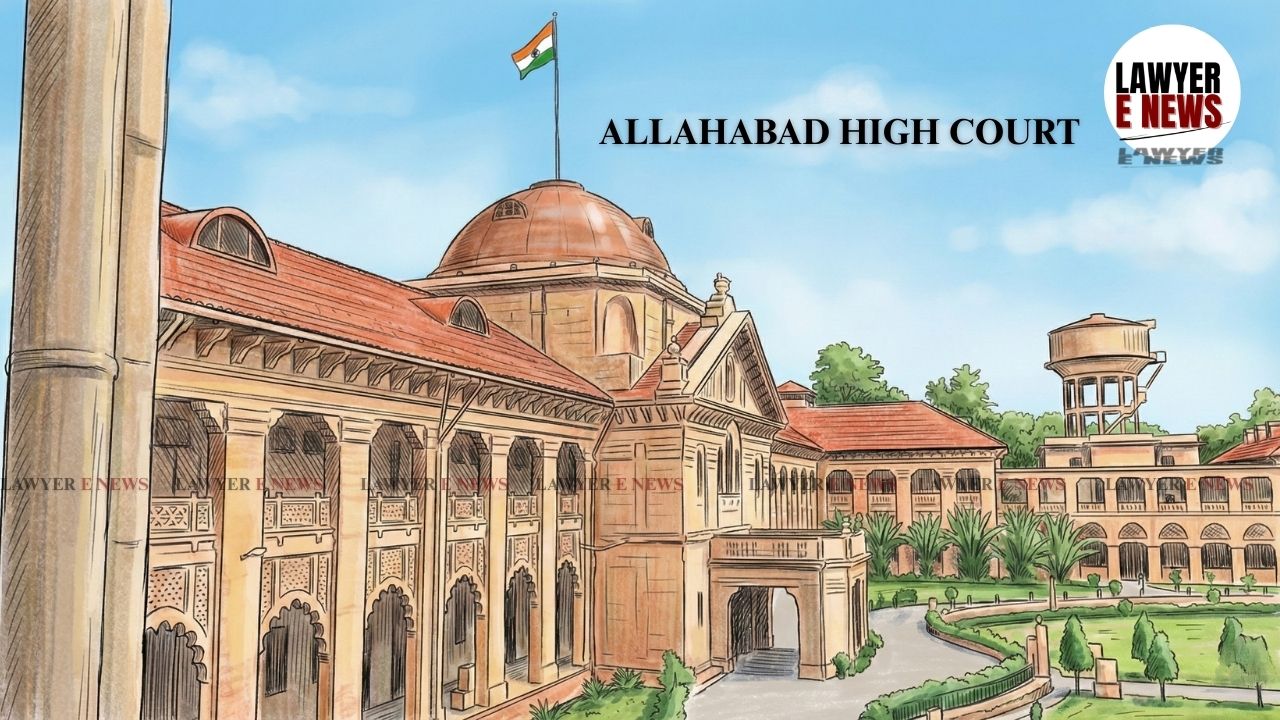
"In our view, the said footage cannot be provided to the petitioner directly, as the same is covered by the exception contained in Section 8(1)(g) of the Act, 2005." Allahabad High Court, in a ruling, held that CCTV footage cannot be provided directly to an applicant under the Right to Information Act, 2005, if such disclosure attracts the exemptions under Section 8(1)(g) of the Act.
A division bench comprising Justice Shekhar B. Saraf and Justice Abdhesh Kumar Chaudhary observed that while the law mandates the preservation of such footage for potential human rights violations, the RTI route is not the appropriate mechanism for direct access to such sensitive recordings.
The petitioner sought a writ of certiorari to quash an order passed by the State Information Commission, which had denied his request for CCTV footage obtained through an RTI application. The petitioner further prayed for the imposition of penalties on the Public Information Officer and sought compensation for alleged harassment. The core of the dispute revolved around the conflict between the right to information and the privacy and security concerns surrounding CCTV surveillance.
The court was primarily called upon to determine whether CCTV footage constitutes disclosable information under the RTI Act, 2005. It further addressed whether the mandate in Paramvir Singh Saini v. Baljit Singh regarding the preservation of CCTV footage creates an absolute right for an applicant to obtain such footage directly under the RTI Act, or if it remains subject to statutory exemptions.
Scope of RTI Exemptions
The court emphasized that the right to information is not absolute and is subject to the restrictive clauses specifically provided under Section 8 of the RTI Act. Regarding the nature of CCTV footage, the court accepted the State's submission that such recordings often contain sensitive information.
Section 8(1)(g) of the RTI Act serves to protect information that could endanger the life or physical safety of any person or identify the source of information or assistance given in confidence for law enforcement or security purposes.
Distinguishing Paramvir Singh Saini
The petitioner relied heavily on the Supreme Court judgment in Paramvir Singh Saini v. Baljit Singh, which mandates the preservation of CCTV footage to prevent custodial violence. The High Court clarified that the Supreme Court's directions were intended to ensure that evidence is not destroyed to facilitate legal remedies before appropriate forums, such as Human Rights Commissions or Courts.
The judgment in Paramvir Singh Saini does not confer an unfettered right to an applicant to demand and obtain CCTV footage directly through the RTI mechanism without having initiated a formal complaint regarding a specific incident.
"In the event that the petitioner files a complaint before the appropriate Forum/Court, the said Forum/Court may very well direct preservation of the CCTV footage, as well as call for the actual footage for the purpose of verifying the complaint made by the petitioner."
Procedural Pathway for Litigants
The bench underscored that if a citizen has a legitimate grievance concerning a violation of human rights or a legal wrong, they must first move the appropriate forum. Once such a complaint is established, the adjudicating authority holds the power to summon the footage for its safe keeping and perusal. The court concluded that the RTI Act cannot be used as a shortcut to bypass the procedural safeguards afforded to the security and privacy of premises under Section 8(1)(g). Consequently, the petition was disposed of with the observation that the petitioner must pursue his remedies through the appropriate legal channels.
Date of Decision: 02 September 2026