-
by sayum
28 August 2026 6:29 AM







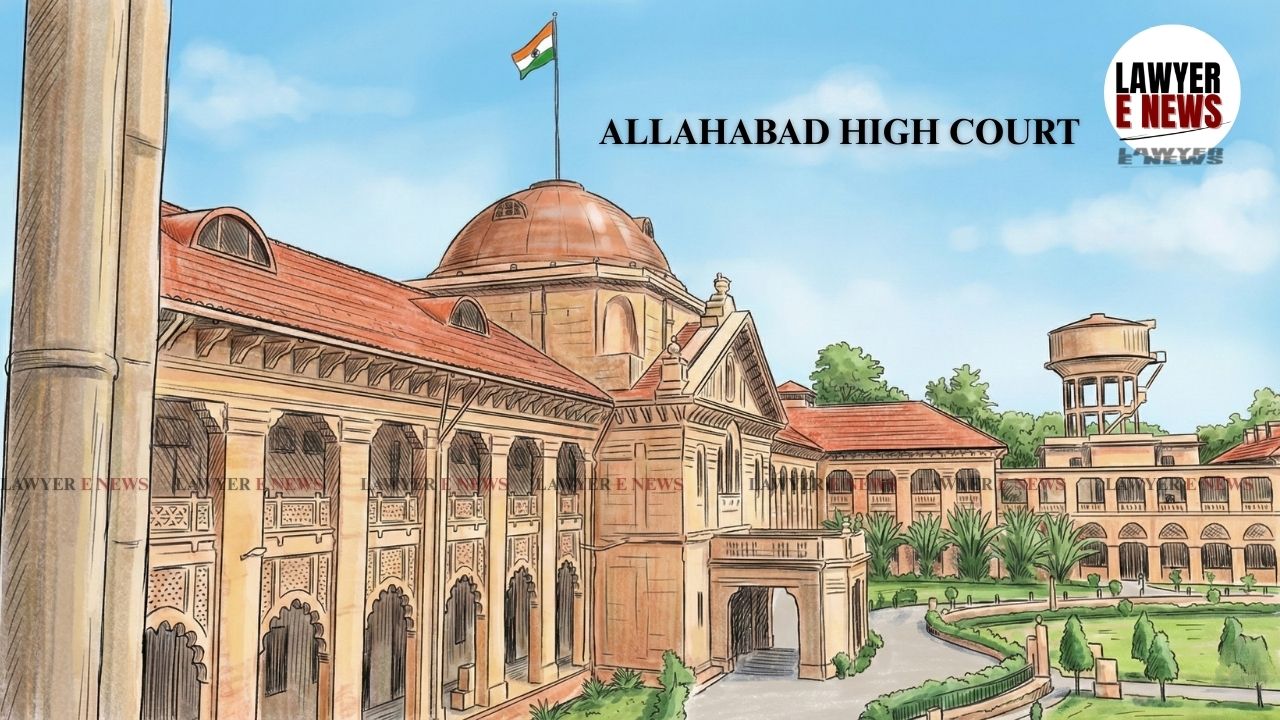
"Right of private defence is available only to one who is suddenly confronted with the necessity of averting an impending danger and not of self-creation," Allahabad High Court, in a significant ruling dated May 19, 2026, held that the right of private defence is a protective tool and cannot be invoked by those who act as the primary aggressors in a conflict.
A bench of Justice Sanjiv Kumar observed that while self-preservation is a basic human instinct, the law does not permit the guise of self-defence to be used for assaulting an original victim after the apprehension of danger has ceased. The Court emphasized that this right is co-terminus with the duration of such apprehension and does not extend to "self-created" situations of peril.
The matter originated from a 1982 dispute in Village Chak Habsapur, Ballia, where the informant’s son was allegedly assaulted by the appellants while repairing a hut wall. The Trial Court in 1986 convicted five individuals under Sections 147, 323, 308, and 324 read with 149 of the IPC, sentencing them to three years of rigorous imprisonment. During the long pendency of the appeal, four of the five appellants passed away, leaving the appeal to survive only for appellant Jai Nath.
The primary question before the Court was whether the appellants could claim the right of private defence in a situation involving a cross-case. The Court was also called upon to determine whether the prosecution had established the appellants as the "aggressors" who initiated the assault, thereby stripping them of the plea of self-defence.
Trial Courts Must Decide Cross-Cases Solely On Individual Evidence
The Court first addressed the procedural requirements for cross-cases, placing reliance on the Supreme Court’s ruling in Nathilal vs. State of U.P. It noted that in such scenarios, a judge must rely only on the evidence recorded in the specific case being decided. The bench observed that the evidence or arguments from a cross-case cannot influence the judgment of the current case, ensuring each matter stands on its own factual merit.
Prosecution Witnesses Proven Reliable Despite Cross-Case Rivalry
The Court scrutinized the testimonies of the eye-witnesses and the injured victim, Kailash Sharma, who stated they were attacked while repairing a southern wall. Despite the defense's claim that the informant's side was the aggressor, the Court found the prosecution's narrative to be consistent and trustworthy. The bench noted that the witnesses were cross-examined at length, yet no material contradictions emerged to impeach their credibility regarding the place and manner of the incident.
Right Of Private Defence Not A Tool For Retaliation
Directing its focus to the plea of self-defence, the Court reiterated the principles laid down in Darshan Singh vs. State of Punjab. It held that the right of private defence commences as soon as a reasonable apprehension of danger arises and ends when that threat is routed. The bench observed that "a person who is in imminent and reasonable danger of losing his life or limb may in exercise of self-defence inflict any harm," but this cannot be modulated with "arithmetical exactitude" in the heat of the moment.
Aggressor Status Negates The Plea Of Self-Preservation
The Court found that the appellants failed to produce any evidence or witnesses to support their version that they were the ones initially attacked. It noted that the appellants were the ones who reached the spot armed with lathis and initiated the "maarpeet." The bench held that if the fact situation shows that what was really done was an assault on the original victim under the guise of self-preservation, the plea of private defence must be negatived.
"The evidence shows that the accused were aggressor and assaulted Kailash and others... and accused suffered injuries when the first informant’s side exercised their right of private defence."
Medical Evidence Corroborates Use Of Blunt Weapons
Regarding the injuries sustained by the victims, the Court examined the testimony of the medical officer, P.W. 4 Dr. S.P. Narain. The medical reports indicated lacerated wounds and swellings caused by hard and blunt objects, consistent with the use of lathis as alleged by the prosecution. The Court concluded that the oral testimony was sufficiently supported by the medical evidence, proving the nature of the assault under Section 308 read with 149 of the IPC.
Final Directions And Order
The Court concluded that the prosecution successfully proved its case beyond reasonable doubt, establishing that the appellants formed an unlawful assembly to commit riot and assault. Finding no merit in the appeal, the High Court dismissed the plea and upheld the conviction of the surviving appellant, Jai Nath. The Court directed him to surrender within three weeks to undergo the remaining part of his sentence, failing which coercive measures would be adopted.
The High Court affirmed the 1986 conviction, emphasizing that the right of private defence is not a license for aggression. By applying the principles of self-preservation versus self-creation of danger, the Court ensured that the legal shield of private defence is not misused by those who initiate violence.
Date of Decision: 19 May 2026