-
by sayum
28 August 2026 6:47 AM







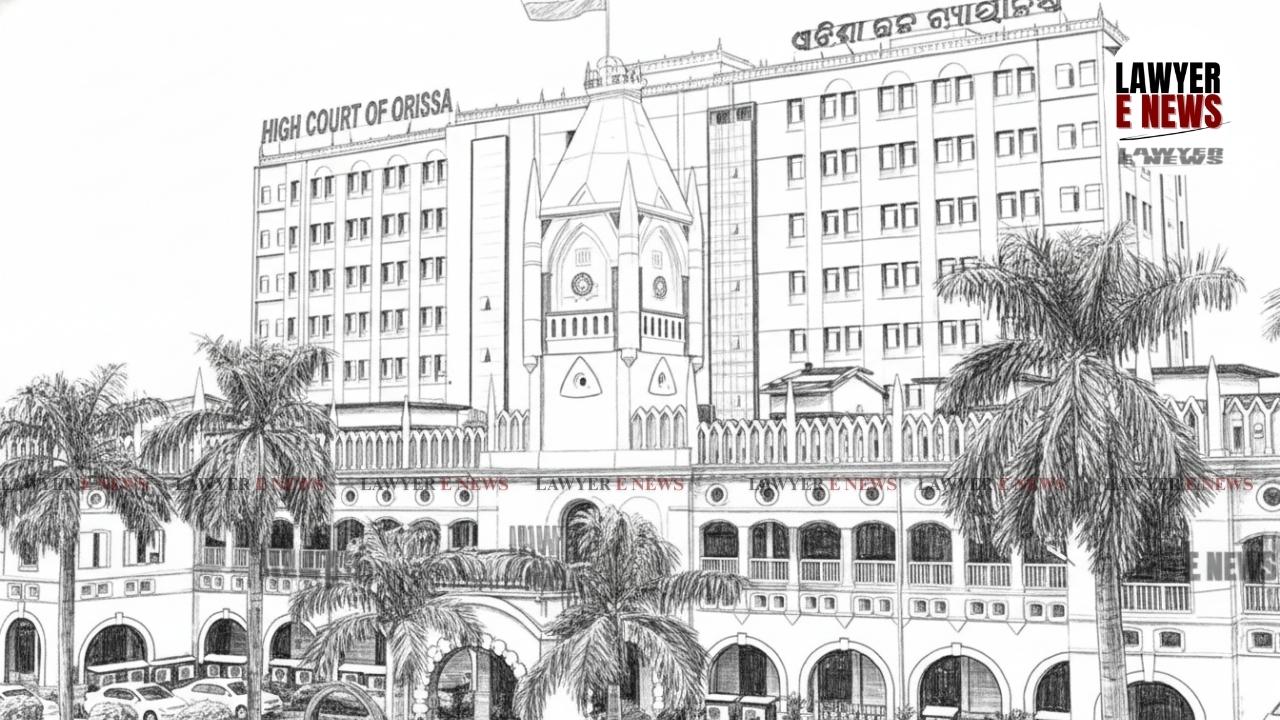
"By allowing someone to work for so many years and not even undertaking or deferring regular recruitment for long is a practice which has been deprecated by the Apex Court... as ‘ad hocism’ is strikingly opposed to a decent labour practice," Orissa High Court, in a significant judgment, held that the State cannot indefinitely continue employees on a contractual basis for perennial roles to evade its obligations.
A Single Judge Bench of Justice R.K. Pattanaik observed that when workers have provided unblemished service for over two decades, the State is duty-bound to regularize them, even by creating supernumerary posts if sanctioned vacancies are unavailable. The Court emphasized that "ad hocism" in public employment is an exploitative practice that undermines the principles of a model employer.
The petitioners were engaged as Drivers in the Finance Department of the Government of Odisha, initially on a Daily Labour Rate (DLR) basis and subsequently as direct contractual drivers since 2006. Despite having rendered over 21 years of continuous and unblemished service, their requests for regularization under the G.A. Department Resolution dated September 17, 2013, were denied by the State. The State contended that the petitioners were not recruited against sanctioned posts through a regular competitive process, rendering them ineligible for permanent absorption.
The primary question before the Court was whether the petitioners were entitled to regularization of their services in terms of the G.A. Department Resolution of 2013 despite the State's objection regarding the lack of sanctioned posts. The Court was also called upon to determine if the continued engagement of the petitioners for over two decades without regularization constituted an exploitative labour practice.
Irregular Appointments Distinguished From Illegal Appointments
The Court began by addressing the State’s primary objection that the petitioners' initial recruitment did not follow a formal competitive process. Relying on the Constitution Bench judgment in Secretary, State of Karnataka v. Umadevi (3) (2006) 4 SCC 1, the Bench clarified the distinction between "irregular" and "illegal" appointments. It noted that if a person possesses the requisite qualifications and works against a need that is perennial, the lack of a formal recruitment process makes the appointment irregular, not illegal.
Continuous Service Of 10 Years Entitles Workers To Regularization
The Bench highlighted that the Supreme Court in State of Karnataka v. M.L. Kesari (2010) 9 SCC 247 had carved out a one-time measure for regularizing employees who have completed ten years of service without the protection of any interim court orders. The Court observed that the petitioners had served for more than 21 years uninterruptedly, which squarely placed them within the protective ambit of the principles settled by the Apex Court for regularizing long-term casual or contractual staff.
"Lack of Sanctioned Posts No Shield For Exploitation"
State Must Create Supernumerary Posts To Accommodate Long-Term Staff
Responding to the State’s plea that no sanctioned posts were available at the time of the petitioners' engagement, the Court held that the existence of a perennial need for the work is the relevant factor. Citing Nihal Singh v. State of Punjab (2013) 14 SCC 65, Justice Pattanaik observed that the failure of the Executive to create posts while extracting work for decades is an arbitrary exercise of power. The Court noted that the State should absorb such employees by creating supernumerary posts to prevent further exploitation.
"Contractual Labels Cannot Mask Permanent Nature Of Work"
Court Criticizes Misclassification Of Employees To Evade Benefits
The Court expressed concern over the "disconcerting reality" of temporary employees in government institutions being misclassified as "contractual" even when their roles mirror those of regular employees. Referring to the recent Apex Court rulings in Jaggo v. Union of India (2024) and Shripal v. Nagar Nigam, Ghaziabad (2025), the Bench noted that such practices deprive workers of dignity, job security, and terminal benefits like pensions and provident funds.
"State Must Act As A Model Employer Under Article 226"
Legitimate Expectation Of Regularization Arises After Decades Of Service
The Court underscored that after working for over 20 years, a "legitimate expectation" arises that services will be regularized. It held that bureaucratic limitations or the failure to apply reservation rules at the initial stage cannot be used as a "weapon" against workers when they demand their rights. The Bench remarked that government departments must lead by example in providing stable employment rather than adopting practices observed in the precarious "gig economy."
The High Court concluded that the petitioners' service for over two decades was not pursuant to any judicial intervention and was therefore voluntary on the part of the State. It ruled that the denial of regularization based on technicalities was unjustified. Consequently, the Court directed the State to conclude the exercise of regularizing the petitioners against Driver posts in the Finance Department within eight weeks, including the creation of supernumerary posts if required.
Date of Decision: 15 May 2026