-
by sayum
28 August 2026 6:47 AM







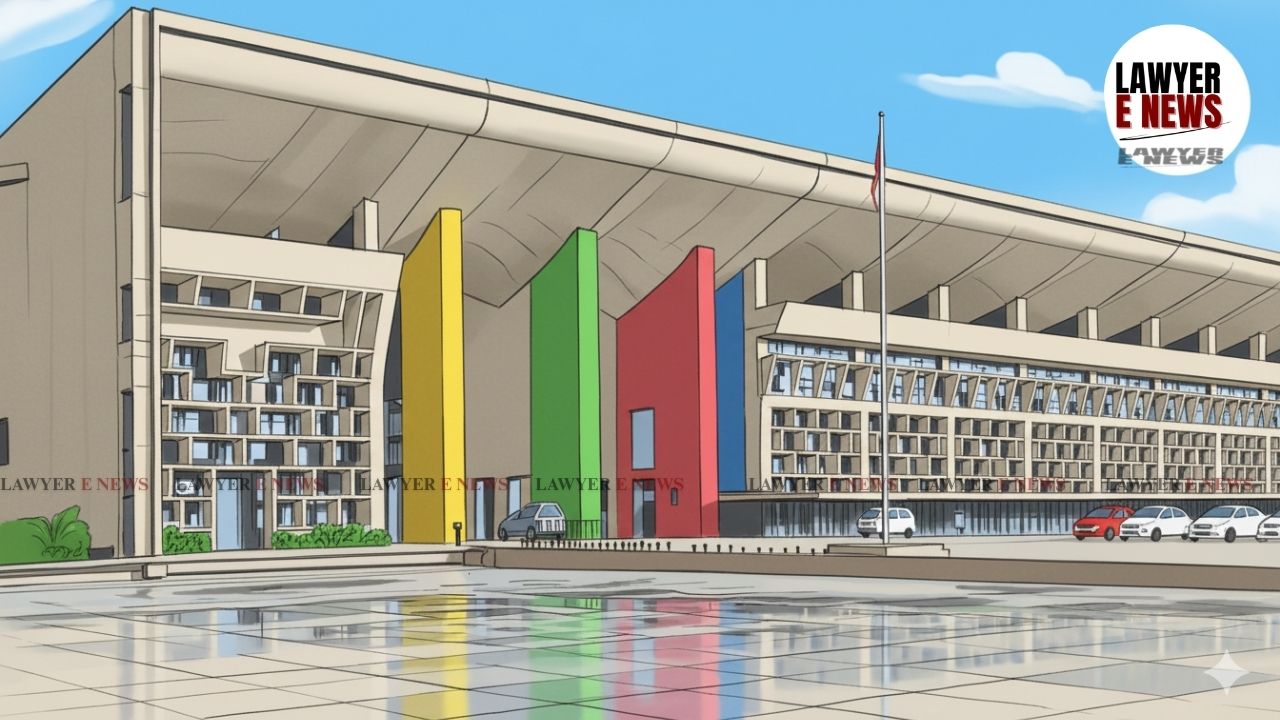
"Relief by way of reinstatement with back wages is not automatic and may be wholly inappropriate in a given fact situation even though the termination of an employee is in contravention to the prescribed procedure," Punjab and Haryana High Court, in a significant ruling, held that reinstatement is not an automatic consequence of illegal termination under Section 25-F of the Industrial Disputes Act, 1947.
A bench of Justice Kuldeep Tiwari observed that in cases involving short tenures or daily wagers, monetary compensation often serves the ends of justice better than reinstatement. The Court emphasized that while procedural infirmities make a termination illegal, the relief granted must be balanced against the nature of employment and the lapse of time.
The petitioner, M/s Vinay Auto Pvt. Ltd., challenged an ex-parte award passed by the Industrial Tribunal which directed the reinstatement of an EDM operator with full back wages. The workman had served for approximately three years from 2008 to 2011 before being terminated without compliance with Section 25-F of the ID Act. During the long pendency of the writ petition, the workman reached the age of superannuation, making the original relief of reinstatement technically infructuous.
The primary question before the Court was whether the violation of Section 25-F of the Industrial Disputes Act, 1947, necessitates automatic reinstatement with back wages. The Court also sought to determine the appropriate quantum of compensation in lieu of reinstatement for a workman who has since superannuated after contesting litigation for over a decade.
Violation Of Section 25-F Confirmed By Court
The Court noted that the petitioner-management failed to provide sufficient grounds to interfere with the Industrial Tribunal's well-reasoned findings. Since the workman had produced sufficient evidence to establish continuous service of 240 days, the bench upheld the conclusion that the termination was in clear violation of Section 25-F of the ID Act. The Court found no reason to set aside the ex-parte nature of the award given the lack of sufficient explanation from the management.
Shift In Legal Position Regarding Reinstatement
The bench highlighted a marked shift in labor jurisprudence, noting that the old view of "automatic reinstatement" for illegal termination has evolved. Justice Tiwari observed that "in the recent past, there has been a shift in the legal position and in a long line of cases, this Court has consistently taken the view that relief by way of reinstatement with back wages is not automatic." The Court maintained that compensation instead of reinstatement often meets the ends of justice in specific fact situations.
Distinction Between Daily Wagers And Permanent Staff
Relying on the Supreme Court's decision in Jagbir Singh v. Haryana State Agriculture Marketing Board, the Court emphasized the distinction between daily wagers and permanent employees. The bench noted that while an order of retrenchment in violation of Section 25-F may be set aside, the relief of reinstatement with full back wages is often improper for daily wagers who do not hold a permanent post.
"The award of reinstatement with full back wages in a case where the workman has completed 240 days of work... particularly for daily wagers has not been found to be proper by this Court and instead compensation has been awarded."
Factors Influencing The Choice Of Remedy
The Court cited B.S.N.L. v. Bhurumal to outline the factors necessary for determining the relief, including the manner of appointment, nature of employment, and length of service. It clarified that while compensation is the norm for procedural defects, reinstatement should ordinarily follow if the termination was actuated by "unfair labour practice" or a violation of the "last come, first go" principle. In the present case, the long lapse of time and the workman's superannuation weighed heavily in favor of monetary compensation.
Enhanced Compensation Due To Prolonged Litigation
While a coordinate bench in State of Haryana v. Surjeet had previously set a benchmark of ₹50,000 per completed year of service, this Court decided to enhance the rate. Justice Tiwari observed that since the workman had been forced to contest the litigation for approximately 12 years, the ends of justice required a higher quantum. Consequently, the Court fixed the compensation at ₹1,00,000 per completed year of service.
"Having regard to the totality of the facts and circumstances and considering that since respondent no.1-workman, had to contest the litigation for about 12 years, this Court is of the considered view that ends of justice would be met by awarding him a lump sum compensation of Rs.1.00 lakh for each completed year of service."
The Court modified the impugned Award, granting the workman a total lump sum compensation of ₹3,00,000 for his three years of completed service. The petitioner-management was directed to remit this amount directly to the workman’s bank account within six weeks. The Court further stipulated that any delay in payment beyond this period would attract an interest rate of 6% per annum until the date of actual realization.
The High Court concluded that while the illegality of the termination was beyond doubt, the superannuation of the workman and the nature of his service necessitated a shift from reinstatement to compensation. By enhancing the per-year compensation to ₹1,00,000, the Court sought to mitigate the hardship caused by twelve years of litigation. The petition was disposed of with the modification of the Tribunal's award into a final monetary settlement.
Date of Decision: 12 May 2026