-
by sayum
25 August 2026 12:32 PM







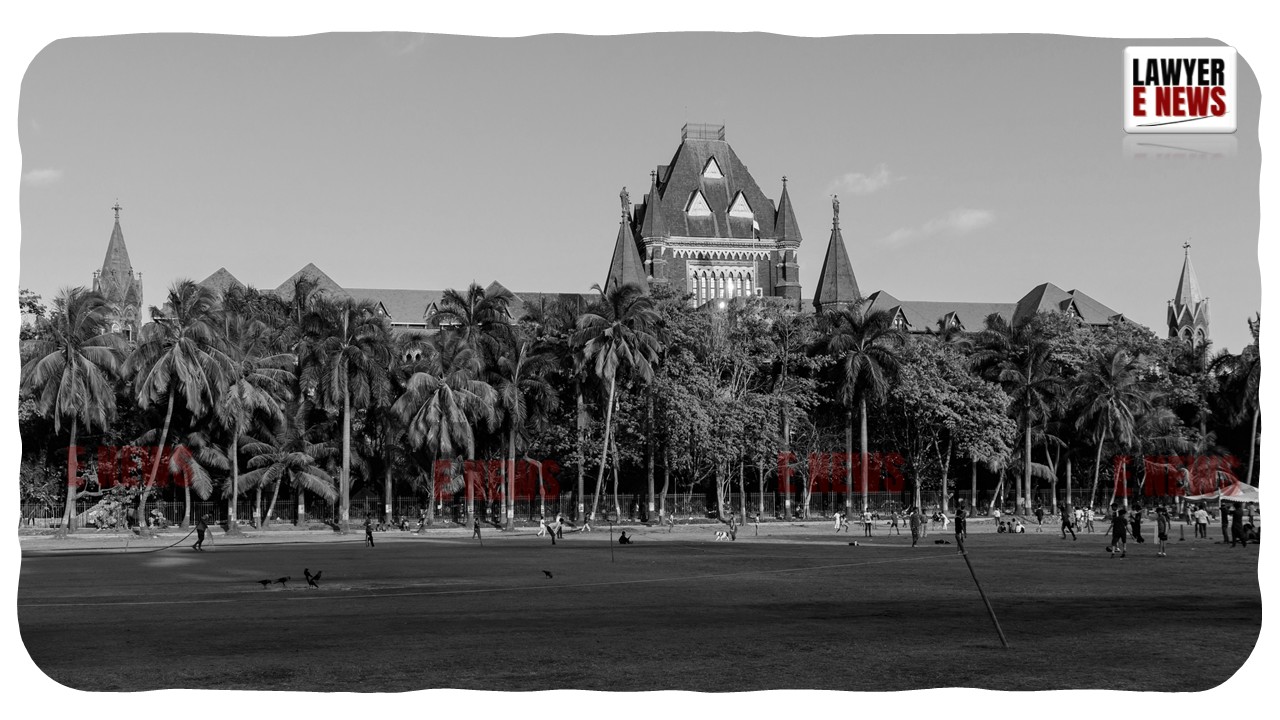
“An agreement to renew is not an agreement for an extended term — future possibilities do not create present obligations under the Stamp Act,” In a significant ruling delivered on 2nd September 2025, the Bombay High Court held that a lease agreement which provides only an option to renew on future mutually agreed terms cannot be construed as a lease for an extended term under the Maharashtra Stamp Act, 1958.
The case arose from a 2014 Indenture of Lease where the petitioner paid stamp duty under Article 36(ii) for a nine-year lease, but the authorities sought to reclassify it as an eighteen-year lease, demanding additional duty under Article 36(iii).
Justice Jitendra Jain, sitting on the Original Side, categorically rejected the State’s contention, holding that: “Where the lease provides that the same can be renewed for a further period only if mutually agreed upon in the future, such a clause does not create a present demise and hence cannot be reckoned for stamp duty under Article 36(iii).”
“Clause 3C Only Offers A Future Option, Not a Present Right”: Court Clarifies Scope of Renewal in Lease Deeds
The lease deed in question, dated 19 December 2014, provided for an initial term of three years, with two automatic renewals of three years each, bringing the total to nine years. The agreement also contained Clause 3C, which granted the lessee an option to renew for another nine years, split into three terms of three years each — but only on terms to be mutually agreed and subject to the lessee's matching of any third-party offers.
On this basis, the State claimed that the lease should be treated as one for eighteen years, liable to duty under Article 36(iii).
Rejecting this reading, the Court emphasized: “Clause 3C of the Lease Agreement clearly indicates that post the expiry of nine years, the parties, if mutually agreeable, will enter into a fresh lease. There is no certainty of rent, deposit, or consideration for this further period. Therefore, it is not part of the present lease.”
The Court held that such a clause does not constitute a ‘renewal clause’ within the meaning of Article 36(iii). The phrase “with a renewal clause contingent or otherwise” must be confined to cases where terms for both the original and extended period are expressly provided in the same deed.
“An Option Dependent on Future Consent Does Not Constitute a Lease for the Extended Period”
The Court undertook a meticulous statutory and doctrinal analysis of the Maharashtra Stamp Act, observing that:
“Article 36(ii) and 36(iii) create a distinction between ‘a lease with agreed renewals’ and ‘an agreement to renew’. The former binds the parties to a continued lease; the latter merely expresses intent, which is legally insufficient to create a present demise.”
Justice Jain stressed that stamp duty is levied on instruments, not intentions, and held: “If a lease for 9 years does not include agreed terms for the next 9 years, then the latter period cannot be taxed under the same instrument.”
Even Explanation II to Article 36, which states that “the renewal period, if specifically mentioned, shall be treated as part of the present lease,” was held inapplicable:
“Explanation II would apply only where the renewal period is definite and its terms are settled within the same document. That is not the case here.”
“Lease vs. Agreement to Lease: Only the Former Attracts Duty for a Present Demise”
Justice Jain clarified that the 2014 lease was not a lease for 18 years but a lease for 9 years with a future agreement to negotiate another lease:
“An instrument which entitles parties to merely consider a lease in the future cannot be treated as a lease for that future period. It is at best an agreement to enter into a lease.”
He further stated: “Renewal requires fresh execution if the original document lacks definite terms. Clause 3C creates no present demise for the extended term. There is no binding obligation unless both parties agree to new terms — and that is exactly what occurred in 2023.”
Execution of Fresh Lease in 2023 Proved Parties Never Intended a Continuous 18-Year Lease
A key factual development cited by the Court was that the parties executed a fresh lease deed on 11 December 2023, for five years, and paid stamp duty under Article 36(i), which was accepted by the authorities. This, according to Justice Jain, reinforced the petitioner’s case:
“The execution of a fresh lease on different terms shows that the parties never intended the original lease to subsist beyond nine years. The 2023 deed is a separate transaction — and a fresh instrument — supporting the petitioner’s interpretation.”
“Renewal” vs. “Extension”: The Legal Distinction That Decided the Case
In distinguishing the terms “renewal” and “extension”, the Court cited the Supreme Court in Lalji Tandon and Provash Chandra Dalui, which held that: “Extension continues the same lease; renewal creates a new lease. Where future terms must be agreed upon, the result is not extension, but renewal, requiring a fresh deed.”
Justice Jain noted: “Clause 3C does not extend the lease; it permits a fresh negotiation. It is not binding. Therefore, the present lease does not exceed nine years under the law.”
Fiscal Statute Must Be Construed Strictly; State Cannot Presume a Longer Lease Term
The Court also reminded the State of the settled rule of strict construction of fiscal statutes, holding that:
“The Stamp Act, being a taxing statute, must be interpreted narrowly. Unless a lease clearly satisfies Article 36(iii), no additional duty can be levied.”
Relying on the decision in National Insurance Co. Ltd. v. DIG, the Court held:
“Where renewal is subject to mutual agreement, there is no certainty that such lease would ever materialize. It cannot form the basis of tax on the current instrument.”
Demand Order and Appeal Set Aside, Rule Made Absolute
In conclusion, the Court quashed the orders dated 10 January 2017 and 20 January 2020 as well as the demand notice dated 24 September 2020, ruling that:
“The present lease dated 19 December 2014 is governed by Article 36(ii) only. The demand of ₹64,75,500/- as deficit stamp duty under Article 36(iii) is unsustainable in law.”
The Court allowed both writ petitions, held that the State’s interpretation was contrary to the deed, and made the Rule absolute.
“A Lease Must Speak in Present Terms — Not in Future Probabilities”: High Court Protects Certainty in Commercial Agreements
This ruling sets an important precedent in stamp duty interpretation of commercial leases, especially concerning renewal clauses. The judgment reaffirms the necessity for contractual certainty and reiterates that:
“No party can be taxed on speculative future events unless such events are contractually certain within the four corners of the instrument itself.”
Date of Decision: 2 September 2025