
-
by sayum
26 August 2026 1:49 PM







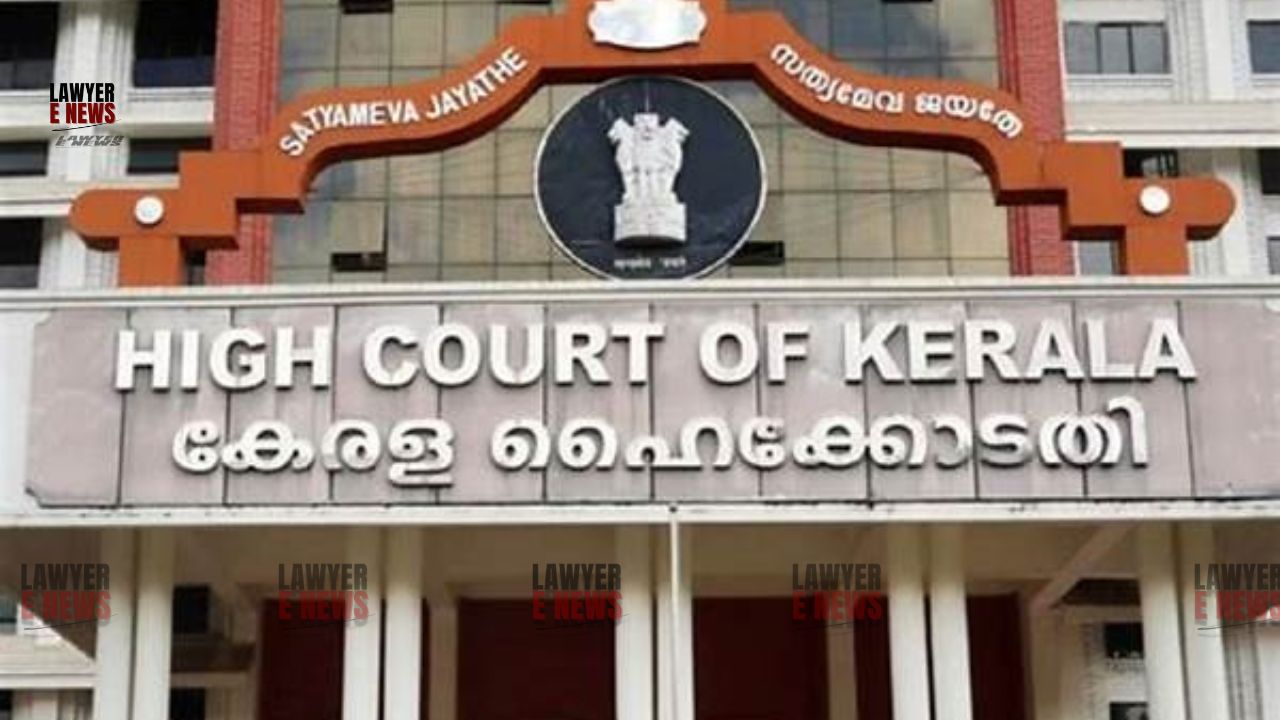
"If the contention is accepted, it would mean a Kerala candidate must study regularly, but an outsider can qualify through distance mode—this would be fallacious", Kerala High Court quashed a common order of the Kerala Administrative Tribunal (KAT) that had directed the inclusion of distance-education degree holders in the ranked list for Librarian Grade-IV posts.
Division Bench comprising Justice Anil K. Narendran and Justice Muralee Krishna S. held that when the recruitment notification and special rules mandate a regular course of study, mere equivalency certificates for degrees obtained through distance education do not suffice.
Allowing a batch of Original Petitions filed under Article 227 of the Constitution, the Court observed:
“In no strength of imagination can a qualification obtained through distance learning be said to be equivalent to a degree obtained through a regular course.”
This judgment reiterates the binding nature of recruitment qualifications prescribed in statutory special rules, which cannot be diluted by executive orders, university certificates, or tribunal interpretations.
Tribunal Allowed Distance Learners to Compete for Librarian Posts
The Kerala Public Service Commission (KPSC), through notifications dated 31.12.2020 and 30.11.2022, invited applications for the post of Librarian Grade-IV in the Common Pool Library Subordinate Service and the Municipal Common Service. The notified qualifications included a BLISc degree acquired through a regular course of study from any university in Kerala or equivalent qualification recognised by such a university.
The candidates (respondents before the High Court) held BLISc degrees obtained via distance education, primarily from Kerala University and IGNOU. They produced equivalency certificates stating that their distance education degrees were equivalent to regular BLISc degrees. The KAT, relying on these certificates and a 2017 Government Order (G.O.(Ms) No.119/2017/H.Edn) recognising such equivalency, directed KPSC to include them in the ranked list.
The High Court, however, found that the Tribunal erred in law by equating equivalency with compliance of the mode of study—particularly when the statutory Special Rules, as amended by G.O.(P) No.53/2009/H.Edn dated 09.06.2009, explicitly required a regular course of study.
Does Equivalency Override the Requirement of “Regular Course of Study”?
At the heart of the dispute lay a clause in the recruitment notification (Clause 7) which stipulated that qualifications must be:
“Acquired after undergoing a regular course of study from any of the Universities in Kerala or recognised as equivalent thereto by any of the Universities in Kerala.”
Candidates argued that if their distance education degrees were declared equivalent to regular degrees, the mode of study should be immaterial. KPSC countered that equivalency alone was not enough—mode of acquisition must also comply with the statutory rules.
Accepting the PSC's contention, the High Court clarified:
“The qualification must be obtained through regular course of study either from a university in Kerala or from a university outside Kerala, but through a regular course of study officially recognised as equivalent by a university in Kerala.”
Importantly, the Court noted that if distance education were permitted for out-of-state universities while regular study remained mandatory for in-state candidates, it would result in unjust discrimination, which the rules never intended.
“Equivalency Does Not Mean Equivalence of Mode”
Citing Shine Bose B. v. KPSC, 2015 (1) KHC 354, and Asha K. v. State of Kerala, 2016 KER 55340, the Court underscored that when rules expressly insist on regular mode of study, it is not open to candidates or the Tribunal to treat distance education as fulfilling that condition.
“It would be fallacious if we were to hold so. The very purpose of having the prescription that one should have acquired the educational qualification after a regular course of study is consciously made by the Government in the Special Rules.”
The Court also cited Nagaland PSC v. State of Nagaland (2017) 13 SCC 498, reiterating that recruitment qualifications are to be strictly followed and neither the Commission nor the Tribunal can reinterpret them beyond their text.
Additionally, in Guru Nanak Dev University v. Sanjay Kumar Katwal, (2009) 1 SCC 610, the Supreme Court had already held that equivalence is an academic decision, but it does not entitle a candidate to bypass specific stipulations about mode of study imposed by statutory rules.
Judicial Review Under Article 227: Tribunal's Finding Was a “Manifest Legal Error”
In a detailed analysis of the scope of Article 227, the High Court emphasised that supervisory jurisdiction is not appellate in nature, but it may be exercised when the subordinate tribunal’s decision is patently erroneous or perverse.
Quoting from Shalini Shyam Shetty v. Rajendra Shankar Patil [(2010) 8 SCC 329], the Bench stated:
“The correctional jurisdiction under Article 227 can be exercised only in a case where the order or judgment of a lower court or tribunal has been passed in grave dereliction of duty or in flagrant abuse of fundamental principles of law or justice.”
Applying this standard, the Court held that the Tribunal's conclusion disregarded binding precedent and statutory qualifications, warranting interference under Article 227.
Tribunal Order Set Aside, Distance Learners Ineligible Under Existing Rules
Concluding that the applicants had not acquired the qualification in compliance with the mode of study stipulated, the High Court allowed all the original petitions filed by KPSC.
“We find that the applicants did not satisfy the qualifications stipulated in the Note appended to clause 7 of the notifications. The Tribunal grossly erred... Therefore, these original petitions are liable to be allowed.”
Accordingly, the impugned common order dated 01.07.2025 passed by the Kerala Administrative Tribunal was set aside, and the original applications filed by the candidates were dismissed.
Date of Decision: 29 January 2026





