-
by sayum
28 August 2026 2:11 PM







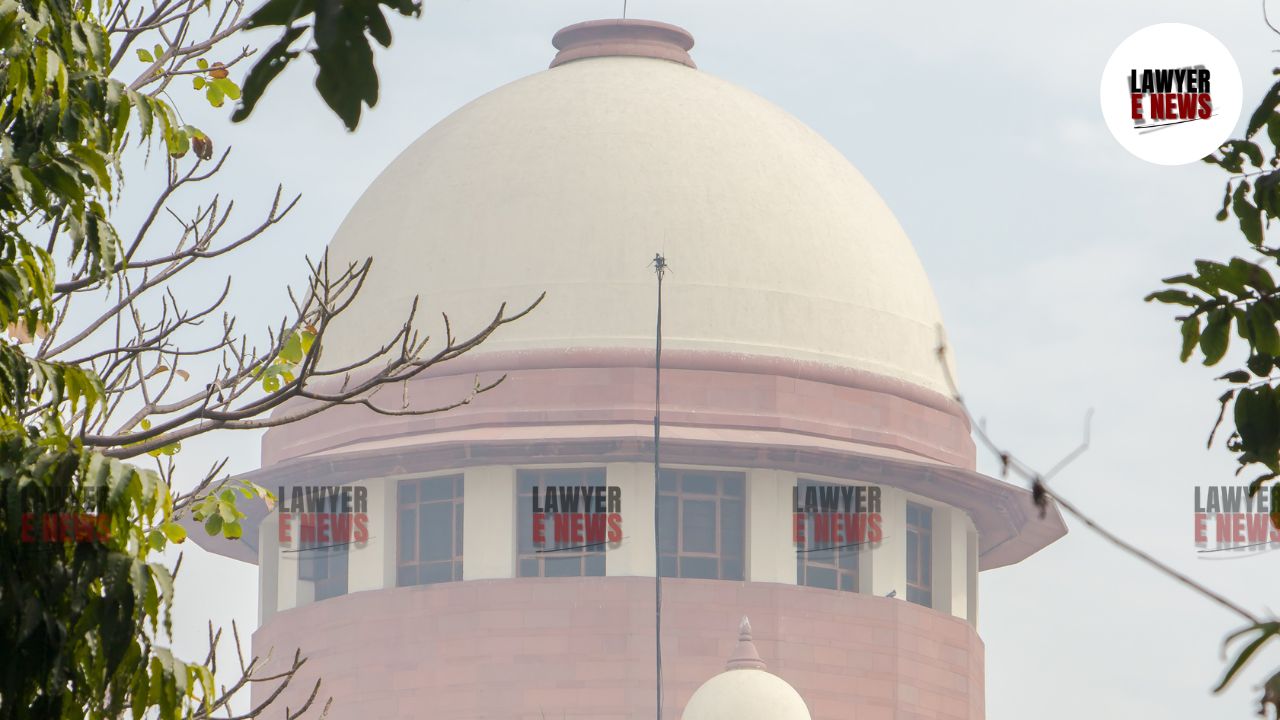
“It is not open to EPL to claim fixed charges twice over... while also pocketing fixed charges paid by ESL for the excess electricity”: In a decisive judgment dated September 25, 2025, the Supreme Court of India resolved a long-standing power purchase dispute in Civil Appeal Nos. 6581–6582 of 2025, titled Gujarat Urja Vikas Nigam Limited v. Essar Power Limited & Anr, wherein the Court laid down the legal contours of contractual liability, restitution, and compensation in electricity supply agreements governed under the Electricity Act, 2003.
In a case that had meandered through regulatory commissions, tribunals, and courts for over two decades, the Court firmly reiterated the contractual principle of proportionate allocation of electricity and upheld dual remedies in favor of GUVNL — reimbursement of fixed charges as a matter of right, and compensation for wrongful diversion of power by EPL.
“Once the Proportion Is Contracted, It Cannot Be Breached for Commercial Convenience”: Court Restores Sanctity of PPA Allocation
The case stems from a Power Purchase Agreement (PPA) executed on May 30, 1996, between Gujarat Electricity Board (predecessor of GUVNL) and Essar Power Limited (EPL) for 300 MW out of a 515 MW plant at Hazira. The remaining 215 MW was contracted to Essar Steel Limited (ESL), EPL’s sister concern.
From 1998 to 2004, EPL breached the proportionate allocation of 58:42 (GUVNL:ESL) and supplied more power to ESL. GUVNL claimed this diversion warranted not just compensation but also refund of fixed charges it had paid for undelivered capacity.
Though EPL initially accepted a ₹64 crore settlement proposed by GUVNL in 2004, the dispute continued, especially for the period post-September 2004. The matter was examined by GERC in 2009, reversed by APTEL in 2010, and partially restored by the Supreme Court in Gujarat Urja Vikas Nigam Ltd v. Essar Power Ltd, (2016) 9 SCC 103. Fresh claims were filed before GERC in 2009 and disposed in 2019, followed by APTEL’s ruling in 2025, leading finally to the present appeal before the Apex Court.
“Reimbursement of Fixed Charges Flows from the PPA — It Is Not a Head of Compensation”: Supreme Court Separates Contractual Entitlement from Damages
The central legal issue in this round of litigation was whether GUVNL was entitled to both ‘compensation’ and ‘reimbursement of fixed charges’, or whether these were overlapping claims. Rejecting the lower authorities’ view that fixed charges were implicitly covered under compensation, the Court drew a sharp distinction:
“Reimbursement of fixed charges flowed from the provisions of the PPA itself and was not traceable only to the breach by EPL… That was only one of the scenarios in which such reimbursement stood triggered apart from those envisaged by the provisions of the PPA.”【¶35】
The Court clarified that compensation arises out of wrongful diversion of electricity, whereas reimbursement of fixed charges is a matter of contractual adjustment governed by Article 7.1.1 of the PPA:
“The PPA envisaged adjustment of the fixed charges at the end of the accounting year if EPL’s generation during that year was less than the capacity allocated to GUVNL… Reimbursement of such fixed charges was to be made proportionately in the event of any shortfall.”【¶33-34】
“GUVNL Cannot Be Made to Pay for Power It Never Received”: Restitution Principle Invoked Against Essar Power’s Unjust Enrichment
Coming down heavily on Essar Power, the Court held that allowing EPL to retain fixed charges paid by GUVNL for diverted power would result in unjust enrichment and violate the principle of restitution:
“It is not open to EPL to claim fixed charges twice over, by appropriating the excess fixed charges paid by GUVNL for electricity that was never supplied… and also pocketing the fixed charges paid by ESL for the extra electricity.”【¶37】
Even in cases where GUVNL declined to schedule power, the Court reaffirmed that EPL was only allowed to divert such electricity if it reimbursed the proportionate fixed charges:
“If GUVNL does not schedule the power to the extent of availability declared by EPL… it cannot complain if the power is sold to EPL’s sister concern and the proportionate annual fixed cost is reimbursed.”【GERC ¶9.11, cited with approval in SC ¶32】
“Methodology Once Accepted by Parties Cannot Be Discarded Opportunistically”: Half-Hourly Computation Upheld
A secondary but important dispute concerned the methodology for computing the diverted electricity — hourly or half-hourly. While the PPA originally stipulated hourly computation, EPL had sought and implemented a change to half-hourly metering through a recommendation from the Central Electricity Authority (CEA) in 2005.
Rejecting APTEL’s insistence on hourly basis due to lack of formal amendment, the Court invoked doctrine of acceptance and estoppel:
“Even if both PPAs were not amended… the irrefutable fact remained that GUVNL, EPL and ESL accepted, adopted and acted upon the recommendation of the CEA… It is not open to EPL to secure, at its own behest, such a modification… and then argue that it ought not to be adopted.”【¶40-41】
The Court decisively held that post-23.02.2005, half-hourly computation shall apply for quantifying diverted power.
“Parties May Misunderstand Our Ruling — This Court Cannot Remain a Mute Spectator”: Supreme Court Reinterprets Its 2016 Decision to Prevent Misconstruction
Both GUVNL and EPL relied on the 2016 Supreme Court decision to support their divergent claims in this round of litigation. The Bench of Justices Sanjay Kumar and Alok Aradhe cautioned against fragmentary reading of precedent:
“We are of the opinion that such disjointed reading of specific paragraphs or even sentences, out of context, would not be the proper approach… It must, necessarily, be read as a whole and in its entirety…”【¶12】
The Court took it upon itself to clarify its own judgment, ensuring its ratio decidendi is not misconstrued in future regulatory or appellate proceedings.
Conclusion: Fixed Charges Are Refundable, Compensation Is Payable, and Principles of Equity Prevail
Summing up, the Supreme Court allowed GUVNL’s appeal and modified the orders of GERC (2019) and APTEL (2025) to the extent that:
GUVNL is entitled to reimbursement of fixed charges for diverted power.
GUVNL is additionally entitled to compensation at HTP-1 Tariff Energy Charge minus variable cost.
Half-hourly computation shall apply post-CEA recommendation.
Disputed figures regarding Deemed Generation Incentive and invoice deductions may be re-examined by GERC.
The double recovery by EPL stands condemned.
The judgment sets a precedent not only in electricity regulatory jurisprudence but also in enforcing contractual equity and statutory restitution under Section 73 of the Indian Contract Act, 1872.
Date of Decision: September 25, 2025