-
by sayum
29 August 2026 9:28 AM







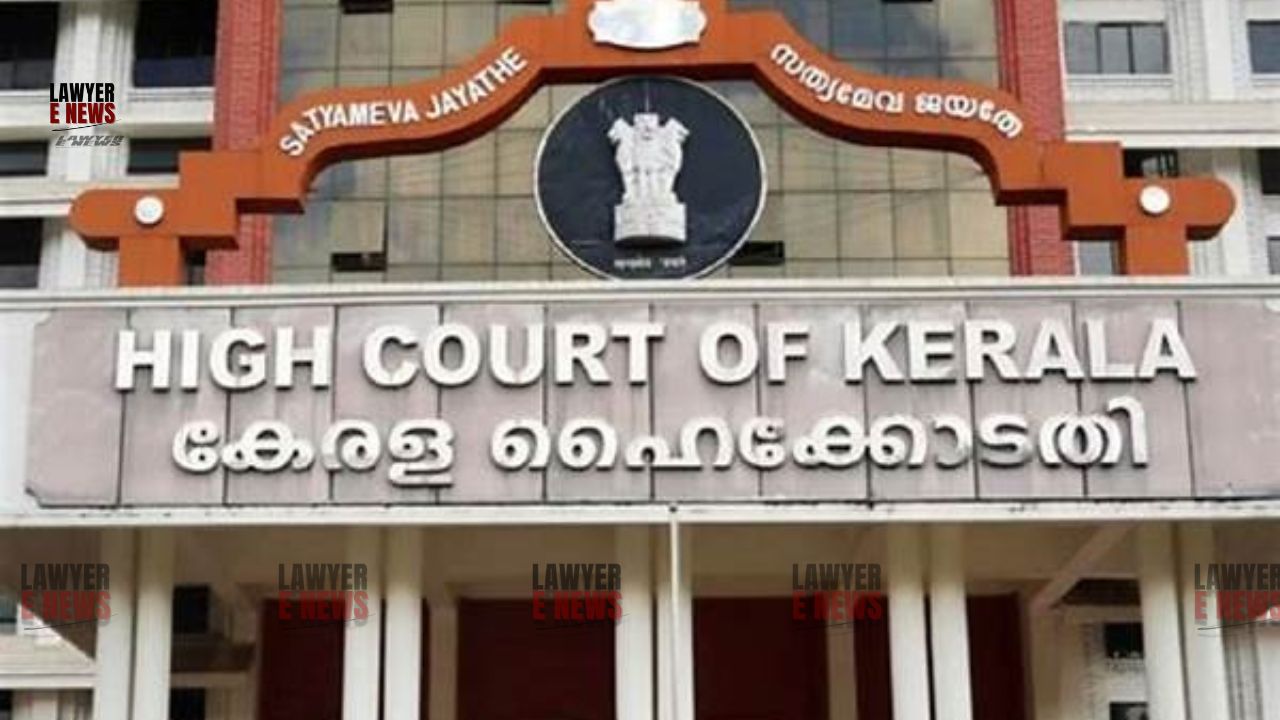
“Confession-led Recovery Is Not Substantive Evidence — Must Be Corroborated”, Kerala High Court overturning the conviction of a man accused of gold chain snatching in 2001. Justice Dr. Kauser Edappagath held that recovery of stolen property based solely on a confession during police custody cannot be the sole ground for conviction under Section 379 read with Section 34 of the IPC.
The Court emphatically ruled that evidence regarding recovery under Section 27 of the Indian Evidence Act is not substantive evidence, and without identification or corroborative testimony, conviction cannot be sustained.
“The Accused Was Never Identified by the Victims — No Test Identification Parade Conducted”: Court Finds Fatal Gaps in Investigation
The prosecution alleged that on 11.11.2001, while the de facto complainant and his wife were returning home after watching a movie, two individuals arrived in an autorickshaw and snatched gold ornaments (MO1 and MO2 series) worn by the wife. Abdul Jabbar, the revision petitioner, was accused as one of the culprits.
However, during trial, both the complainant (PW2) and his wife (PW1) categorically failed to identify Abdul Jabbar as the assailant. The Court noted:
“The trial court found that PW1 and PW2 did not identify the petitioner or the accused No.2 at all. The said finding was confirmed by the appellate court.”
No test identification parade was conducted during investigation. The FIR itself recorded that the complainants were unable to recognize the accused or even the vehicle number.
“A Presumption Under Section 114(a) Must Be Corroborated — Cannot Stand Alone”: Recovery of Gold Insufficient for Conviction
The conviction was based entirely on the recovery of gold ornaments (MO1, MO2 and MO2a) allegedly sold by the accused at two jewellery shops, following a confession during police custody.
Justice Edappagath held: “While recovery under Section 27 of the Act can be a crucial piece of evidence, it cannot be the sole basis for conviction. It is not substantive evidence. It needs to be corroborated by other evidence to establish guilt beyond a reasonable doubt.”
The Court relied on the Supreme Court’s ruling in Manoj Kumar Soni v. State of Madhya Pradesh [(2023) AIR SC 3857], observing:
“Disclosure statements hold significance as a contributing factor… but they are not so strong a piece of evidence sufficient on their own and without anything more to bring home the charges beyond a reasonable doubt.”
“Conviction Under Section 411 IPC Also Not Permissible Without Cogent Evidence”: Court Rejects Alternate Argument by Prosecution
The Senior Public Prosecutor argued that even if the petitioner could not be convicted for theft (Section 379), he could still be convicted for receiving stolen property under Section 411 IPC, based on possession of the ornaments shortly after the incident.
However, the Court rejected this too, clarifying that even for Section 411:
“The Supreme Court in Manoj Kumar Soni has held that solely relying on the disclosure statement made by the accused, conviction under Section 411 of IPC is also not permissible.”
It emphasized that Section 114(a) of the Evidence Act, which permits presumption from possession of stolen goods, cannot be drawn in isolation and must be based on supporting evidence.
“Confession-Led Recovery Without Victim Identification or Independent Corroboration Is Inherently Weak”: Court Acquits the Petitioner
Finding the conviction unsustainable on both legal and evidentiary grounds, the High Court held:
“The conviction of the petitioner based on the evidence regarding recovery under Section 27 of the Evidence Act and drawing presumption under Section 114(a) alone cannot be sustained.”
The Court set aside the conviction and sentence of two years rigorous imprisonment imposed by both the trial court and the Sessions Court, Kozhikode.
Important Clarification on Evidentiary Limits of Section 27 — Confession Alone Cannot Convict
This judgment serves as an important precedent reaffirming that confession-led recoveries must not substitute for proper identification, corroborative evidence, and procedural safeguards like test identification parades.
It underscores a principle of criminal justice: the presumption of innocence remains paramount, and convictions must rest on substantive and corroborated evidence.
Date of Decision: 13th August 2025