-
by sayum
27 August 2026 3:32 PM







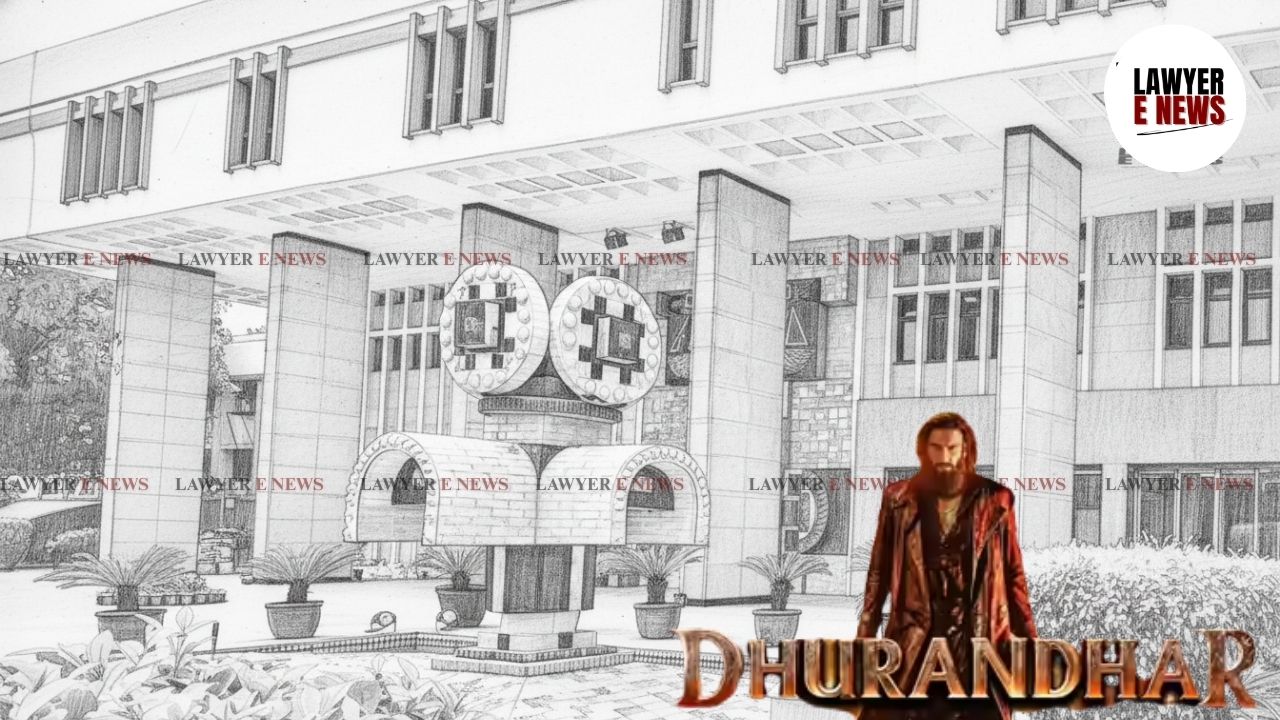
"Suppresio veri suggestio falsi would disentitle a party from obtaining discretionary relief. Even if a party has some semblance of a legal right, but its conduct displaces such semblance, the Court is not bound to exercise discretionary jurisdiction." High Court of Delhi, in a significant ruling dated May 14, 2026, refused to grant an interim injunction to Trimurti Films Private Limited in a copyright infringement suit regarding the iconic song 'Tirchi Topiwale'.
A bench of Justice Tushar Rao Gedela held that the plaintiff was disentitled from seeking discretionary relief under Order XXXIX Rules 1 and 2 of the CPC due to the suppression of material facts and prolonged inaction. The Court observed that the plaintiff failed to disclose prior knowledge of the song's usage in other films and made contradictory statements regarding the promoter's presence in India.
The plaintiff, producer of the 1989 film 'Tridev', filed a suit against the producers of 'Dhurandhar: The Revenge' and Super Cassettes Industries Private Limited (Defendant No. 3). The dispute centered on the unauthorized incorporation of a remixed version of the song 'Tirchi Topiwale', titled 'Rang De Lal (Oye Oye)', in the new film. The plaintiff contended that a 1988 assignment agreement with Defendant No. 3 was limited to audio records and did not permit synchronization of the song into new cinematograph films.
The primary question before the court was whether the plaintiff had suppressed material facts regarding its knowledge of prior exploitations of the song. The court was also called upon to determine if the 1988 agreement granted broad rights to Defendant No. 3 and whether an injunction against an OTT release was maintainable when the film had already been released in theaters.
Requirement Of Clean Hands In Seeking Discretionary Relief
The Court began by emphasizing that the power to grant an injunction is discretionary and rooted in equity. Justice Gedela noted that any party seeking such relief must approach the Court with clean hands. Citing the principle of "one who seeks equity must do equity," the Court held that the suppression of material facts which would impact the merits of the case is sufficient ground to deny an injunction.
Court Explains Significance Of Material Disclosures
The bench observed that the plaintiff had made only a "passing reference" to the film 'Azhar' and claimed the promoter, Mr. Rajiv Rai, was out of touch with the industry between 1997 and 2018. However, records produced by the defendants revealed that the plaintiff had issued a legal notice in 2016 regarding the song's use in 'Azhar' and had received a categorical reply from Defendant No. 3 asserting its ownership. The Court found the plaintiff’s claim of ignorance regarding these developments to be "patently false."
"The affidavits have not been able to satisfy the conscience of this Court that the non-disclosures were innocuous or that such disclosures would not have adversely impacted the plaintiff."
Contradictory Affidavits And Selective Prosecution
The Court highlighted significant inconsistencies between the plaint, the rejoinder, and the subsequent affidavits filed by the plaintiff's promoter and authorized representative. While the plaintiff claimed the promoter was unable to monitor infringements from abroad, the defendants produced various judicial orders showing the plaintiff was actively pursuing multiple lawsuits in Indian courts and tribunals between 2016 and 2020. The Court noted that the plaintiff had even successfully sued Defendant No. 3 on similar grounds during this period but chose to remain silent regarding 'Tirchi Topiwale'.
Plaintiff’s Inaction Led Defendants To Alter Their Position
Regarding the song's use in 'K.G.F: Chapter 1' (2019), the Court observed that the plaintiff "did not even move a muscle" to challenge the alleged infringement. This prolonged apathy and silence induced the defendants to invest heavily in the production of 'Dhurandhar: The Revenge' based on the assurance that the 1988 assignment remained unchallenged. The Court held that the plaintiff could not suddenly "awaken from its deep slumber" to seek an injunction after years of inaction.
"The complete absence of any legal action on the part of the plaintiff evidently assured the defendant no.3 of exercising what it claims to be complete assignment."
Scope Of The 1988 Assignment Agreement
The Court analyzed the 1988 agreement, noting it was distinct from the one considered in the Shemaroo Entertainment case. The agreement defined "the said work" to include literary, dramatic, musical, and cinematographic film copyrights. Under Para 2(i) and 2(xi), the plaintiff assigned all rights and titles in literary and musical works, including the right to make "any versions" of the work. The Court prima facie concluded that the assignment was broad, excluding only the original film 'Tridev' itself from further exploitation by the assignee.
Court Rejects Injunction Against OTT Release
Addressing the prayer for a limited injunction against the OTT release, the Court found the request to be legally incongruous. Since the film had already been exhibited in theaters since March 19, 2026, the Court held it would be inconceivable to allow the song in cinema halls while restraining it on streaming platforms. The bench noted that any potential loss to the plaintiff could be adequately addressed through monetary damages during the final trial.
"Restraining release on OTT platforms while theatrical exhibition continues would result in an incongruous situation which cannot be reconciled."
Final Directions For Monetary Deposit
While denying the injunction, the Court sought to balance equities. It noted that Defendant No. 3 is exploiting the remixed version on digital platforms like YouTube and Spotify, which may attract royalty obligations under the 1988 agreement. Consequently, the Court directed Defendant No. 3 to deposit ₹50 Lakhs with the Registrar General of the High Court within four weeks. This amount is to be kept in an interest-bearing FDR to benefit the party that eventually succeeds at trial.
The High Court dismissed the application for interim injunction, concluding that the plaintiff's conduct and material suppressions outweighed its legal claims at this stage. The Court clarified that these observations are prima facie and do not reflect on the final merits of the copyright dispute. The suit has been listed before the Joint Registrar for further proceedings in July 2026.
Date of Decision: 14 May 2026