-
by sayum
28 July 2026 10:19 AM







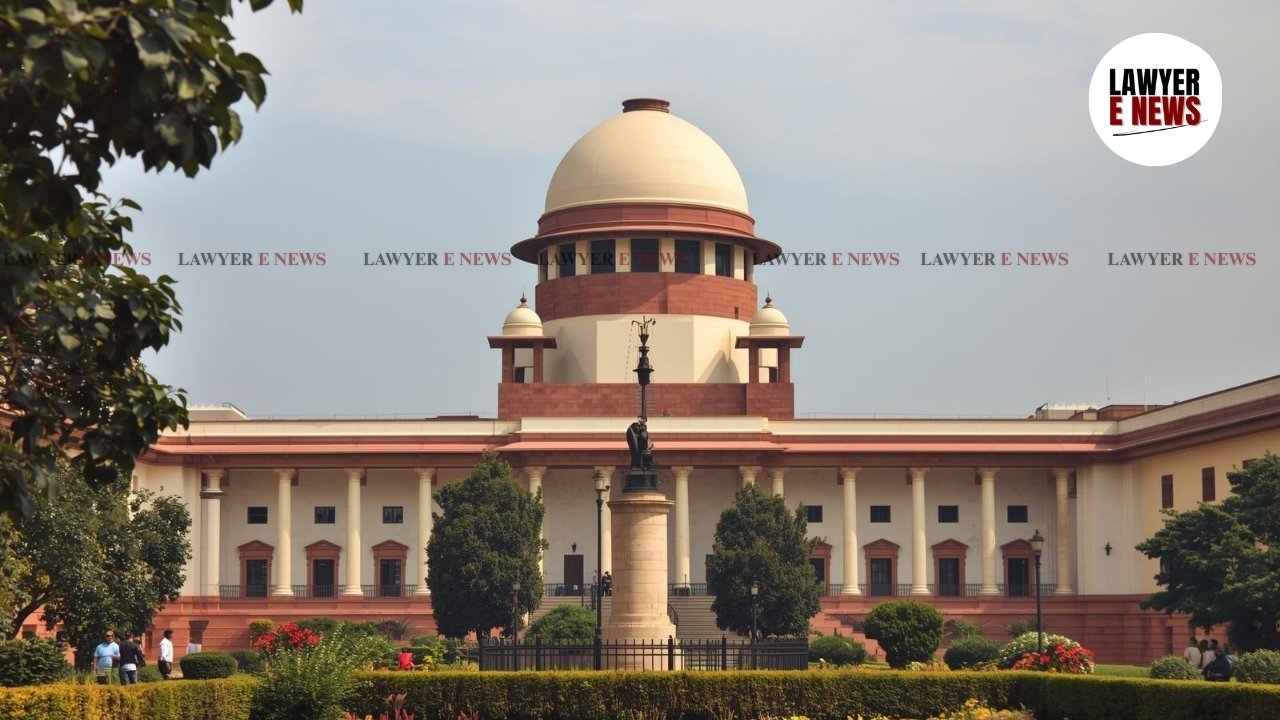
"Passed-out students cannot be allowed the benefit of a windfall or a bonanza merely by dint of the interim orders passed by this Court... it is the right time when they should be asked to make good their outstanding fee obligations," Supreme Court, in a significant ruling dated May 14, 2026, held that medical students who were relocated from a deficient private medical college to other private institutions cannot claim the permanent benefit of subsidised government-rate fees.
A bench of Justice Vikram Nath and Justice Sandeep Mehta observed that since these students originally contracted to pay higher fees at a private institution, allowing them to complete their degrees at government rates would amount to "unjust enrichment" at the cost of the transferee colleges.
The controversy arose regarding the relocation of students from the Sardar Rajas Medical College, Hospital and Research Centre (SRMCH) in Odisha. After the Medical Council of India (MCI) found gross deficiencies in infrastructure and faculty, the college was denied renewal of recognition for the 2013-14 and 2014-15 batches. To safeguard the academic interests of 122 students whose careers were in jeopardy, the High Court and subsequently the Supreme Court directed their transfer to three recognised private medical colleges: Kalinga Institute of Medical Sciences (KIMS), Institute of Medical Sciences & SUM Hospital, and Hi-Tech Medical College.
The primary legal issue before the Court was the equitable apportionment of the financial burden arising from this extraordinary situation. The Court had to determine whether the transferred students were liable to pay fees at government rates or the rates applicable to private medical colleges. Furthermore, the bench examined whether the financial liability should be fixed entirely on the defaulting institution, Selvam Educational and Charitable Trust, or if the students should contribute to the shortfall.
Students Cannot Claim Undue Advantage From Interim Orders
The Court observed that the interim arrangement permitting students to pay government-rate fees was an emergent measure intended only to tide over the crisis. The bench noted that these students had consciously contracted to pay the higher fee standards charged by a private medical college at the time of their initial admission. By virtue of the Court's intervention, they were able to complete their MBBS courses without losing an academic year, a benefit they might not have received had they sought admission in government colleges based on their original merit.
The bench emphasized that providing education at government rates, which are highly subsidised, would result in a "bonanza" for the students. The Court noted that the transferee colleges had provided high-quality education and infrastructural facilities despite the sudden burden of additional students. Consequently, the judges held that the students must fulfill their outstanding fee obligations, as the protective umbrella of the interim orders could not be extended indefinitely to grant them a financial windfall.
Application Of The Maxim 'Commodum Ex Injuria Sua Nemo Habere Debet'
The Court invoked the legal maxim Commodum ex injuria sua nemo habere debet, meaning no one should derive a benefit from their own wrong. While this maxim applied primarily to the defaulting institution, SRMCH, the Court extended the logic of equity to the students. It observed that while the students were entitled to complete their course without hindrance upon payment of fees, they could not use the college’s default as a tool to evade the financial obligations they had originally agreed to undertake.
The bench was firm that the defaulting institution, the Selvam Trust, could not be permitted to take benefit of its own follies. The findings of the MCI regarding inadequate infrastructure and faculty were affirmed by the dismissal of the college’s previous writ petitions. However, the Court also noted that the transferee colleges should not be forced to suffer unprecedented financial losses for providing education under judicial directions.
Liability Fastened Primarily On The Defaulting Trust
The Court directed that the primary brunt of the financial liability must be fastened upon the Selvam Trust, which managed the deficient SRMCH. To satisfy the dues of the transferee colleges, the Court ordered the release of the Rs. 10 crore bank guarantee furnished by the Trust to the MCI/NMC. Additionally, a sum of Rs. 2 crore previously deposited by the Trust with the Registry of the Supreme Court, along with accrued interest, was ordered to be disbursed among the three transferee colleges in equal proportions.
The bench clarified that the National Medical Commission (NMC) does not hold an overriding charge or exclusive lien over the bank guarantee amount in this context. The Court held that these funds should be utilised to compensate the private colleges that stepped in to save the students' careers. The NMC was directed to ensure the release of these amounts to the respective bank accounts of the transferee colleges within three months.
Transferee Colleges Entitled To Recover Shortfall From Students
Despite the disbursal of funds from the Trust, the Court acknowledged that a significant shortfall would remain in the recovery of lawful dues. The transferee colleges fairly conceded that they would be satisfied if they were reimbursed at the rates originally charged by SRMCH, rather than their own higher prevailing rates. The bench calculated that even after applying the SRMCH fee standards, the total liability would exceed the funds available from the Trust’s guarantees.
The Court permitted the transferee colleges to make representations to the NMC detailing the exact shortfall of fees due from each student based on the SRMCH rates. The NMC was directed to provide redressal for the recovery of these deficit amounts from the passed-out students. The bench noted that the students had already provided undertakings at the time of receiving their degree certificates, acknowledging that their fee liability was subject to the final outcome of these proceedings.
Release Of Academic Documents Contingent On Fee Clearance
As a final direction, the Court clarified that students who comply with the fee liability as determined by the NMC would be entitled to receive all their academic and course-completion documents. This includes certificates and other consequential records that are ordinarily required for professional registration and practice. The Court stressed that this resolution was the most equitable way to balance the interests of the students, the transferee colleges, and the regulatory framework of medical education.
The bench concluded by stating that the observations made regarding the deficiencies of SRMCH would not prejudice any other ongoing claims or defences the Selvam Trust might have in separate proceedings. With these directions, the Court closed the long-standing litigation and disposed of all pending interlocutory applications filed by the transferee medical institutions.
Date of Decision: May 14, 2026