-
by sayum
27 August 2026 3:32 PM







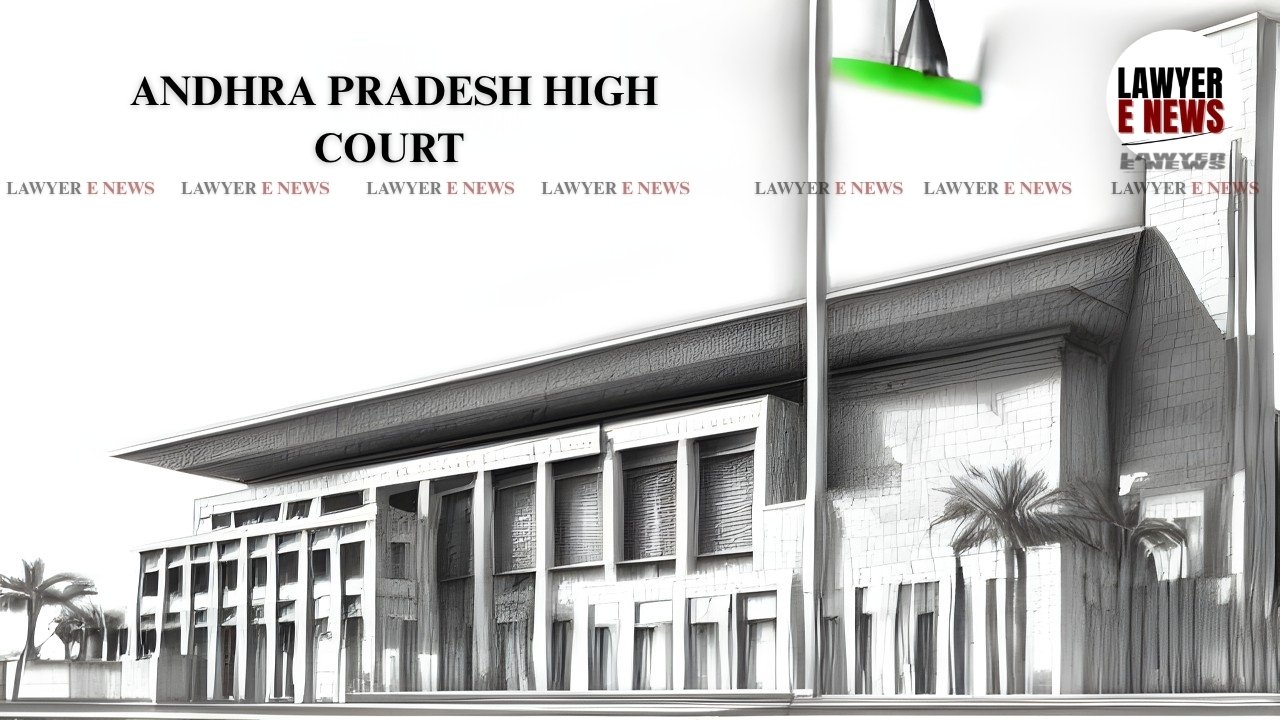
"Insurance Company failed to prove that there is no driving license to the driver of the offending vehicle. Therefore, this Court finds that the 2nd respondent - Insurance Company is also liable to pay the compensation. The findings of the learned MACT contra are not sustainable," High Court of Andhra Pradesh, in a significant ruling, has held that the burden of proving that a driver did not possess a valid license lies squarely on the insurance company if it seeks to escape liability in a motor accident claim.
A bench of Justice A. Hari Haranadha Sarma observed that in summary proceedings under the Motor Vehicles Act, the court must adopt a holistic view based on the preponderance of probabilities rather than the strict standard of proof beyond reasonable doubt.
The court further emphasized that a Motor Accidents Claims Tribunal (MACT) cannot arbitrarily reduce the percentage of disability assessed by a Medical Board without a valid medical basis or a fresh reassessment.
The appellant, a 35-year-old coolie named Palem Chandrayudu, sustained a fracture of the right femur and other grievous injuries after a Tipper dashed against his auto-rickshaw on March 18, 2013. The MACT had awarded him a compensation of Rs. 93,400 but exonerated the insurance company, Sriram General Insurance, on the ground that the driver lacked a valid license. Dissatisfied with the quantum and the exoneration of the insurer, the claimant approached the High Court.
The primary question before the court was whether the insurance company had successfully discharged its burden to prove the absence of a driving license. The court was also called upon to determine if the MACT was justified in reducing the claimant's disability from 40%, as certified by a Medical Board, to 15% without any supporting evidence.
On The Burden Of Proof Regarding Driving License
The court noted that the Insurance Company relied on a legal notice sent to the owner which returned unserved to claim that the driver lacked a license. The bench remarked that such a move is insufficient to discharge the burden of proof, especially when the insurer took no steps to summon the owner or the driver to the witness box.
Justice Sarma pointed out that the police charge sheet did not mention any offences under Sections 180 or 181 of the Motor Vehicles Act, which relate to driving without a license. The court observed that the record maintained by the police in their official findings carries a presumption of correctness under the law.
Insurance Company Fails To Prove Policy Breach
The bench emphasized that the plea of lack of a driving license is often taken generally by insurers. However, without producing concrete documentary evidence or examining the relevant transport authorities to prove the specific absence of a license for the driver in question, the insurer cannot be absolved of its contractual and statutory liability toward third parties.
Court Highlights Preponderance Of Probability
Citing the Supreme Court’s decision in Bimla Devi and others Vs. Himachal Road Transport Corporation, the court reiterated that claimants are only required to establish their case on the touchstone of preponderance of probability. The bench held that the summary nature of the inquiry under the Motor Vehicles Act serves a social welfare purpose, requiring a holistic view of the facts.
On The Arbitrary Reduction Of Disability Percentage
The court took a stern view of the MACT’s decision to reduce the claimant’s disability from 40% to 15%. It noted that the disability was assessed by a Medical Board at the Rajendra Institute of Medical Sciences (RIMS) and supported by the testimony of an orthopedic surgeon.
MACT Cannot Disregard Medical Board Certificates Without Basis
The bench held that if a Tribunal finds a medical assessment unacceptable, it must order a reassessment to establish a proper basis for its findings. Reducing the percentage "without any basis" is not sustainable in law. Consequently, the High Court restored the disability assessment to 40% for the purpose of calculating the loss of earning capacity.
On The Quantum Of Compensation
Applying the multiplier method, the court accepted the claimant's monthly income as Rs. 3,000, considering the socio-economic conditions of 2013. With a 40% permanent disability and a multiplier of 11 for the 50-year-old claimant (as per the wound certificate), the court recalculated the loss of income.
Court Enhances Compensation Amount
The court enhanced the total compensation from Rs. 93,400 to Rs. 1,98,400. It also modified the interest rate to 6% per annum from the date of the petition till realization. The court directed that both the owner and the insurance company are jointly and severally liable to pay the amount, with the insurer being primarily responsible under the policy.
The appeal was allowed in part, setting aside the MACT’s order exonerating the insurance company. The court concluded that the insurer failed to prove a breach of policy conditions regarding the driver's license and that the claimant was entitled to higher compensation based on the original medical assessment of his disability.
Date of Decision: 07 May 2026