-
by sayum
27 August 2026 3:32 PM







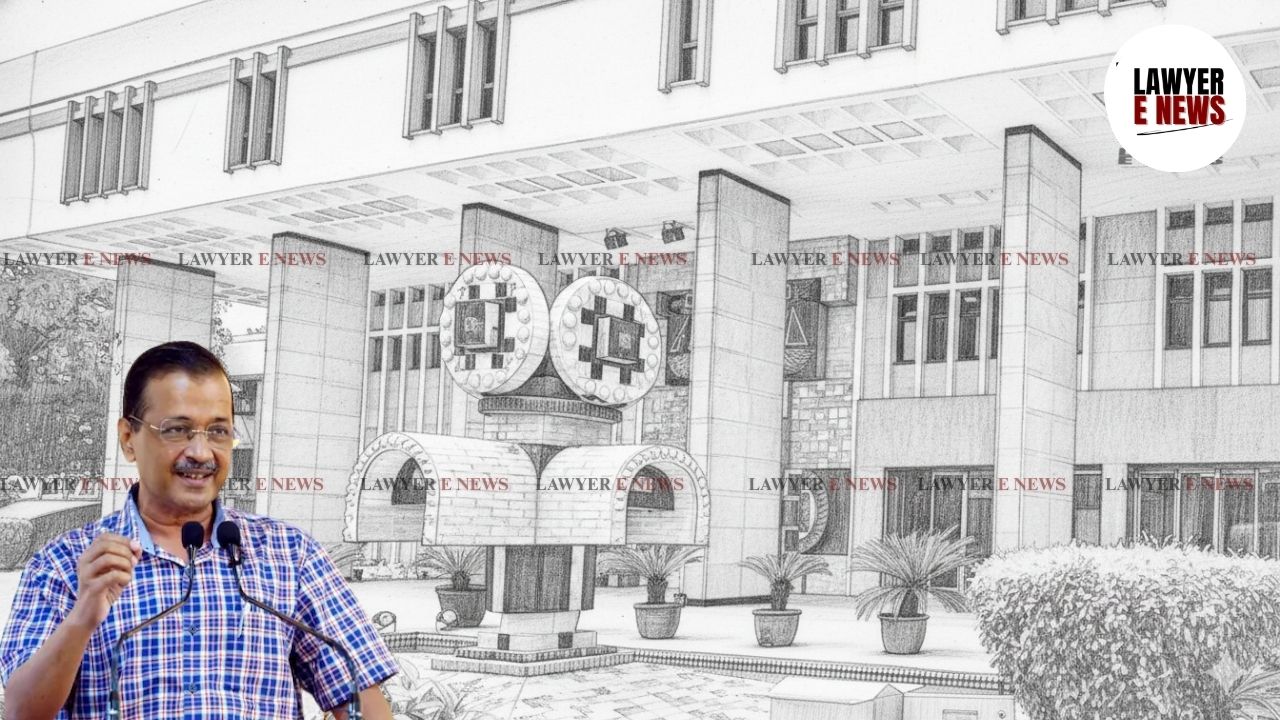
"A lie spoken a thousand times does not become the truth, just as intimidation clothed as legitimate criticism does not become immune from the law of contempt," Delhi High Court, in a significant ruling, has initiated suo motu criminal contempt proceedings against several political leaders, including Arvind Kejriwal, Manish Sisodia, and Saurabh Bhardwaj, for orchestrating a coordinated social media campaign to vilify the judiciary.
A bench of Dr. Justice Swarana Kanta Sharma observed that the acts of the proposed contemnors were a "calculated attempt" to scandalise the Court, lower the authority of the institution, and intimidate the presiding judge while a criminal revision petition in the 2022 Delhi Excise Policy case was pending.
The proceedings arose after certain respondents in the Delhi Excise Policy case filed applications seeking the recusal of Justice Swarana Kanta Sharma, which were rejected via a detailed judgment on April 20, 2026. Instead of challenging this order before the Supreme Court, the respondents allegedly launched a sustained public campaign through social media platforms, press conferences, and selectively edited videos to attribute political bias to the presiding judge. The Court took notice of these developments after finding that the campaign was intended to create a parallel narrative outside the courtroom to obstruct the administration of justice.
The primary question before the court was whether the coordinated social media posts, public letters, and edited videos published by the respondents prima facie constitute criminal contempt under Section 2(c) of the Contempt of Courts Act, 1971. The Court was also called upon to determine whether such conduct, framed as "Satyagraha" or free speech, interfered with the due course of judicial proceedings or scandalised the authority of the Court.
Courts Cannot Yield To Manufactured Public Opinion
The Court began by emphasizing that the institution of the judiciary does not function based on political considerations or the "political might" of any individual. Justice Sharma noted that the soul of the judiciary depends on the trust reposed by common people, which is eroded when orchestrated campaigns are used to target judges. The bench observed that neither the Constitution nor the judges consider the Courts of law to be so weak as to "bow before pressure, manufactured public opinion, or vilification campaigns."
Campaign Of Vilification Clothed As Free Speech
The Court observed that while fair criticism of judgments is permissible, there is a clear constitutional distinction between such criticism and a campaign to scandalise the institution. The bench noted that the utterances in the form of videos and letters lead to only one conclusion—that it was a "calculated campaign of vilification in the digital space." The Court emphasized that "popularity of a person also cannot bestow constitutional immunity" and that no individual is above the majesty of justice.
Contemptuous Conduct of Arvind Kejriwal and "Satyagraha"
Regarding respondent no. 18, Arvind Kejriwal, the Court highlighted a letter published on platform 'X' where he attributed political bias to the Court and declared he would not appear in proceedings. The Court found his public declaration of non-participation, framed as "Satyagraha," to be an attempt to portray the Court as incapable of independent adjudication. The bench remarked that "if people stop coming to Courts on such grounds and take the path adopted by accused Arvind Kejriwal, the judicial system will be shaken."
"Satyagraha" Means Holding To Truth, Not Attacking Judges
The Court critiqued the use of the term "Satyagraha" by the respondents, noting that it means holding firmly to the truth, which in a legal context involves approaching a higher court for redressal. Justice Sharma observed that instead of holding to truth, the contemnors tried to prove "there was something wrong with the judge instead of the judgment." The Court described the situation as a calculated move to browbeat the judiciary by shifting focus from the accused to the system itself.
Misleading Circulation of Edited Academic Videos
The Court took serious note of the circulation of a selectively edited video of the judge delivering a lecture at Mahatma Gandhi Kashi Vidyapeeth, Varanasi. The video was decontextualised to falsely suggest that the judge admitted to receiving promotions for attending political events. "The references in the speech were in the context of Lord Shiva and the cultural significance of Kashi," the Court clarified, noting that the distortion was intended to create a perception of political alignment.
Distinction Between Libel and Criminal Contempt
Referring to the precedent in Brahma Prakash Sharma v. State of UP, the Court explained that while a defamatory attack on a judge as an individual may be libel, it becomes contempt when it is "calculated to interfere with the due course of justice." The bench held that the current campaign was a "constitutional injury" aimed at destabilising the institution. The Court reiterated that "intimidation in the form of public speeches... cannot be clothed in the garb of popular belief or public opinion."
Judicial Silence vs. Constitutional Duty
Addressing the limitations of judicial office, the Court noted that judges do not hold press conferences and speak only through their orders. Justice Sharma observed that "remaining silent is not judicial restraint but may amount to surrender before a powerful litigant" in certain moments. The Court held that it was duty-bound to ensure the rule of law does not collapse by "choosing courage over convenience" when the institution is under systematic assault.
Judicial Propriety Over Transfer of Main Case
While initiating the contempt proceedings, the Court directed that the main revision petition be placed before the Chief Justice for assignment to another bench. However, Justice Sharma categorically clarified that this was "not a recusal" nor a yielding to the demands of the contemnors. The Court noted that this step was taken solely for "judicial propriety and fairness to the accused," so that the contemnors cannot later project themselves as victims of bias.
The Court concluded that the acts of the proposed contemnors constitute a deliberate attempt to scandalise the Court and interfere with the administration of justice under Section 2(c) and Section 15 of the Contempt of Courts Act, 1971. The Registry was directed to assign a case title and number to the suo motu proceedings and place the matter before the Chief Justice for further assignment. The Court ended by reaffirming that the "rule of law cannot be permitted to surrender before intimidation or the weight of political influence.
Date of Decision: May 14, 2026