
-
by sayum
25 August 2026 12:32 PM







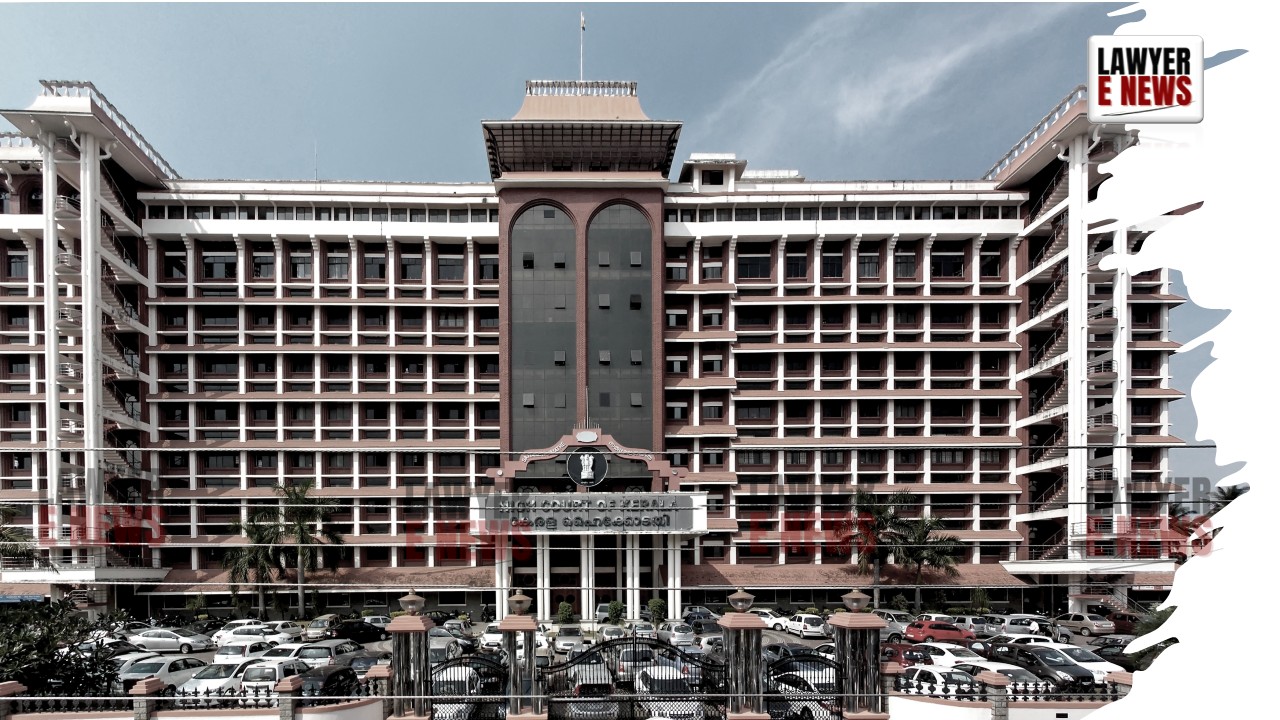
“Even if Rule 16(ii) does not mandate it, fairness demands a personal hearing before penal action” – In a decisive reaffirmation of natural justice as a foundational principle of administrative law, the Kerala High Court on 13 November 2025 dismissed Writ Appeal filed by the Kerala State Civil Supplies Corporation (Supplyco), and upheld a Single Judge’s ruling that quashed disciplinary orders against an employee due to lack of personal hearing and non-supply of crucial documents.
The Division Bench comprising Justice Sushrut Arvind Dharmadhikari and Justice P.V. Balakrishnan ruled that even when Rule 16(ii) of the Helpers Service Rules, 1978 does not explicitly mandate a personal hearing in every case, fair procedure and the principle of audi alteram partem must be read into such statutory schemes, especially where the delinquent official is penalised based on financial allegations.
The Court found no merit in the appeal and concluded that the disciplinary proceedings and subsequent orders were vitiated due to procedural unfairness, reiterating that natural justice cannot be sacrificed at the altar of rigid statutory interpretation.
“Non-Supply of Audit Report and Accounts Violates Natural Justice, Disciplinary Orders Unsustainable”
Kerala High Court dismissed a writ appeal filed by Supplyco challenging the judgment of the learned Single Judge dated 01.08.2025 in WP(C) No. 20882 of 2020, which had quashed the disciplinary orders (Exts.P5 and P7) issued against the respondent, M. Ashraf, a retired Data Entry Operator. The disciplinary action was taken on the allegation of excess distribution of subsidised goods, causing a financial loss of ₹2,86,590/- to the Corporation.
The Court held that the failure to provide the respondent with copies of the relied-upon audit report and statements of account, along with the denial of personal hearing, constituted a serious violation of natural justice, and thus rendered the disciplinary proceedings legally unsustainable.
The respondent, M. Ashraf, was working as an Assistant Salesman at the Kochi Depot of Supplyco during the period from 01.04.2014 to 31.12.2015. He was served with a charge memo (Ext.P1) alleging that he had sold subsidised items in excess of the quota permitted to ration card holders, resulting in significant financial loss to the Corporation.
Ashraf responded to the charge memo with Ext.P2 reply dated 22.05.2019. However, the disciplinary authority proceeded to issue Ext.P5 order, confirming the charges and holding the respondent liable. His appeal (Ext.P6) was also dismissed by the appellate authority through Ext.P7 order. Aggrieved, Ashraf approached the High Court through a writ petition, which was allowed by the Single Judge, leading to this writ appeal by the Corporation.
The central legal issues considered by the Court were:
Whether personal hearing is mandatory in disciplinary proceedings even if not explicitly required under Rule 16(ii) of the Helpers Service Rules, 1978.
Whether failure to furnish relied-upon documents, such as audit reports and statements of account, amounts to a violation of natural justice.
Whether disciplinary proceedings initiated under a minor penalty provision could bypass basic procedural fairness.
On Rule 16(ii) and Natural Justice:
The appellant-Corporation argued that under Rule 16(ii), a personal hearing is only required if demanded by the delinquent. Since the respondent did not request one, and the documents were allegedly self-evident, the Corporation claimed there was no procedural lapse.
The Court, however, decisively rejected this argument, observing:
"Even if the Rule stipulates so, in order to comply with the principles of natural justice and to make the enquiry process fair, the disciplinary authority ought to have granted an opportunity of personal hearing to the delinquent before passing Ext.P5 order." [Para 7]
Referring to the precedent in Abdulla T.A. v. Supplyco, 2020 (1) KHC 236, the Court reaffirmed that:
"Irrespective of whether an opportunity for hearing is provided in a statute or not, the principles of natural justice require that such an opportunity must be read into the Statute." [Para 7]
Thus, the right to be heard is not dependent on express statutory language, and is an implied requirement in any action with civil consequences.
On Non-Supply of Documents:
The Court also recorded that copies of the audit report and statement of accounts, which were central to the charge, were never supplied to the respondent.
The Bench remarked:
"The said conduct of the appellants is again, nothing but a violation of the principles of natural justice, causing considerable prejudice to the delinquent." [Para 8]
Without access to the documents that formed the basis of the charges, the respondent was effectively denied a meaningful defence, undermining the legitimacy of the disciplinary process.
The Court found that both Ext.P5 (disciplinary order) and Ext.P7 (appellate order) were passed in violation of elementary fairness and natural justice.
It concluded that:"The findings of the learned Single Judge that Exts.P5 and P7 orders are liable to be quashed cannot be faulted with." [Para 8]
Accordingly, the writ appeal was dismissed, and the judgment of the Single Judge was upheld.
No costs were awarded.
The High Court’s judgment in Supplyco v. M. Ashraf sends a clear message that disciplinary processes, even for minor penalties, must conform to principles of fairness and justice. Procedural shortcuts—such as denial of personal hearing or non-disclosure of relied-upon evidence—cannot be justified by citing silence in the rules.
This decision builds upon settled constitutional jurisprudence and affirms that natural justice is not a matter of formality, but a substantive guarantee of fairness, particularly where livelihood and reputation are at stake.
The judgment ensures that statutory interpretation does not override fundamental rights, and that state entities remain accountable to fair procedure in all disciplinary actions.
Date of Decision: 13 November 2025





