
-
by sayum
28 August 2026 2:11 PM







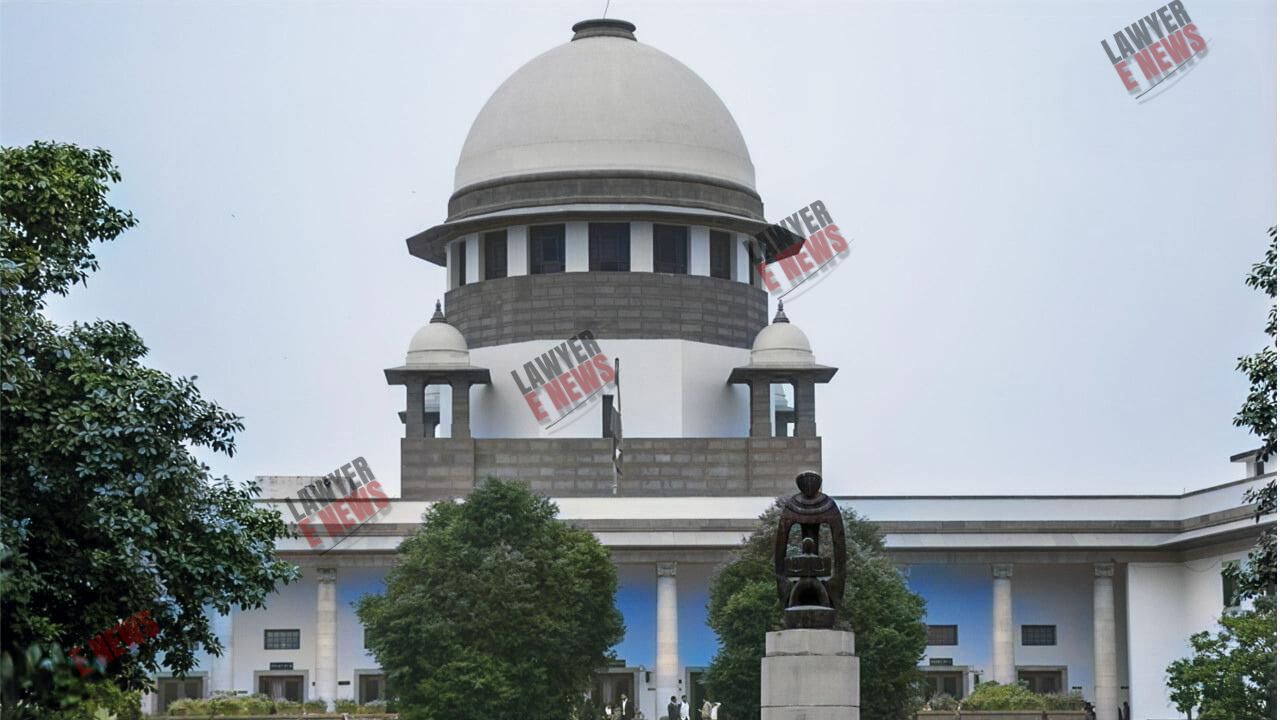
"If a reply or defence is allowed to come on record in a summary suit without the Leave of the Court, then the distinction... stands effaced" – In a decisive reaffirmation of the mandatory procedural rigour under Order XXXVII of the Code of Civil Procedure, 1908, the Supreme Court of India on 25 September 2025 held that a defendant cannot file a reply to a summons for judgment in a summary suit without obtaining prior leave to defend, as mandated under Rule 3(5) of Order XXXVII.
The judgment came in Civil Appeal where a procedural order of the Bombay High Court, allowing the defendant to file a reply directly in a commercial summary suit without leave, was set aside as a serious procedural defect that struck at the very foundation of the summary suit mechanism.
Summary Suits Demand Procedural Discipline: “Deviation Goes to the Root of the Matter”
The Supreme Court was dealing with a challenge by the plaintiff in a Commercial Summary Suit filed under Order XXXVII CPC for recovery of Rs. 2.15 crore plus interest, in respect of a long-standing business transaction. The High Court had passed a short order on 5 December 2023, directing the defendant to file a reply to the summons for judgment by a specific date — without requiring an application for leave to defend.
The Apex Court, while setting aside this procedural indulgence, observed: “If a reply or defence is allowed to come on record in a summary suit without the Leave of the Court, then the distinction sought to be maintained between a Suit normally instituted and Summary Suit under Order XXXVII of the CPC stands effaced.”
The Court made it unequivocally clear that Order XXXVII is a self-contained, fast-track procedure, available only in specific classes of suits, and its effectiveness depends entirely on strict adherence to procedural steps. Any circumvention, howsoever innocuous it may appear, undermines the very object of the provision.
High Court's Order Flawed: “Bypassing Sub-Rules (4) and (5) of Rule 3 Is Not Sustainable”
Tracing the procedural history of the case, the Court noted that after the defendant entered appearance, the plaintiff had filed Summons for Judgment. Instead of filing an application for leave to defend under Order XXXVII Rule 3(5), the defendant moved an application under Section 12A of the Commercial Courts Act, 2015, seeking dismissal of the suit for non-compliance with pre-institution mediation. That application was allowed, and mediation was directed.
However, upon failure of mediation and amendment of pleadings, the matter returned to the court. Instead of seeking leave to defend in accordance with Order XXXVII, the defendant was allowed by the High Court to file a reply straightaway, without any judicial consideration of the necessity or merits of leave to defend.
This was held to be a procedural error of substance, as per the Supreme Court:
“The step ordered by the High Court, allowing reply to the Summons for Judgment, is procedurally incorrect and unsustainable.”
“The requirement in terms of sub-Rule (5) of Rule 3 of Order XXXVII is to file an application seeking leave to file the defence.”
The Court further held that even if an application for condonation of delay in applying for leave is pending, that does not justify the bypassing of mandatory procedural sequencing.
“Reply Without Leave Equates Summary Suit with Ordinary Suit” – SC Clarifies Core Legal Principle
Perhaps the most critical legal pronouncement in this judgment is the Court’s emphasis on the conceptual distinction between summary and regular civil suits. The summary suit procedure, by design, restricts the defendant’s right to defend, unless a credible, substantial defence is disclosed and judicially approved.
The Court clarified: “Allowing reply in summary suit without leave equates it with ordinary suit, thereby nullifying the purpose of Order XXXVII.”
This fundamental procedural safeguard is not a mere technicality, but an essential legal filter designed to expedite adjudication of claims where the defendant has no plausible defence. Any judicial deviation not only dilutes the rule but frustrates legislative intent.
Pending Application for Condonation of Delay Does Not Cure Procedural Lapse
During the hearing, the respondent-defendant attempted to justify the procedural lapse by pointing to an application for condonation of delay in filing for leave to defend, which was pending before the High Court.
The Supreme Court, however, clarified that mere pendency of such an application or filing it under a wrong provision cannot be used as a shield to override mandatory compliance. The Court expressly refrained from commenting on whether the delay was justifiable or whether leave should be granted, but was categorical that procedural sequencing under Rule 3 must be respected:
“We are not determining whether a case for granting leave is made out or not... but the precise question is whether the court could have permitted filing a reply/defence without even praying for leave.”
A Self-Contained Code: SC Reaffirms the Sequencing Under Order XXXVII Rule 3
To clarify procedural expectations, the Court recounted the step-by-step framework of Order XXXVII Rule 3 — from issuance of summons to application for leave to defend, and conditions under which immediate judgment may be passed in the plaintiff’s favour. This reinforcement reaffirms that Order XXXVII operates as a self-contained procedural code, and any departure from its internal architecture cannot be judicially condoned.
The judgment states: “The procedural deviation goes to the root of the matter.”
Accordingly, the Supreme Court allowed the appeal, set aside the High Court’s order, and restored the integrity of the summary suit process. At the same time, it protected the rights of both parties to pursue appropriate remedies:
“The setting aside of the order impugned shall not be understood as foreclosing the options available to the Defendant... or prejudice the case of either party.”
Summary Suit Is Not a Casual Procedural Shortcut—It Demands Discipline
The Supreme Court’s judgment is a timely reminder that summary procedures are not to be diluted or casually interpreted. Order XXXVII CPC represents a special regime of accelerated justice, premised on the absence of a genuine dispute. The protection it offers to plaintiffs—particularly in commercial claims—is only meaningful if procedural compliance is enforced strictly and uniformly.
This case marks a clear precedent: filing a reply in a summary suit without judicial leave is not a curable irregularity—it is a fatal procedural violation.
Date of Decision: 25 September 2025





